Technical Reference · LASER-STRIPPED
Micro-Coax Stripping Capability
Laser-Stripped Micro-Coax Cable Assembly Capability
Fine-AWG stripping-window control, terminal consistency, inspection checkpoints, and record support for micro-coax projects
EDPcable supports micro-coax projects where laser stripping, terminal-window control, fine-AWG handling, pre-termination inspection, and process records matter to the release. The manufacturing review connects drawings, samples, stripping windows, inspection checkpoints, and delivery records into one reviewable basis. Specific parameters, equipment settings, inspection criteria, and acceptance limits must come from customer drawings, samples, and confirmed quality files.
Quick Links
QUICK ACCESSStart with the sections closest to the project structure, interface requirements, and validation scope.
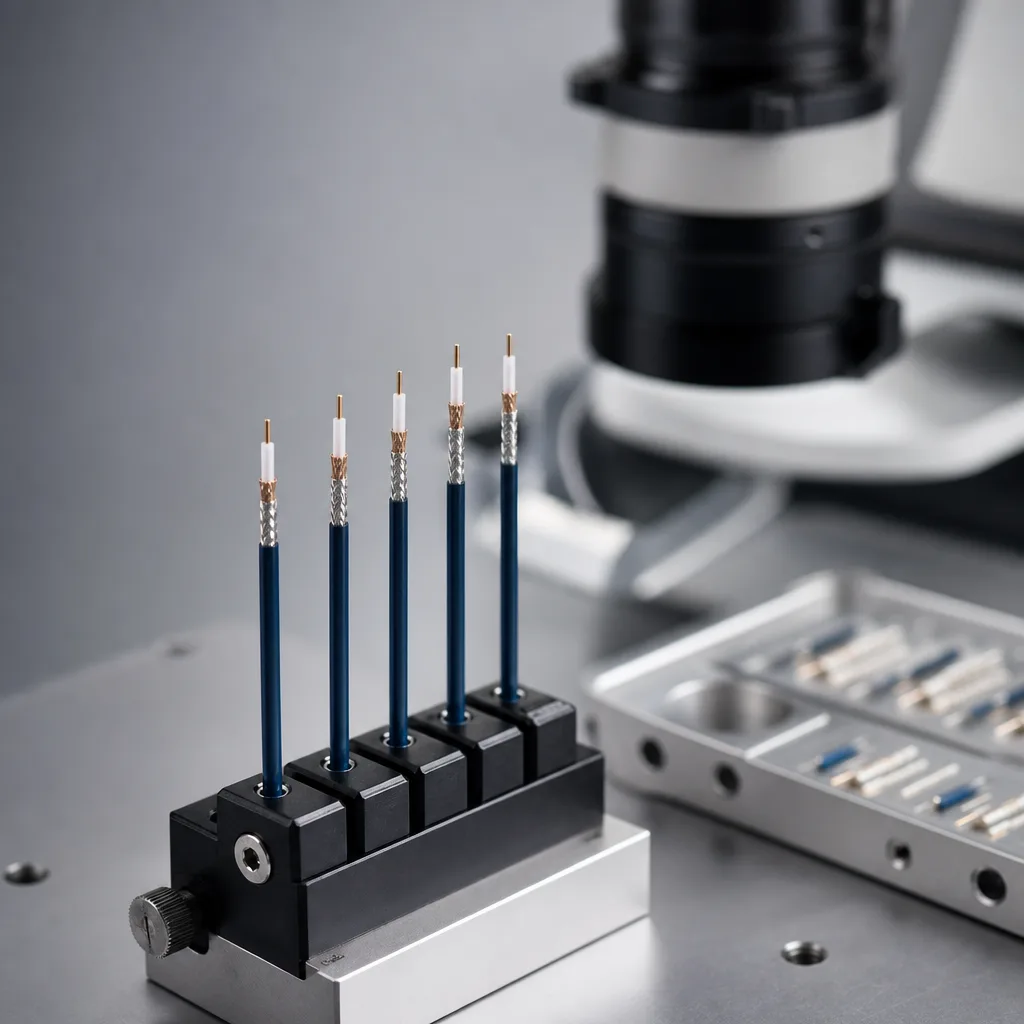
Capability Scope Snapshot
Best fit when the project already defines a micro-coax route and the main review is whether stripping windows, shield handling, dielectric protection, terminal consistency, and records can support sampling or batch release.
| NO | Review Item | Practical Meaning |
|---|---|---|
| 01 | Capability Definition | Laser stripping, terminal-window control, shield and dielectric handling, and inspection-record support for fine-AWG micro-coax assemblies |
| 02 | Relevant Family | Micro-coaxial cable assemblies |
| 03 | Typical Programs | 0.25mm pitch, I-PEX CABLINE-compatible, AR/VR, UAV, medical imaging, and high-shielding micro-coax programs |
| 04 | Required Inputs | AWG, OD, layer stack, stripping window, connector, termination method, inspection requirement, and sample quantity |
| 05 | Deliverable Records | Sample approval, terminal inspection record, process note, batch label, and shipment file when requested and confirmed |
| 06 | Capability Boundary | No fixed parameter, yield, unconfirmed test result, or universal material compatibility is claimed by this page |
Capability Review Inputs
Use these items as first-round review inputs so the discussion does not rely on the page label alone.
Provide AWG, OD, material layer stack, and sample information.
Provide connector, termination method, and target stripping window.
Describe terminal inspection, residue, dielectric protection, or acceptance requirements.
State project stage, sample quantity, pilot quantity, and timing target.
If records, labels, or shipment files are needed, provide format and scope early.
Process Flow
Laser-stripped micro-coax programs should split input review, sample setting, trial stripping, terminal inspection, termination validation, and batch records into visible checkpoints. The flow below is a capability-first review model, not a fixed parameter promise.
| NO | Step | Control Point | Output or Record |
|---|---|---|---|
| 01 | Requirement review | Confirm AWG, layer stack, stripping window, connector, and termination method | RFQ input checklist and engineering review notes |
| 02 | Sample definition | Lock target stripping length, shield handling, dielectric protection, and sample quantity | Sample definition or trial record |
| 03 | Trial stripping setup | Tune process boundary against material and target window | Trial note, sample photo, or inspection record |
| 04 | Terminal inspection | Check conductor, shield, dielectric, residue, and length consistency | Magnified inspection record or deviation note |
| 05 | Termination validation | Confirm whether the stripped terminal supports soldering, crimping, or connector assembly | Sample approval and terminal check |
| 06 | Batch execution | Apply the confirmed window to pilot or production builds | Batch label and process record |
| 07 | Shipment confirmation | Confirm packaging, labels, and agreed shipment documents | Shipment file, carton mark, and traceability note |
Inspection Checkpoints
Inspection should move upstream. For fine-AWG micro-coax, terminal issues are easier to control before termination than after a finished assembly fails later.
| NO | Checkpoint | What To Check | Suggested Record |
|---|---|---|---|
| 01 | Incoming material | AWG, OD, layer stack, material condition | Material batch or sample confirmation |
| 02 | Trial stripping | Window length, conductor condition, shield residue, dielectric damage | Magnified check record or sample photo |
| 03 | In-process patrol | Length consistency, residue, burrs, local deformation | Patrol sheet or deviation note |
| 04 | Pre-termination check | Whether the stripped end supports the next solder, crimp, or assembly step | Pre-termination inspection note |
| 05 | Shipment confirmation | Batch label, protective packaging, sample-to-batch correspondence | Shipment checklist and batch record |
Deliverable Records
Deliverable records must be phrased carefully. The list below shows records that can be discussed for a project; it does not mean every project receives all of them by default.
| NO | Record Type | Project Stage | Use | Boundary |
|---|---|---|---|---|
| 01 | Sample approval record | Sample stage | Confirms whether the stripping window and termination method can support later work | Customer must confirm usable sample boundary |
| 02 | Terminal inspection record | Sample or pilot | Records stripping length, residue, dielectric protection, or appearance focus | Inspection items follow drawing and quality requirements |
| 03 | Process note | Pilot or production | Supports repeat orders and process-boundary review | Does not replace customer validation |
| 04 | Batch label | Pilot or production | Supports batch matching and issue tracing | Label rules must be confirmed early |
| 05 | Shipment file | Shipment stage | Documents packing, quantity, and agreed shipment files | Does not represent unconfirmed test data |
Applicable Projects
This capability is most useful when terminal-window control is a real release risk, not when the project only needs a general micro-coax overview.
| NO | Applicable Project | How This Capability Helps | Not Suitable For Direct Promise When |
|---|---|---|---|
| 01 | 0.25mm pitch micro-coax | Fine-AWG and terminal-window control are more sensitive | Pitch, AWG, or termination method is not defined |
| 02 | I-PEX CABLINE compatible assemblies | Connector terminals and mating space are sensitive | Only a series name is known and mating data is missing |
| 03 | AR/VR near-eye display routes | Lightweight local-space constraints are tight | Device revision and route boundary keep changing |
| 04 | UAV or drone micro-coax | Lightweight, vibration, and shielding requirements overlap | Use environment and fixing method are unclear |
| 05 | Medical imaging micro-coax | Precision structure and record chain are stronger requirements | Signal, impedance, or validation standard is not defined |
Capability Process / Records Visuals
IMAGES · 02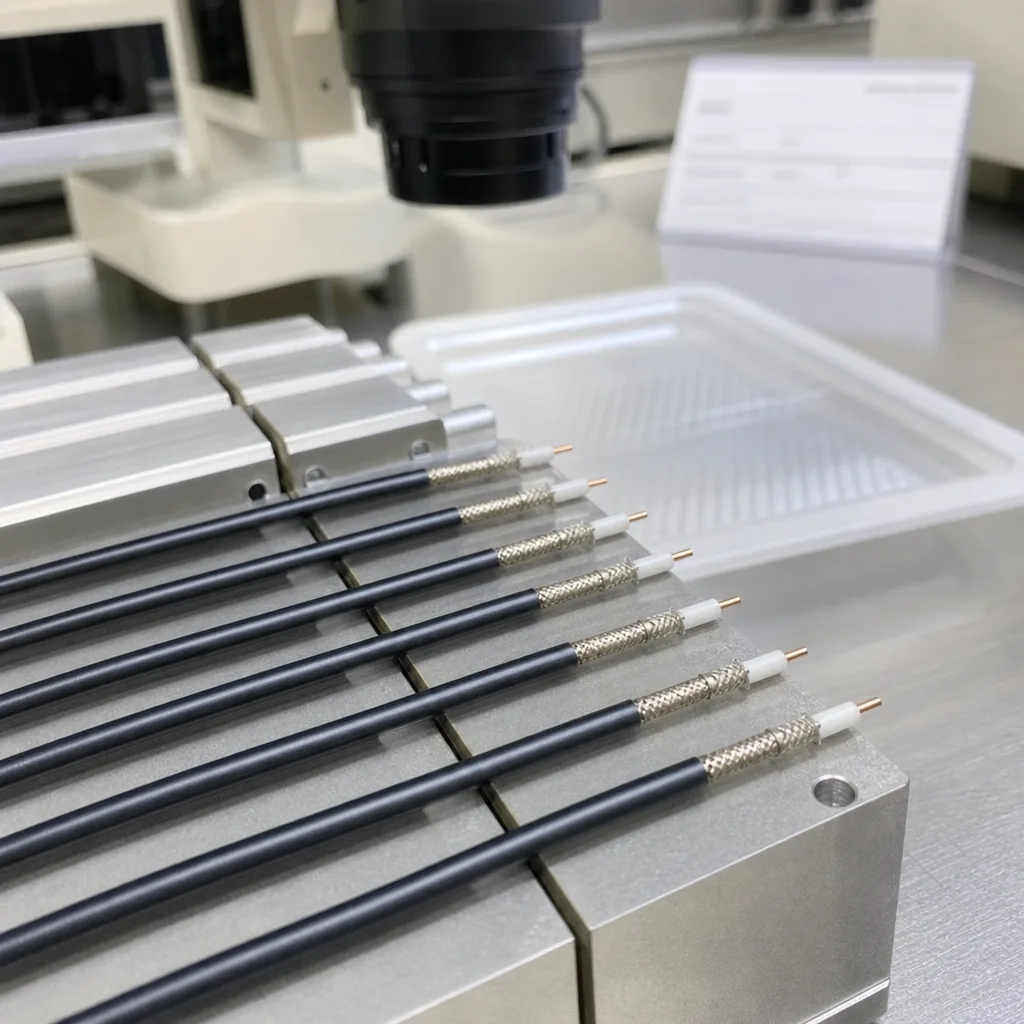
Micro-coax laser-stripping workstation line-art with a fine cable sample in a fixture and magnification inspection equipment
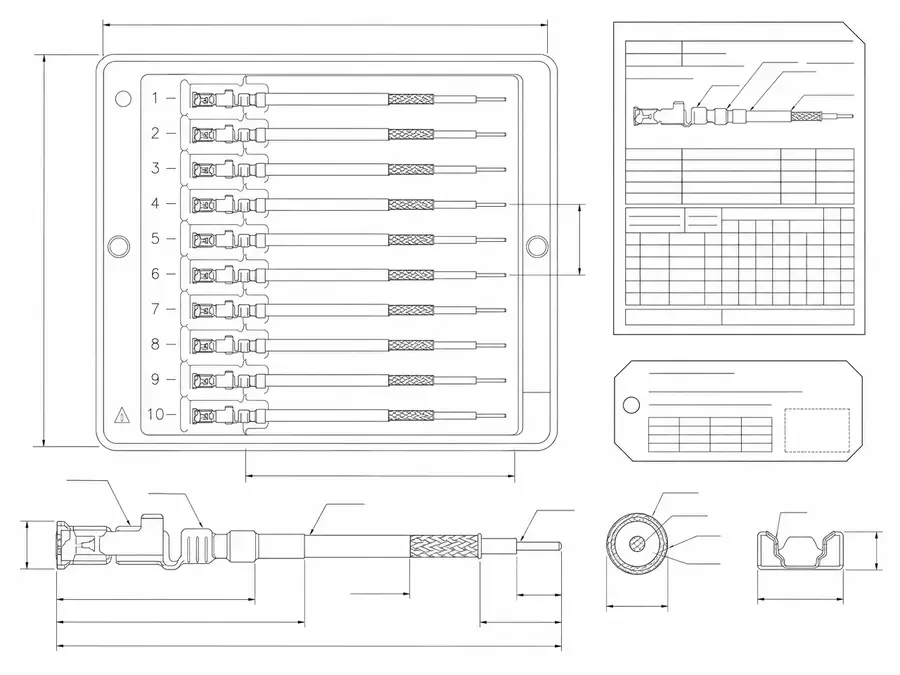
Stripped micro-coax terminal samples on a protective tray with inspection records and batch identification
Laser-Stripping Process Definition Matrix
Laser stripping is released from the actual jacket, shield, dielectric, conductor, color, and termination geometry. A process window proven on one micro-coax construction is not automatically valid for another.
| NO | Process Input | Definition Required | Controlled Output |
|---|---|---|---|
| 01 | Cable construction | Material and thickness of every removable layer | Approved strip recipe family |
| 02 | Target layer | Jacket, shield coating, dielectric, or combined sequence | Layer-specific operation plan |
| 03 | Strip dimensions | Exposed conductor, dielectric, shield, and jacket lengths | Dimensioned termination detail |
| 04 | Conductor type | Plating, strand count, diameter, and heat sensitivity | Conductor-damage acceptance criteria |
| 05 | Shield form | Braid, foil, served wire, or plated construction | Shield preparation instruction |
| 06 | Termination destination | Solder pad, contact, shell, or transition board | Post-strip handling boundary |
| 07 | Sample matrix | Material lots, colors, and geometry variants represented | Process-qualification sample list |
| 08 | Change trigger | Any cable-source, material, color, or dimension change | Recipe revalidation requirement |
First-Party Engineering References
- I-PEX micro-coaxial cable structure overview
Shows conductor, dielectric, shield, jacket, wire size, length, and termination as interdependent cable variables.
- IPC cable and harness acceptance scope
Defines cable-assembly methods and acceptance as a workmanship framework, not a laser recipe.
Laser-Stripping Failure-Mode Review
The strip may look clean while conductor, dielectric, or shield damage remains hidden. Inspection is therefore tied to the layer being removed and the downstream termination.
| NO | Failure Mode | Process Cause | Control Point |
|---|---|---|---|
| 01 | Conductor nick or heat damage | Energy or focus reaches the metal core | Magnified conductor acceptance standard |
| 02 | Dielectric recession | Excess exposure changes the termination geometry | Measure retained dielectric and strip length |
| 03 | Shield loss | Braid or plated layer removed beyond definition | Inspect shield count and termination area |
| 04 | Incomplete removal | Material response varies by color or supplier lot | Qualify representative material variants |
| 05 | Residue at joint | Vaporized material redeposits near solder area | Cleanliness review before termination |
| 06 | Recipe drift | Uncontrolled cable substitution uses an old program | Lock recipe to BOM revision |
Laser-Strip Qualification and Production Checks
Qualification proves a cable-and-geometry combination; production checks confirm the controlled output remains inside that approved window. Equipment identity alone is not evidence of strip quality.
| NO | Verification | Method and Sampling | Evidence |
|---|---|---|---|
| 01 | Layer removal | Magnified inspection against annotated cross-section | Qualified sample images |
| 02 | Strip geometry | Measure exposed lengths at defined datums | Dimensional first-article report |
| 03 | Conductor condition | Inspect plating, strands, and heat-affected surface | Acceptance checklist |
| 04 | Shield condition | Count or compare retained shield at termination zone | Shield preparation record |
| 05 | Termination result | Complete solder, crimp, or weld and inspect joint | Downstream joint evidence |
| 06 | Electrical integrity | Continuity, short, and project-specific resistance checks | Finished-assembly test result |
| 07 | Material change | Repeat qualification for affected layer stack | Revalidation approval |
Engineering, Process, and Evidence Chain
Capability review starts by defining what stripping window is needed, what termination step follows, and how the terminal will be inspected before release. Cross-family engineering review, drawing control, and documentation practice are covered in the Related Capability Pages below.
Engineering Capability
Define stripping window and termination method before treating a sample as the released basis.
Review material stack, shield handling, dielectric protection, and conductor condition together.
Quality Checkpoints
Move inspection before termination so terminal problems are visible earlier.
Do not invent yield, parameter, or acceptance claims without confirmed project evidence.
Evidence Chain
Stripping-window confirmation
Record target length, layer handling, and terminal acceptance basis before the process is carried into later samples.
Trial stripping and terminal inspection
Use sample checks, magnified inspection, or process notes to confirm the current manufacturing boundary.
Laser-Stripping Capability Boundaries
The laser-stripping evidence layer captures stripping-window, material stack, and terminal-acceptance choices that are unique to this capability. Cross-family file control, batch traceability, and certification practice are summarised in the Related Capability Pages.
Process input record
Record AWG, material structure, stripping window, connector, and termination method as the process basis for this capability.
Capability boundary statement
All parameters, inspection items, and acceptance limits follow customer drawings, samples, and confirmed quality files; this page does not claim fixed parameters or universal material compatibility.
Records and Boundary Visuals
IMAGES · 04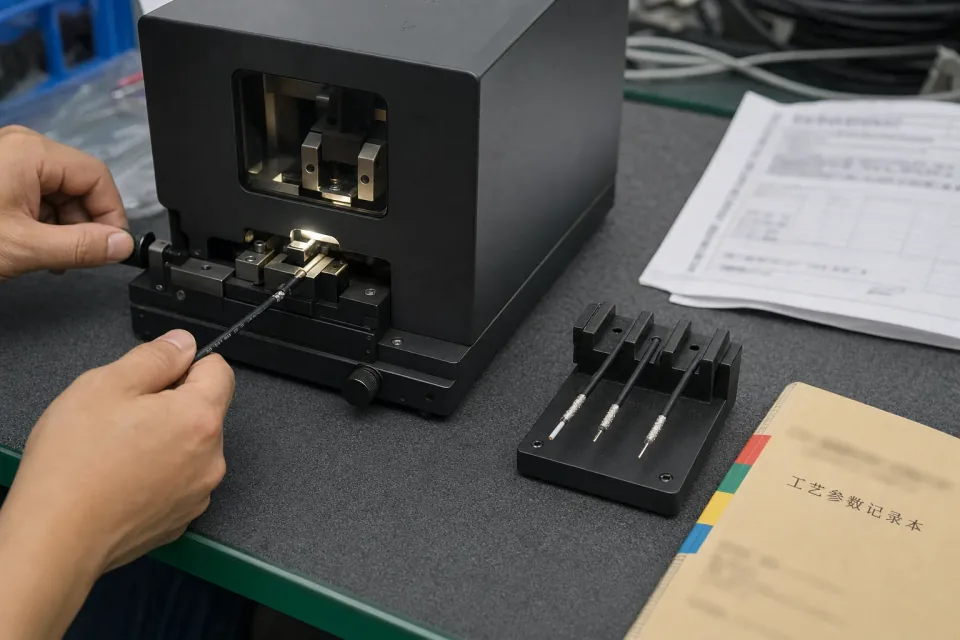
Laser-strip process station with an enclosed fixture, prepared micro-coax samples, and controlled process records
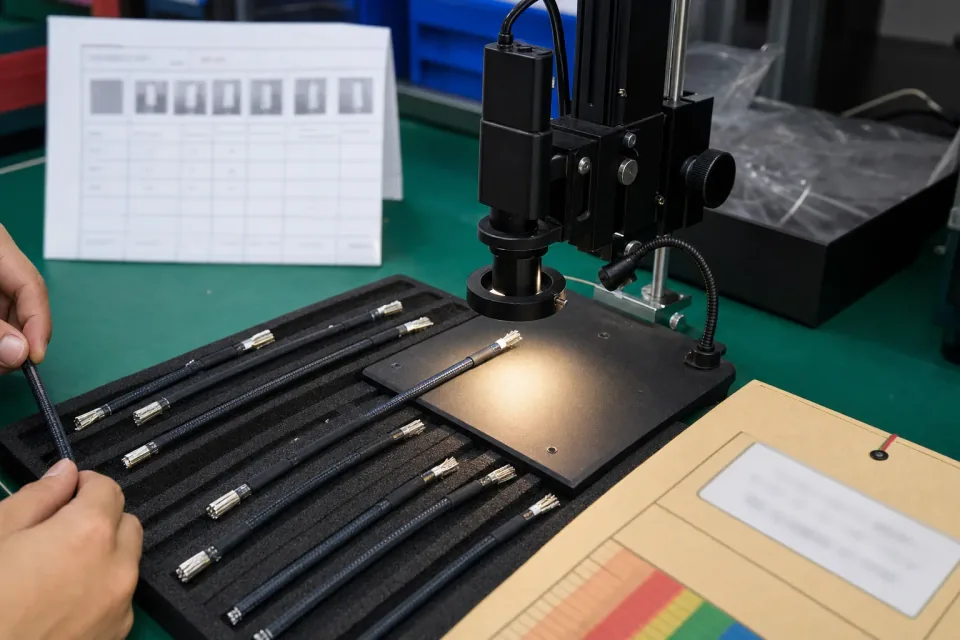
Sample-approval station with laser-stripped micro-coax samples, tip-imaging equipment, and end-face inspection records
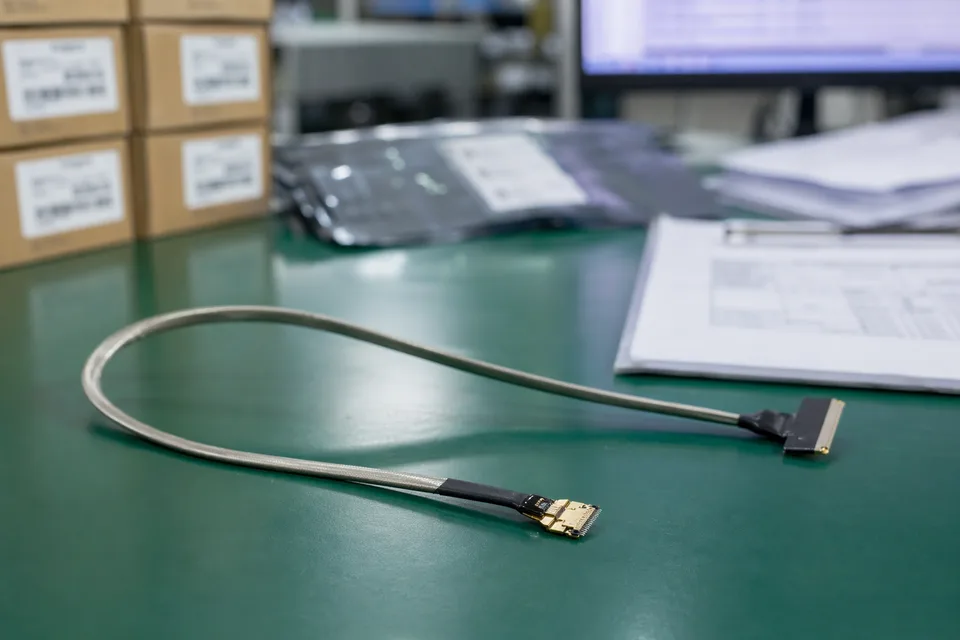
Micro-coaxial batch traceability archive with fine connector lot labels and cable sample visible
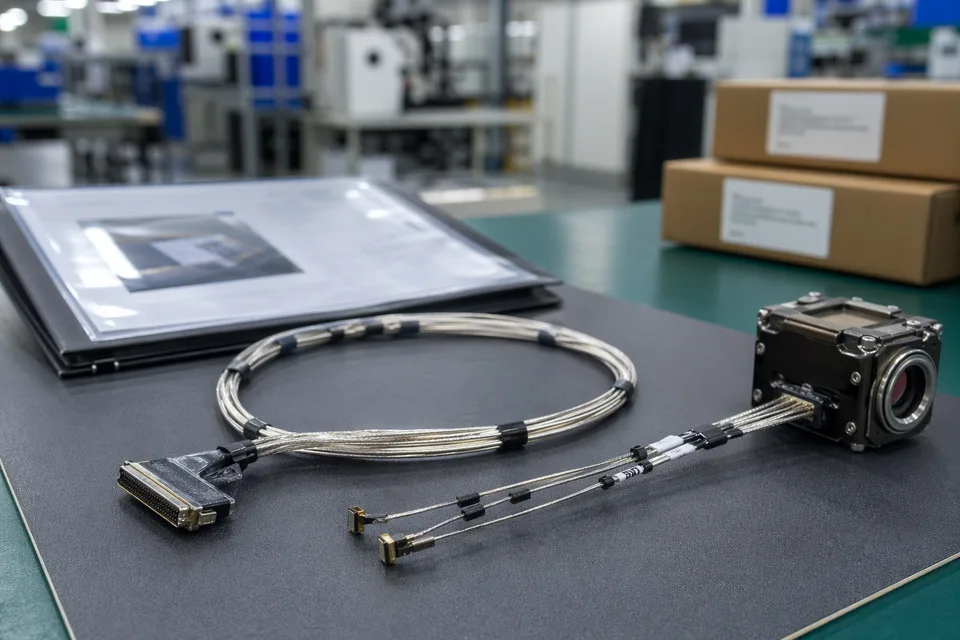
Micro-coaxial released-sample approval folder beside shielded harness and compact module mockup
FAQ
What information is needed before quotation?
Send AWG, material layer stack, connector, target stripping window, termination method, inspection requirement, sample quantity, and project stage.
Can you promise fixed stripping parameters or yield from this page?
No. Parameters and acceptance limits must be confirmed through material review, samples, equipment conditions, and agreed quality requirements.
Can review start from an old sample without drawings?
Yes, but wire gauge, connector, termination method, and target stripping window still need to be clarified before the sample can represent the released build.
Which projects usually need this capability?
Common cases include 0.25mm pitch, I-PEX CABLINE-compatible, AR/VR, UAV, medical imaging, and high-shielding micro-coax programs where terminal consistency is a release risk.