Specification
Specification Paths and Manufacturing Boundaries
Organize connector, pin-count, pitch, routing-space, and release requirements before narrowing the manufacturing scope.
08 · Featured Specifications
View Specification PageTechnical Reference · MICRO-COAXIAL-CABLE-ASSEMBLIES
Custom Manufacturing
Select by exact mating set, supported wire, signal and ground map, installed geometry, and test boundary
This pillar covers the manufacturer-level micro-coax request. Connector portfolios from I-PEX, Hirose, KEL, JAE, Molex, and others are selection inputs only; release requires both complete mating codes, supported cable construction, contact map, shielding and grounding, termination geometry, route, strain relief, and project test plan. Use a pitch, CABLINE, or TDR/VNA child page only when that narrower decision drives the RFQ.
Quick Links
QUICK ACCESSUse the project interface, structure, and application requirements to move into the right content.
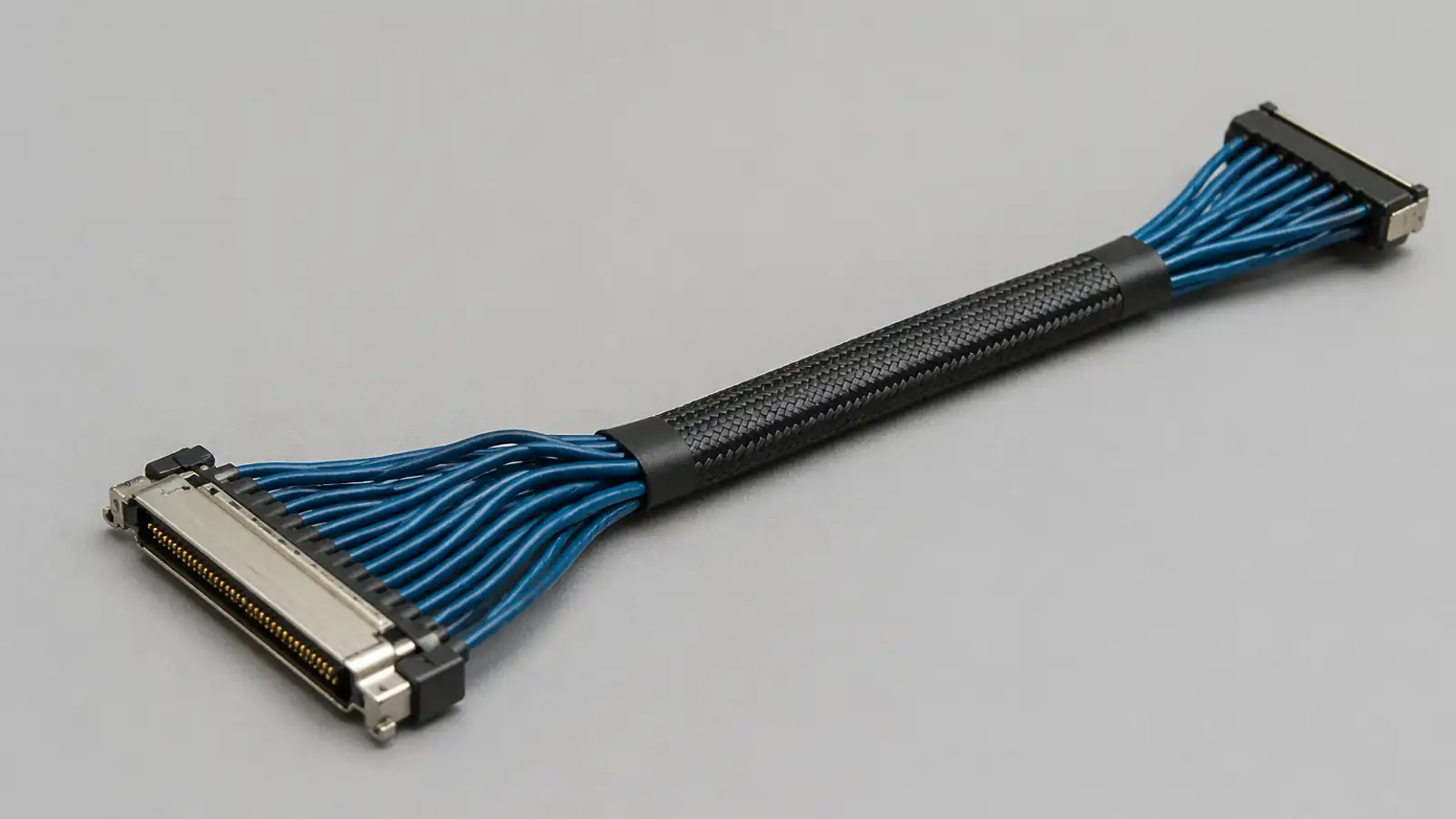
Start from the constraint that is already locked. A complete connector pair leads to a connector-specific review; routing cross-section leads to pitch and wire selection; EMI constraints lead to shielding and grounding review; and electrical evidence requires a project-defined TDR or VNA method. One RFQ can combine these paths without treating a family name or nominal parameter as a release specification.
| 01 | Connector References | I-PEX, Hirose, KEL, JAE, Molex, Amphenol, JST, TE, and other systems; confirm complete mating part numbers and sourcing basis |
| 02 | Pitch Range | Connector-series and part-number dependent; pitch is confirmed from the released mating interface rather than a common family range |
| 03 | Pin Count | Connector-series dependent; confirm the complete part number and mating side |
| 04 | Wire Gauge (AWG) | Selected from the wire sizes and constructions supported by the exact connector, termination process, route, and electrical requirements |
| 05 | Impedance | Interface-specific single-ended or differential target, tolerance, frequency scope, and test method defined by the project |
| 06 | Cable Length | Custom length subject to routing, loss, bend and validation requirements |
| 07 | Shielding | Construction and termination selected for the project grounding and EMI plan |
| 08 | Temperature | Limited by the selected wire, connector, termination, materials, route, and agreed system validation conditions |
| 09 | Pinout | Released from-to definition with connector viewing direction, grounds, shields, and any custom mapping |
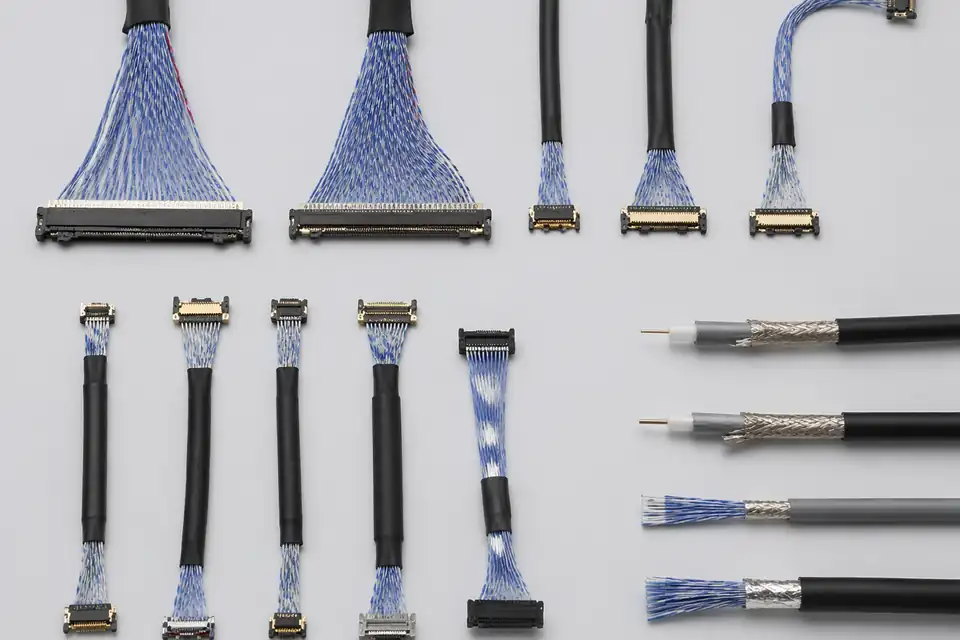
0.4mm pitch solder detail
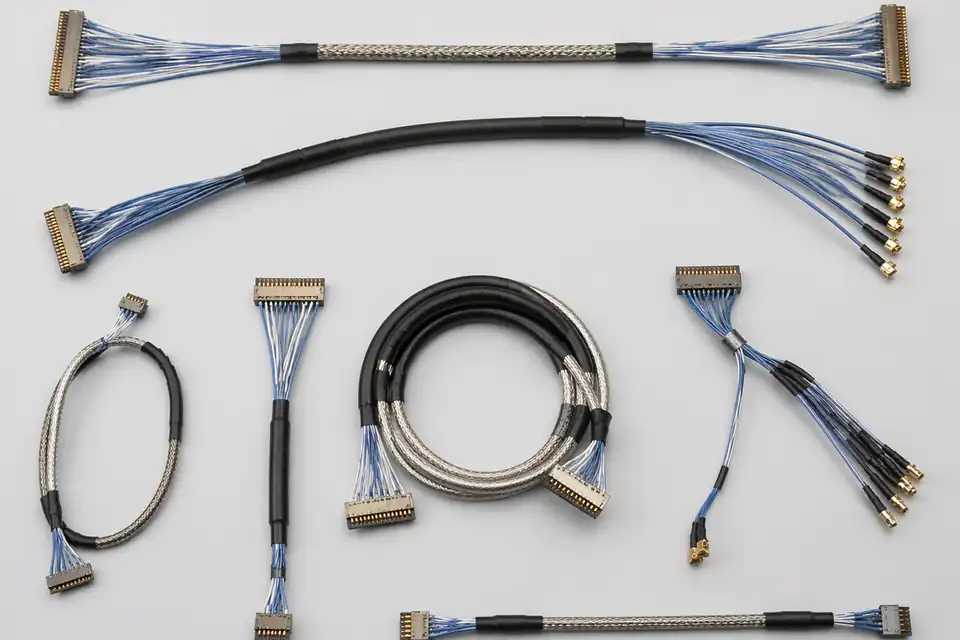
Multi-cable routing layout
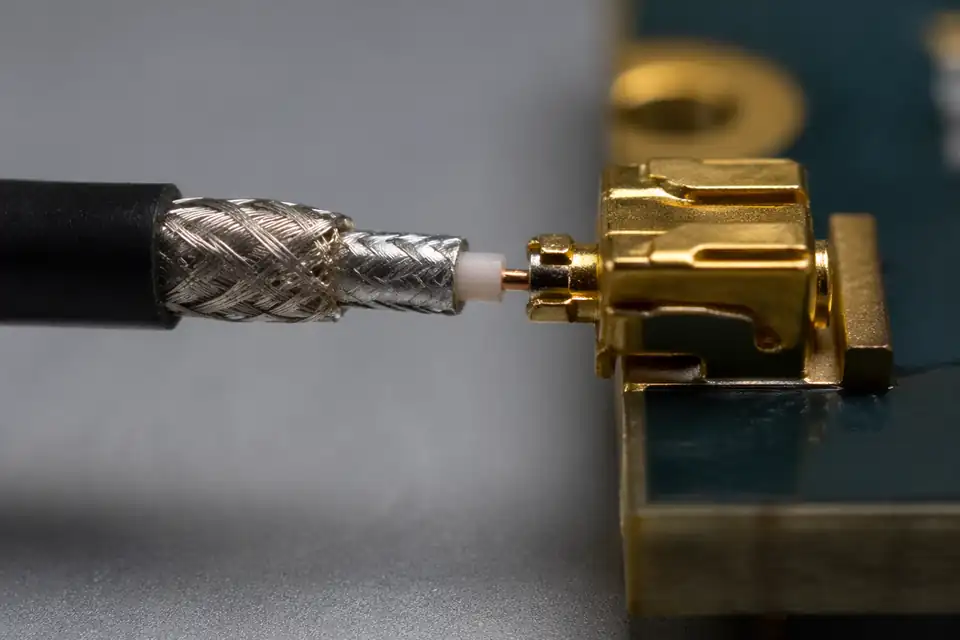
Wire stripping and termination
Organize connector, pin-count, pitch, routing-space, and release requirements before narrowing the manufacturing scope.
Specification
Organize connector, pin-count, pitch, routing-space, and release requirements before narrowing the manufacturing scope.
Use device type, installed position, and validation focus to choose the matching application page.
Application
REF-01For compact medical imaging assemblies and internal signal-routing applications.
Application
REF-02For machine-vision and drone programs that require light, stable coaxial assemblies.
Application
REF-03For HMD, smart-glasses, near-eye display, camera-module, and lightweight wearable routing programs.
Application
REF-04For server, switch, BMC, patch-panel, and hyperscale programs that need dense routing and batch stability.
Micro-coaxial engineering starts with the complete mating definition and installed route. The connector subseries and suffix, supported wire, pinout, shield termination, grounding, bend zones, strain relief, and validation method must resolve into one released drawing before sample results can represent production.
Receive complete cable-side and board-side part numbers, mating views, pinout, wire and length requirements, route drawing, shielding and grounding, strain relief, and electrical validation scope.
Verify that the exact connector supports the selected wire and termination, then review stripping, shield handling, conductor exposure, termination access, bend zones, and route feasibility.
Issue controlled engineering drawings with complete pinout definitions, dimensions, BOM, and process requirements. IPC/WHMA-A-620 workmanship criteria can be referenced where the approved project specification requires them.
Use the approved drawing, sample definition, and agreed validation results as the release basis for the active project revision.
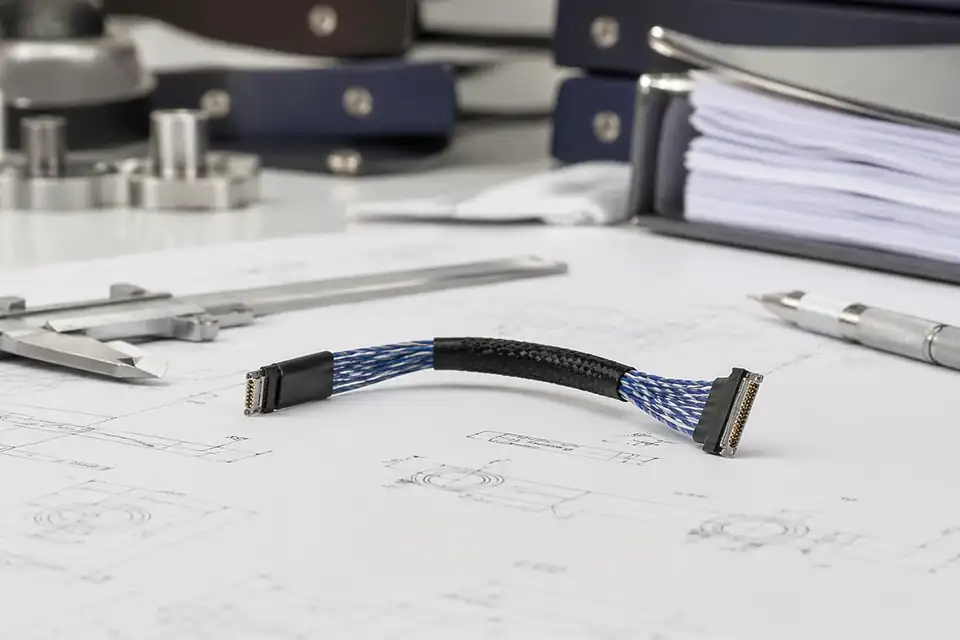
Micro-coaxial engineering drawing set
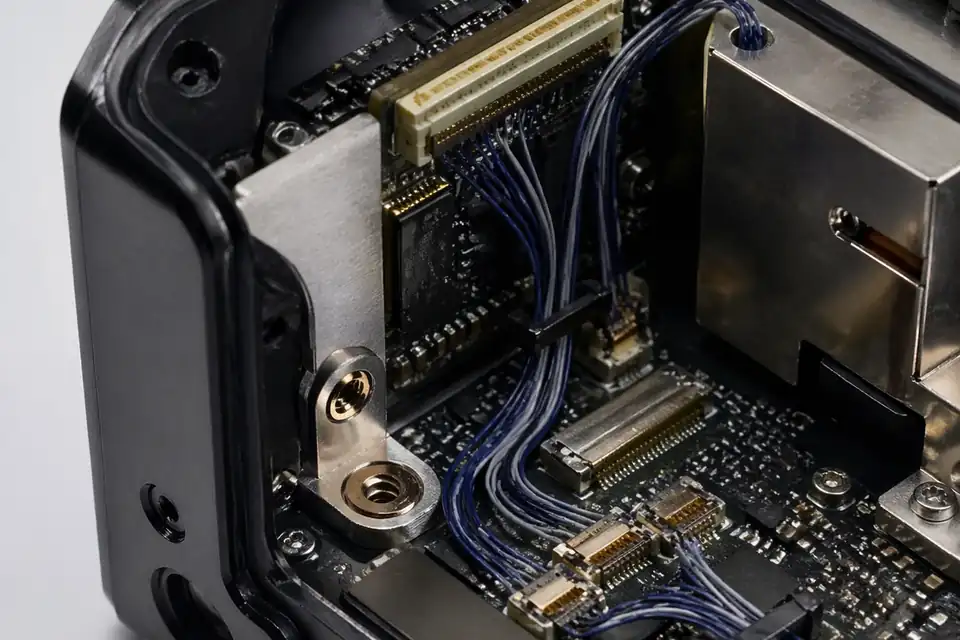
Connector-fit and routing-space review
Quality evidence must correspond to the exact connector and wire combination, termination process, shield and grounding definition, and drawing revision. Impedance, flex, pull, thermal, or other reliability results apply only to the agreed method, fixture, conditions, limits, sample scope, and system validation boundary.
Review conductor damage, termination quality, shield handling, insulation or jacket damage, connector seating, and strain-relief execution against the released workmanship and inspection criteria.
Continuity, shorts, insulation and visual workmanship are selected from the released control plan. Pull-force sampling, Hi-Pot, TDR or VNA review is added only when the assembly construction and agreed project test scope require it; fixture, reference plane, limits and sampling must be defined before results are compared.
Project release files can include FAIR, IQC or OQC records, agreed test reports, and CoC. Current ISO 9001:2015, ISO 13485, or applicable UL documents are provided only where the issued document scope and project requirements support them.
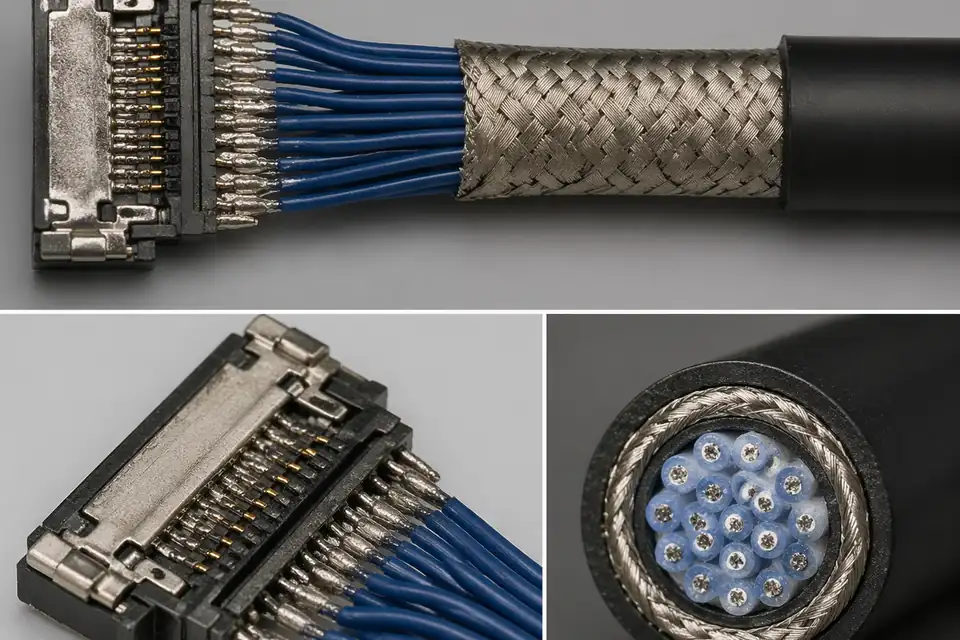
Precision termination and shielding detail
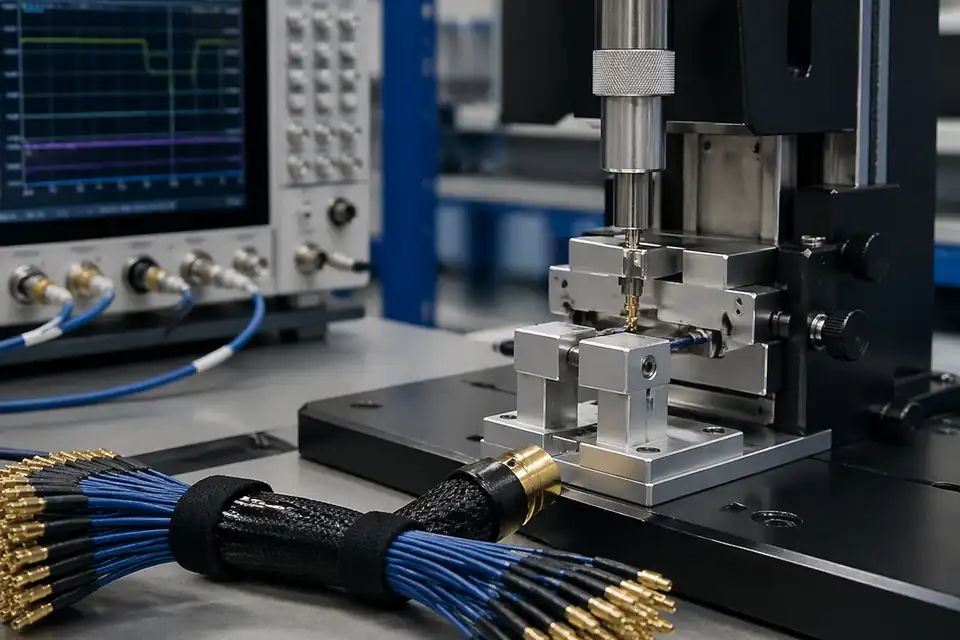
TDR / Hi-Pot / pull-force record
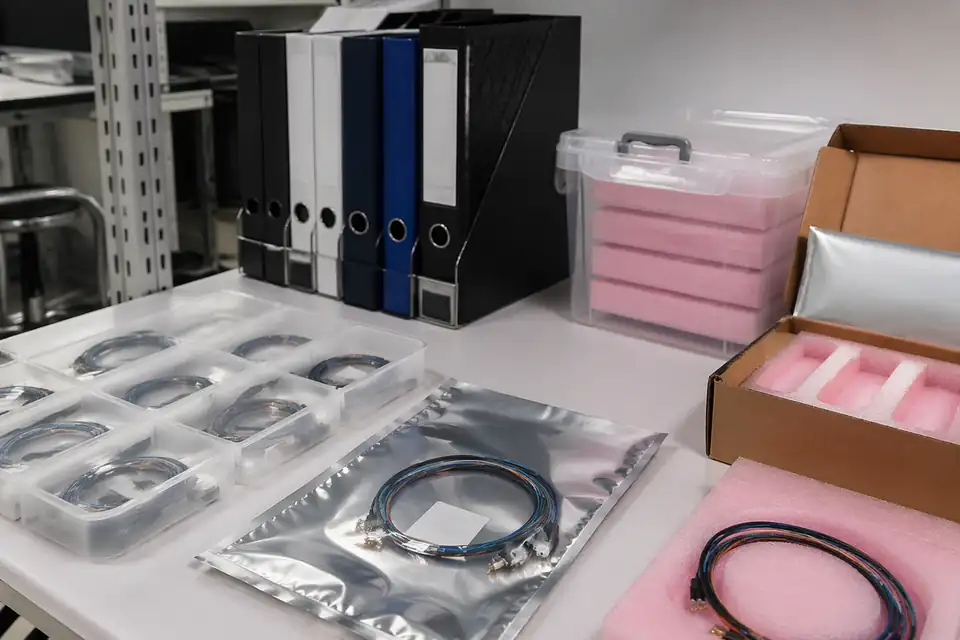
Release file, packaging, and traceability record
These examples show how buyers should frame a connector-led review; the connector name remains a reference until the full mating parts, wire, route, and validation scope are confirmed.
Most micro-coaxial programs move through scope definition, engineering review, sample validation, and controlled production. The clearer that path is, the easier it becomes for sourcing and engineering teams to move the project forward.
Submit complete mating part numbers, pinout, wire construction, length and route, shielding and grounding, validation scope, quantity, and required records for a project-specific quotation.
Prepare a controlled project drawing with connector references, mating views, pinout, dimensions, materials, shielding and grounding, strain relief, and inspection requirements.
Production starts only after drawing approval so the released build can be checked against the agreed connector, pinout, dimensions, materials and validation requirements.
Sample and production timing is confirmed after connector availability, material readiness, process complexity, quantity and the required validation scope are reviewed. Rush feasibility is assessed without removing agreed inspection steps.
Complete the inspection and test coverage defined by the released control plan, then pack and ship with the records agreed for that project.
Keep issue review, revision changes, replacement scope, and repeat-order records tied to the released project definition.