Specification
REF-01Board-to-Panel LVDS
For LVDS links between control boards and display panels in internal display systems.
LVDSDisplayBoard to Panel
View Specification PageTechnical Reference · LVDS-CABLE-ASSEMBLIES
Differential Display Interconnects
Define both endpoints, pair grouping, power and control mapping, shielding, route, and system tests
This pillar covers the manufacturer-level LVDS request after the platform specifies an LVDS link. Release begins with one controller-board revision and one panel option, then reconciles both connector codes, contact views, differential channels, power and controls, grounds, cable construction, installed route, and device validation. Use a board-to-panel, shielded-routing, or JAE FI-X child page only for that page's narrower decision.
Quick Links
QUICK ACCESSUse the project interface, structure, and application requirements to move into the right content.
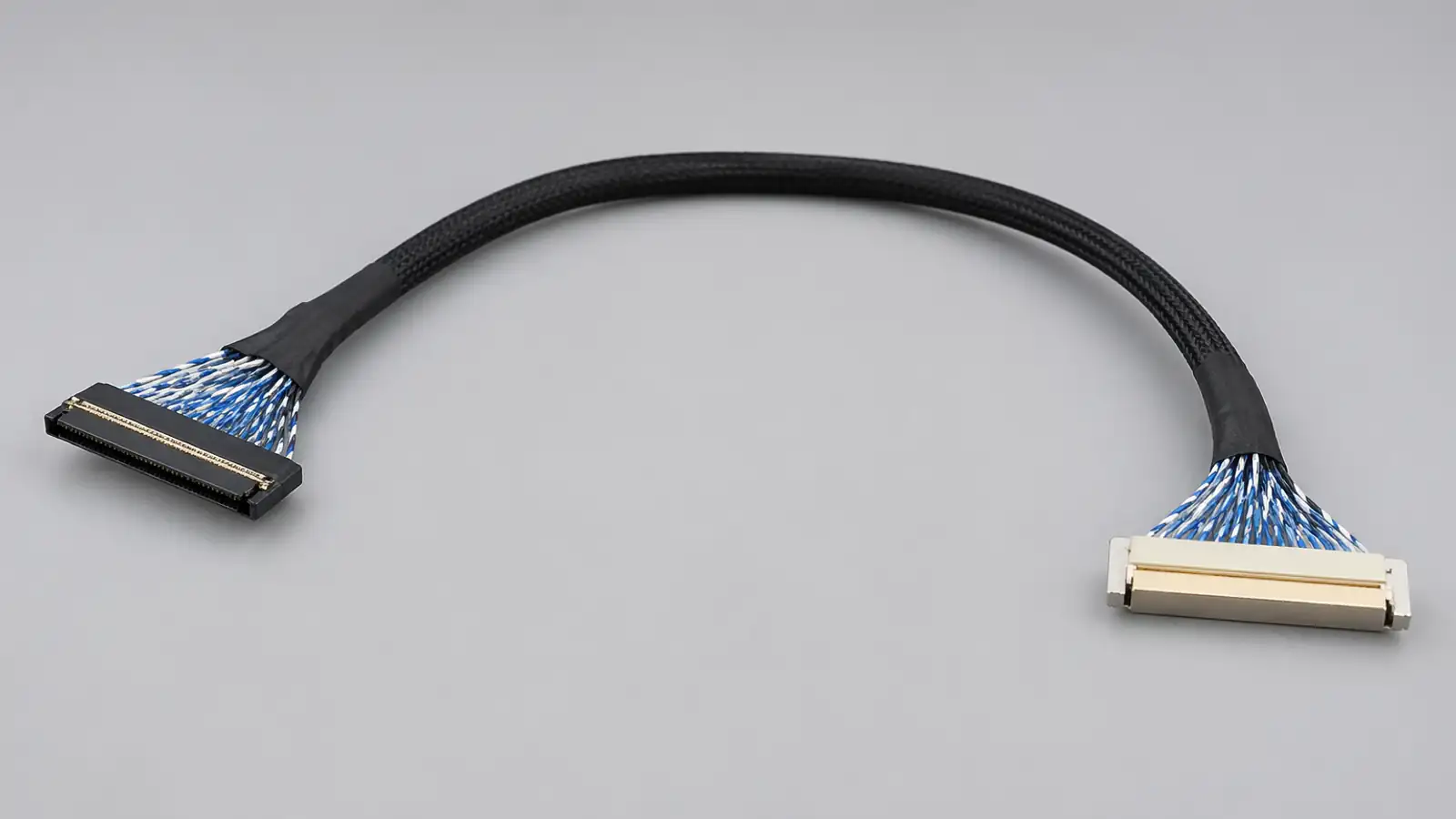
Start from the released board and panel documents. Confirm both connector part numbers, the pin map and pair grouping, installed length and route, shielding termination, grounding points, and project test plan before selecting a pin-range, shielding, connector, or device-specific page.
| 01 | Supported Project Range | 20-pin to 50-pin directions can be reviewed as a supply range; exact support is connector-, pinout-, and platform-specific |
| 02 | Typical Applications | Medical monitors, industrial displays, digital signage, and embedded systems whose released interface specifies LVDS |
| 03 | Signal Structure | Released differential-pair grouping plus power, control, ground, and any reserved conductors |
| 04 | Connector Systems | Complete board-side and panel-side part numbers, mating direction, keying, lock, and cable exit |
| 05 | Cable Styles | Project-defined pair construction, jacket or wrap, shield coverage, drain or shell termination, and grounding |
| 06 | Key Focus | Pin-map correspondence, pair grouping, installed fit, shield termination, and system-level validation |
| 07 | Length Range | Released finished length and tolerance based on connector exits, bend zones, retention, and service space |
| 08 | Verification | Pin-map, continuity, workmanship, and any electrical or EMC checks defined by the project method and sample scope |
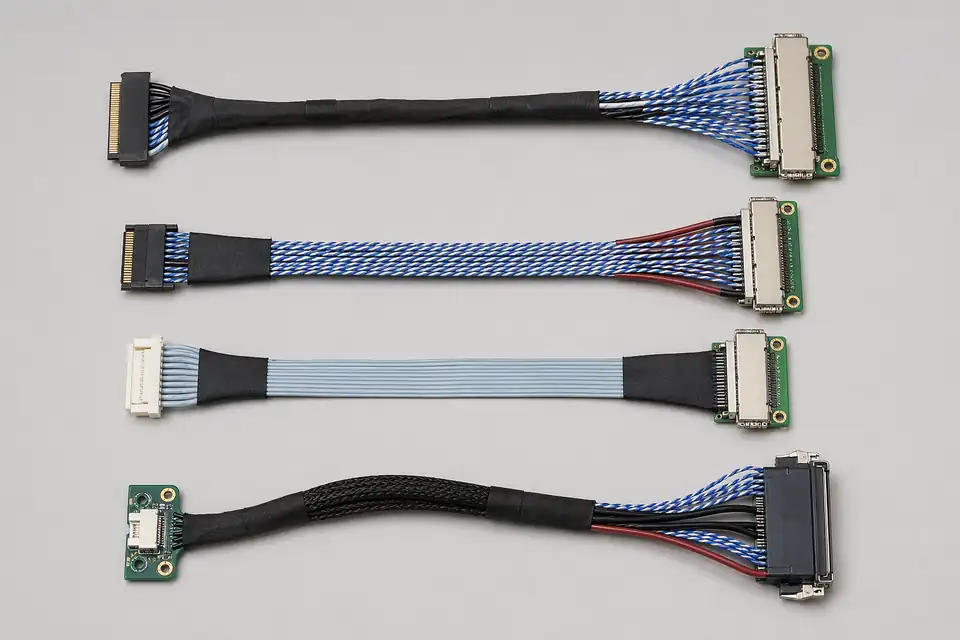
LVDS routing layout reference
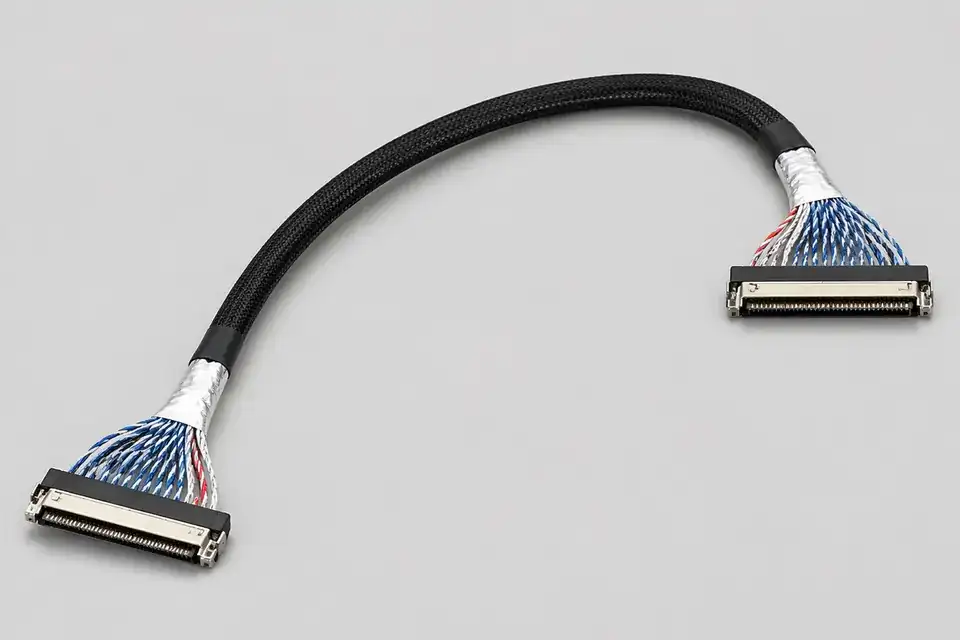
Shielded harness detail
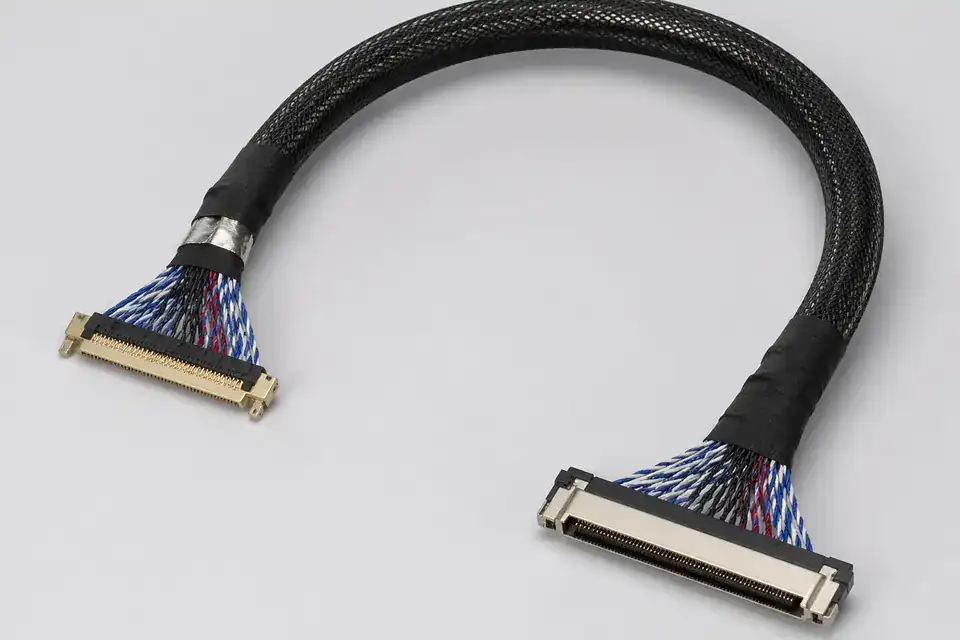
Display-side connector detail
Organize connector, pin-count, pitch, routing-space, and release requirements before narrowing the manufacturing scope.
Specification
REF-01For LVDS links between control boards and display panels in internal display systems.
Specification
REF-02For LVDS harnesses that need stronger shielding execution and stable long-term installation fit.
Specification
REF-03For LVDS projects where pin count, connector family, pin mapping, shielding, and route release need review together.
Specification
REF-04For LVDS display projects where the JAE FI-X connector system is already fixed and cable-side / panel-side mating, lock type, and pin count need a compatibility review.
Use device type, installed position, and validation focus to choose the matching application page.
Application
REF-01For industrial display and monitor programs that still rely on LVDS interconnect architecture.
Application
REF-02For embedded systems that continue to use LVDS display interfaces in controlled internal layouts.
Application
REF-03For diagnostic displays, bedside screens, and medical workstations that still rely on LVDS display harnesses.
Engineering review turns two endpoint interfaces into one controlled harness definition. Pair grouping, wire order, connector orientation, shielding and grounding, bend space, retention, and validation criteria must remain tied to the same drawing revision.
Confirm both complete connector part numbers, mating views, pin mapping, differential-pair grouping, and non-signal conductors before sample release.
Review pair construction, shield coverage and termination, grounding, route length, bend space, fixing conditions, and strain relief against the installed environment.
Freeze dimensions, pin mapping, connector references, and key process notes in a controlled drawing so samples and production stay aligned to one definition.
Use the approved drawing, route-fit review, sample scope, and system validation criteria as the release basis before production.
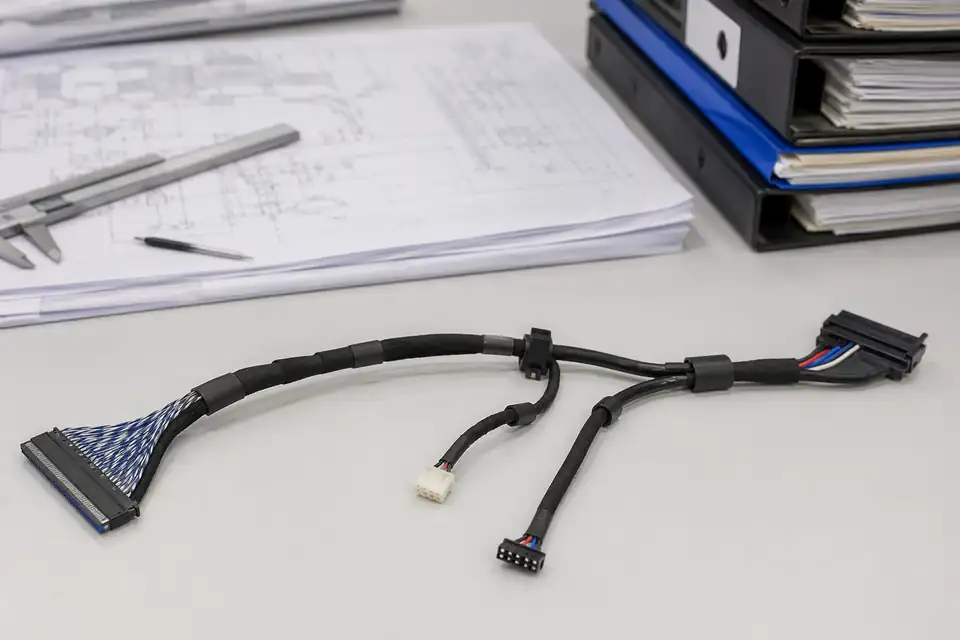
LVDS engineering drawing set
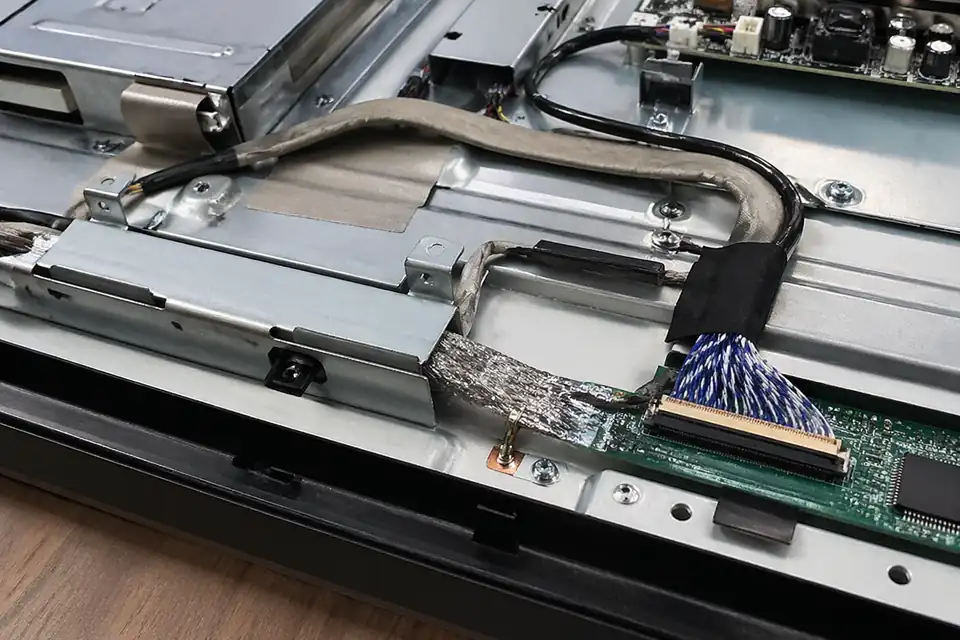
Shielding and routing review
Quality evidence should show correspondence to the released endpoints, pin map, pair construction, shield termination, and installed route. Shielding language alone does not establish EMI performance; final results remain tied to the system configuration and agreed validation method.
Common issues in LVDS work include unstable differential structure, inconsistent shielding execution, pin-mapping errors, and weak assembly repeatability across batches.
Pin-map, continuity, and workmanship checks establish the assembly baseline. Any differential, impedance, or EMC check requires an agreed method, fixture, reference plane where relevant, limits, sample scope, and system configuration.
FAIR, OQC reports, inspection records, and conformance files matter because they tie each shipment back to the approved drawing, sample definition, and production requirements.
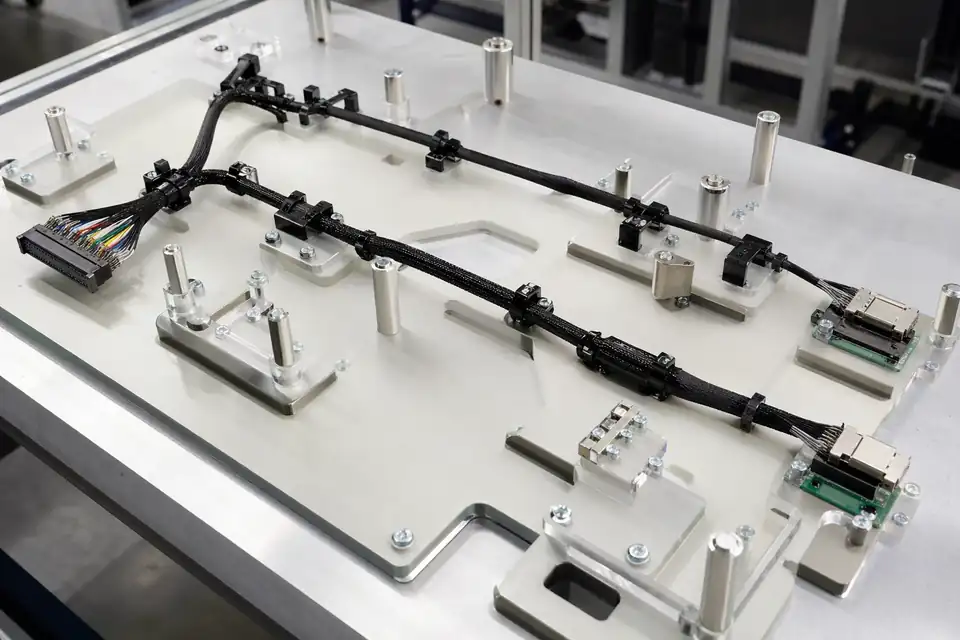
Assembly risk-control reference
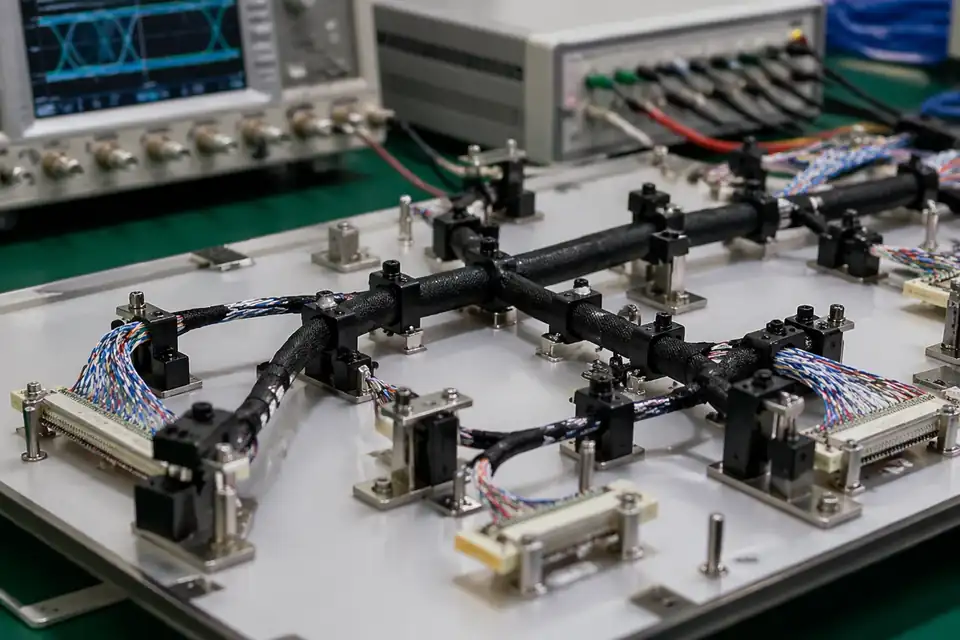
Electrical verification and inspection record
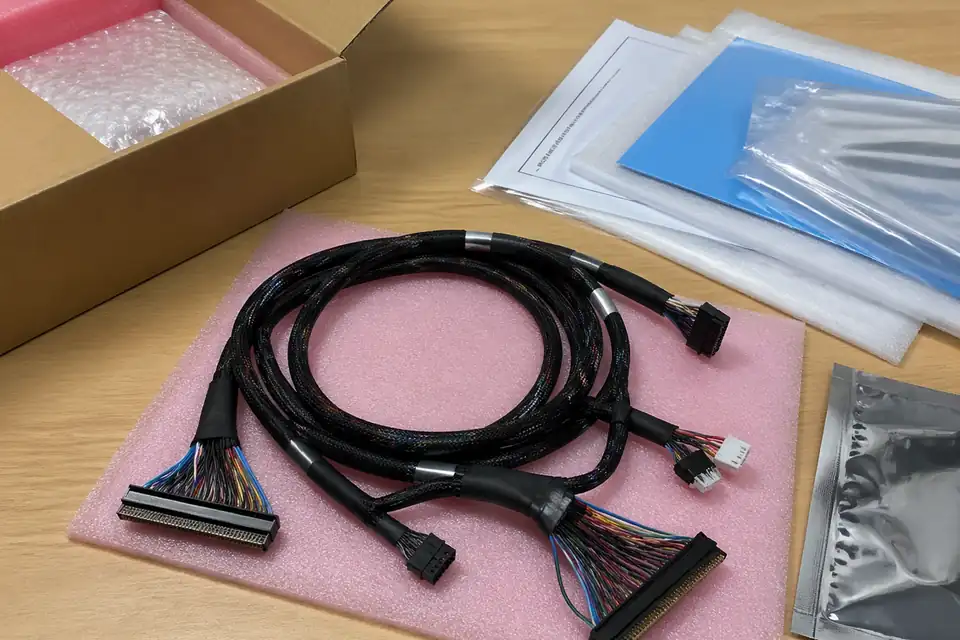
Shipment-side support document set
Select the next page from the constraint that is already fixed: a board-to-panel topology, an EMI-sensitive installed route, or a replacement interface whose connector and pin map must be reconstructed.
Most LVDS programs move through scope definition, engineering review, sample validation, and controlled production. The clearer that path is, the easier it becomes for sourcing and engineering teams to move the project forward.
Start from interface definition, application context, target length, and expected quantity so technical review begins from a clear scope.
Review pin mapping, shielding structure, routing conditions, and manufacturability before the project moves into sample build or production.
Approve the released transmitter-panel pair through netlist checks, installed-route inspection, loaded supply measurements, display-operation cases, and any named channel or EMC test.
Build the released LVDS connector, cable, shield, and pin-map configuration under controlled inspection, with tester revision, lot identity, and shipment records linked to the approved assembly.