Specification
REF-01Fine-Pitch FFC/FPC
For narrow-pitch flexible interconnect programs that depend on tighter pitch control and layout fit.
FFCFPCFine Pitch
View Specification PageTechnical Reference · FFC-FPC-CABLE-ASSEMBLIES
Flexible Interconnects
Choose FFC, Etched FPC, or FPC-to-Wire from the Route and Interface
Use this page to choose the flexible-interconnect family before moving to a pitch, ZIF, shielding, hinge, or hybrid page. FFC suits defined parallel-conductor routes, etched FPC supports shaped circuits and localized features, and FPC-to-wire bridges flexible and discrete-wire sections. The released connector part numbers, pitch, conductor count, contact orientation, exposed contacts, stiffener, fold geometry, shielding, and validation scope decide the usable construction.
Quick Links
QUICK ACCESSUse the project interface, structure, and application requirements to move into the right content.
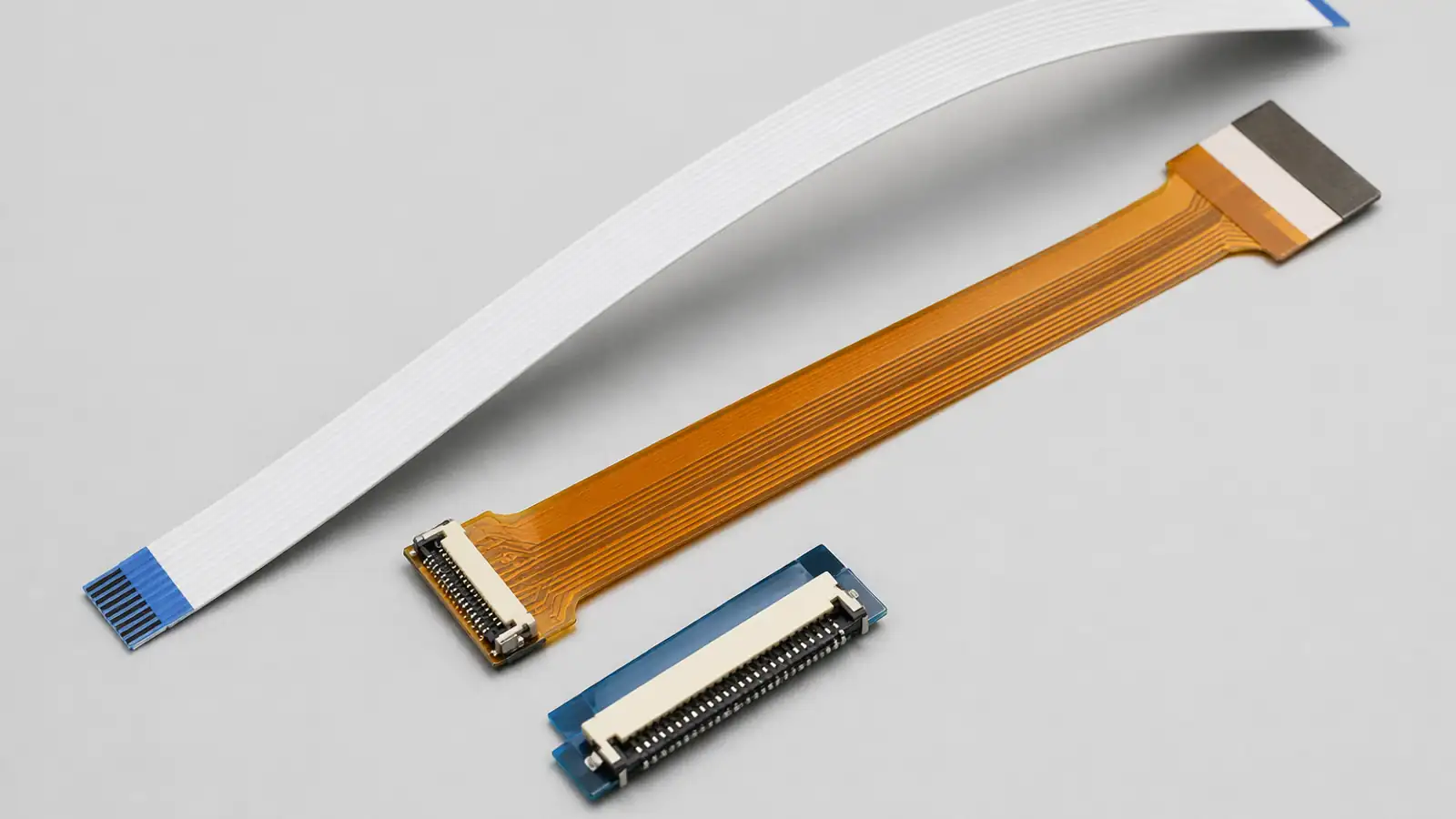
Select FFC, etched FPC, or an FPC-to-wire hybrid from the required circuit geometry and route. Then confirm complete connector or ZIF part numbers, pitch, conductor count, same-side or opposite-side contacts, exposed-contact dimensions, stiffener, bend or fold zones, shielding, and fit or flex validation.
| 01 | Typical Pitch | Defined by the complete mating connector and drawing; 0.5mm and 1.0mm are common project references, not universal limits |
| 02 | Typical Structures | Parallel-conductor FFC, etched FPC, and hybrid FPC-to-wire structures selected for the circuit and route |
| 03 | Typical Applications | Consumer electronics, display modules, compact devices, and internal flexible routing |
| 04 | Connector Focus | Complete ZIF or other mating connector part numbers, contact orientation, actuator type, and insertion dimensions |
| 05 | Customization | Conductor count, contact exposure, finished length, folds, stiffeners, reinforcement, shielding, and transition details |
| 06 | Material Direction | Copper, dielectric, coverlay or insulation, and stiffener selected from the released construction and use conditions |
| 07 | Production Support | Drawing review, project-defined prototypes, fit validation, controlled release, and revision-managed production |
| 08 | Verification | Continuity, dimensions, contact orientation, connector fit, and any flex or environmental checks defined by the project method and sample scope |
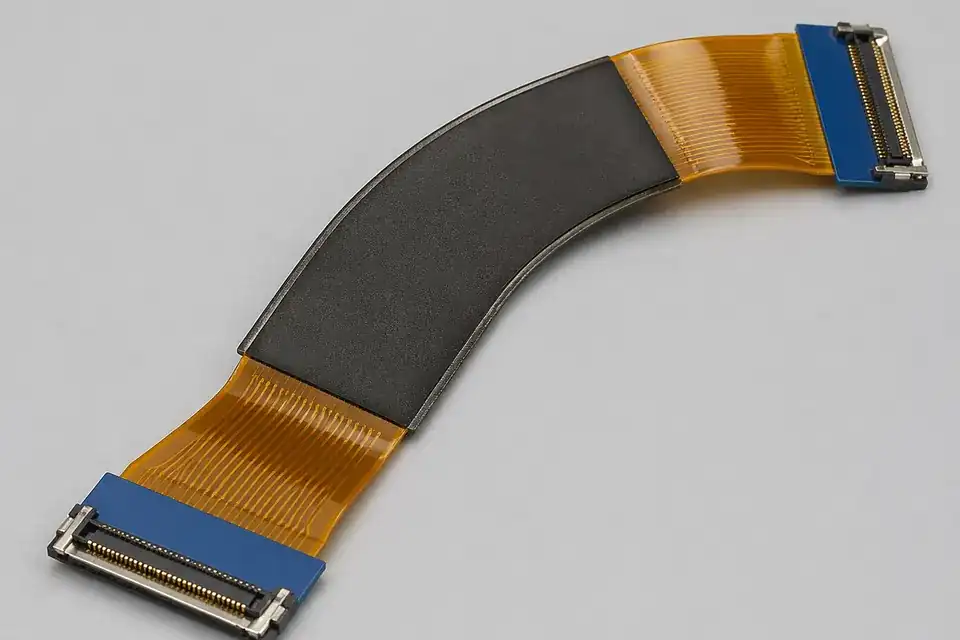
Flexible routing layout
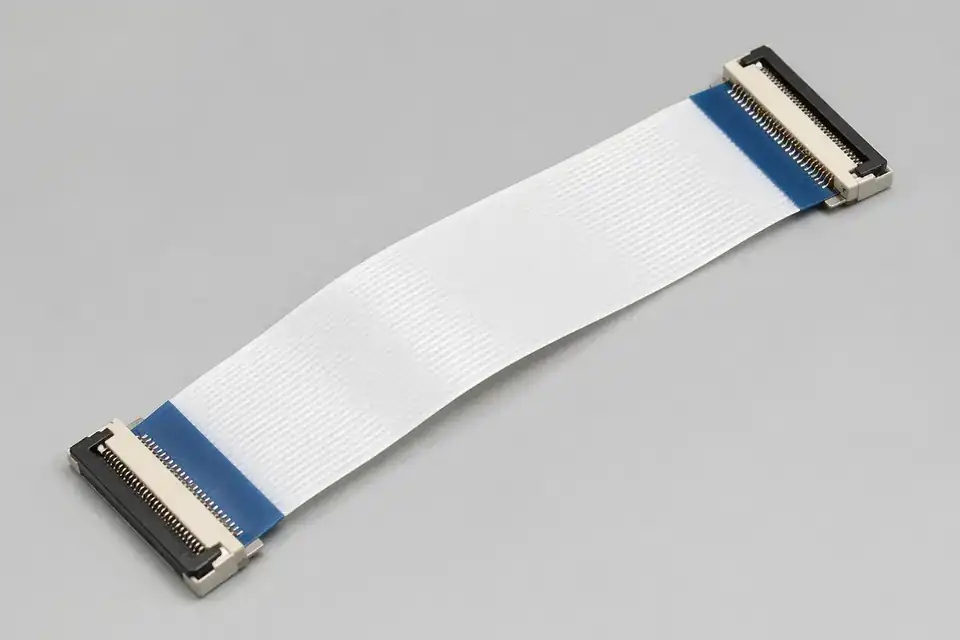
ZIF connector detail
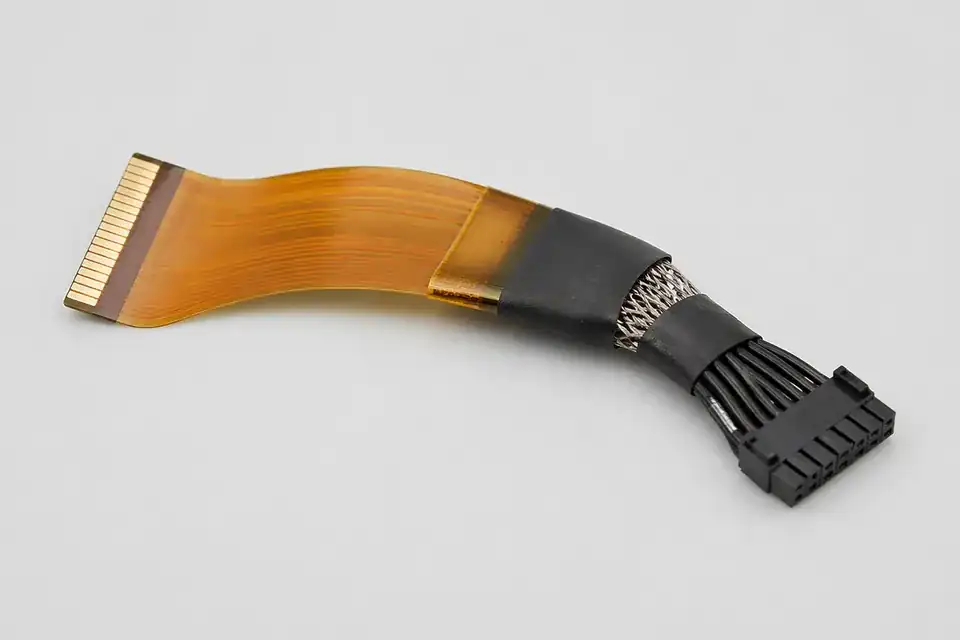
FPC-to-wire transition structure
Organize connector, pin-count, pitch, routing-space, and release requirements before narrowing the manufacturing scope.
Specification
REF-01For narrow-pitch flexible interconnect programs that depend on tighter pitch control and layout fit.
Specification
REF-02For flexible interconnect programs where 0.5mm or 1.0mm pitch choice drives layout, connector fit, and inspection planning.
Specification
REF-03For constrained-space projects that need controlled cable folding and routing geometry.
Specification
REF-04For hybrid builds that transition from FPC pads to discrete wires and need reinforcement, strain relief, and release evidence.
Use device type, installed position, and validation focus to choose the matching application page.
Application
REF-01For small devices that need flexible internal interconnects in tighter layouts.
Application
REF-02For repeated-bend and hinge-adjacent routing programs around displays and fold zones.
Engineering review first separates FFC, etched FPC, and FPC-to-wire requirements. It then fixes both mating interfaces, conductor geometry, contact orientation, reinforcement, fold or bend zones, shielding, and transition strain relief in one released drawing.
Choose FFC, etched FPC, or FPC-to-wire from the required circuit geometry, routing freedom, mating method, and transition needs before sampling.
Review complete connector references, pitch, conductor count, contact orientation, exposed contacts, route, fold radii, stiffeners, shielding, and transition strain relief against the device layout.
Freeze connector references, dimensions, structure, stiffener or tape requirements, and assembly notes in a controlled drawing so the review basis, sample version, and released production build stay tied to the same file set.
Move into production only after the drawing, mating-fit sample, fold or installation check, and any project-defined flex validation are approved.
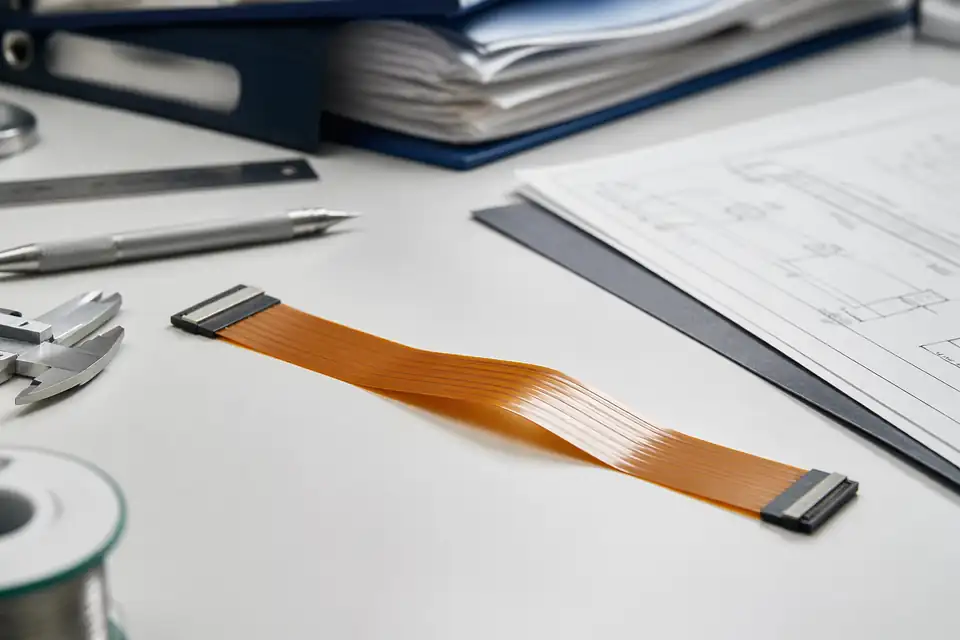
FFC / FPC engineering drawing set
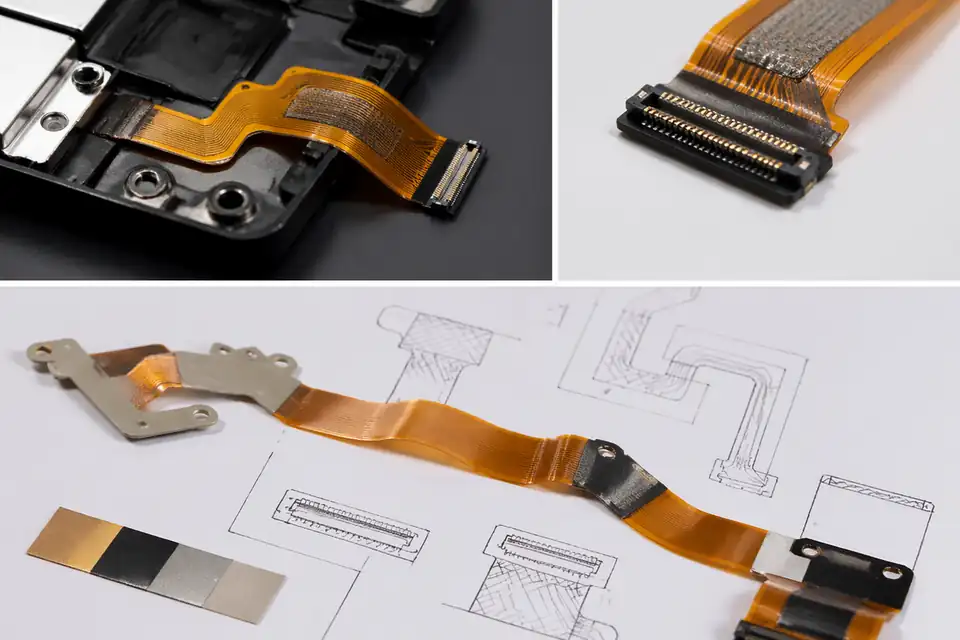
Pitch and reinforcement structure review
Quality evidence should show that pitch, conductor geometry, contacts, stiffeners, folds, shielding, and connector engagement correspond to the released drawing. Reliability cannot be inferred from an FFC or FPC label; flex or environmental claims apply only to the agreed construction, fixture, method, cycle profile, sample scope, and device validation.
Common risks in flexible-interconnect work are not limited to continuity. They include pitch variation, stiffener drift, outlet-direction deviation, and structural instability across repeated builds.
Continuity, dimensions, contact orientation, reinforcement, and connector engagement establish the baseline. Flex, pull, thermal, or other reliability checks require agreed fixtures, motion or load profiles, sample quantities, and acceptance limits.
The relationship between controlled drawings, inspection records, and sample definition is what determines whether batch production stays stable and whether repeat orders become easier to support.
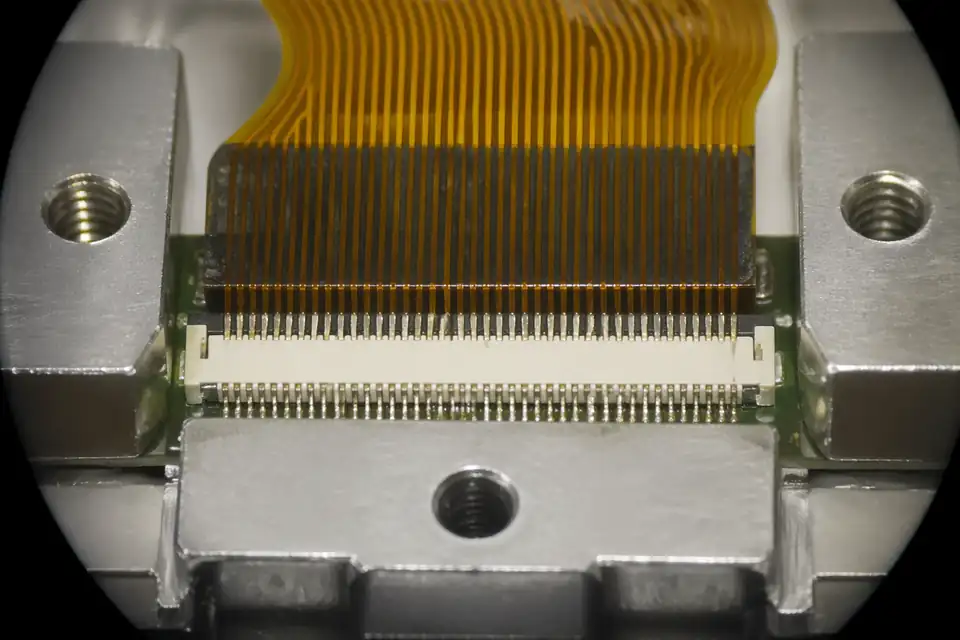
Fine-pitch inspection detail
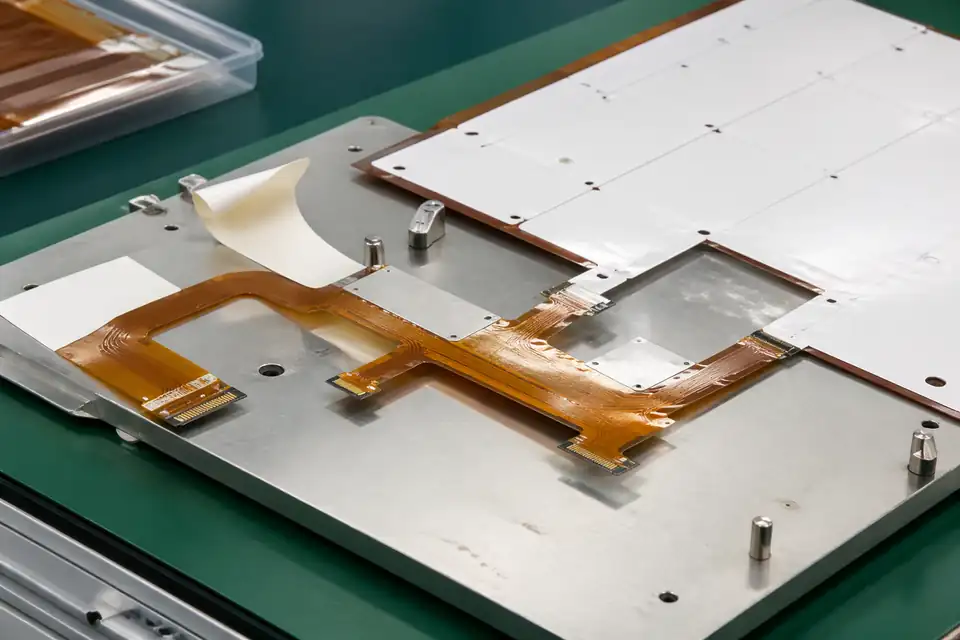
Released-structure record
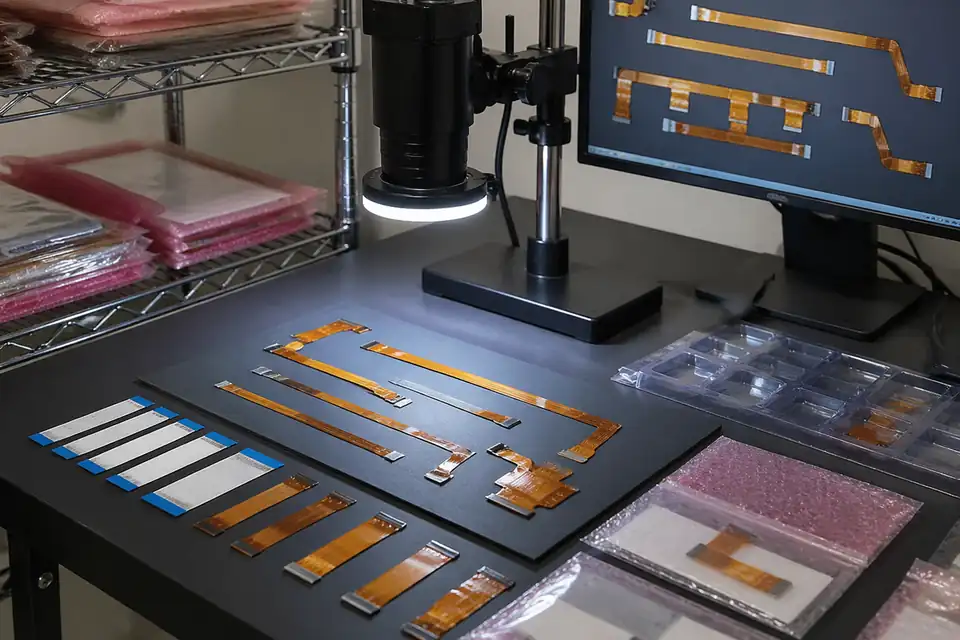
Batch verification reference
Choose the next page from the required construction: a straight flexible route, a shaped circuit with controlled folds, or a transition between an FPC section and discrete wires.
Most flexible-interconnect programs move through scope definition, structure review, sample validation, and controlled production. When the required inputs, review gates, and release points are defined early, sourcing and engineering teams can move faster internally.
Start from pitch, structure direction, connector references, application layout, and expected quantity so technical review begins from a clear scope.
Review routing, pitch, connector system, reinforcement design, and manufacturability before the project moves into sample build or production.
Form and install a representative sample, then verify tail geometry, contact face, connector fit, reinforcement, clearances, and static or dynamic route behavior defined by the project.
Move into controlled production and shipment support once the structure direction, drawing logic, and validation path are clear.