Specification
REF-0130-Pin eDP Cable Assemblies
For common laptop and compact-display programs that need a clear 30-pin internal display interconnect route.
30-PinDisplay100 Ohm
View Specification PageTechnical Reference · EDP-CABLE-ASSEMBLIES
Embedded Display Interface Review
Release the harness from the exact panel option, board interface, pin map, installed route, and validation plan
This pillar covers the manufacturer-level eDP request. Start with the released panel and source-board documents, then freeze the complete mating pair, contact map, active and reserved functions, cable construction, shielding and grounding, installed geometry, restraint, and device test configuration. Use the 30-pin, 40-pin, or I-PEX 20455 child page only after that narrower boundary is known.
Quick Links
QUICK ACCESSUse the project interface, structure, and application requirements to move into the right content.
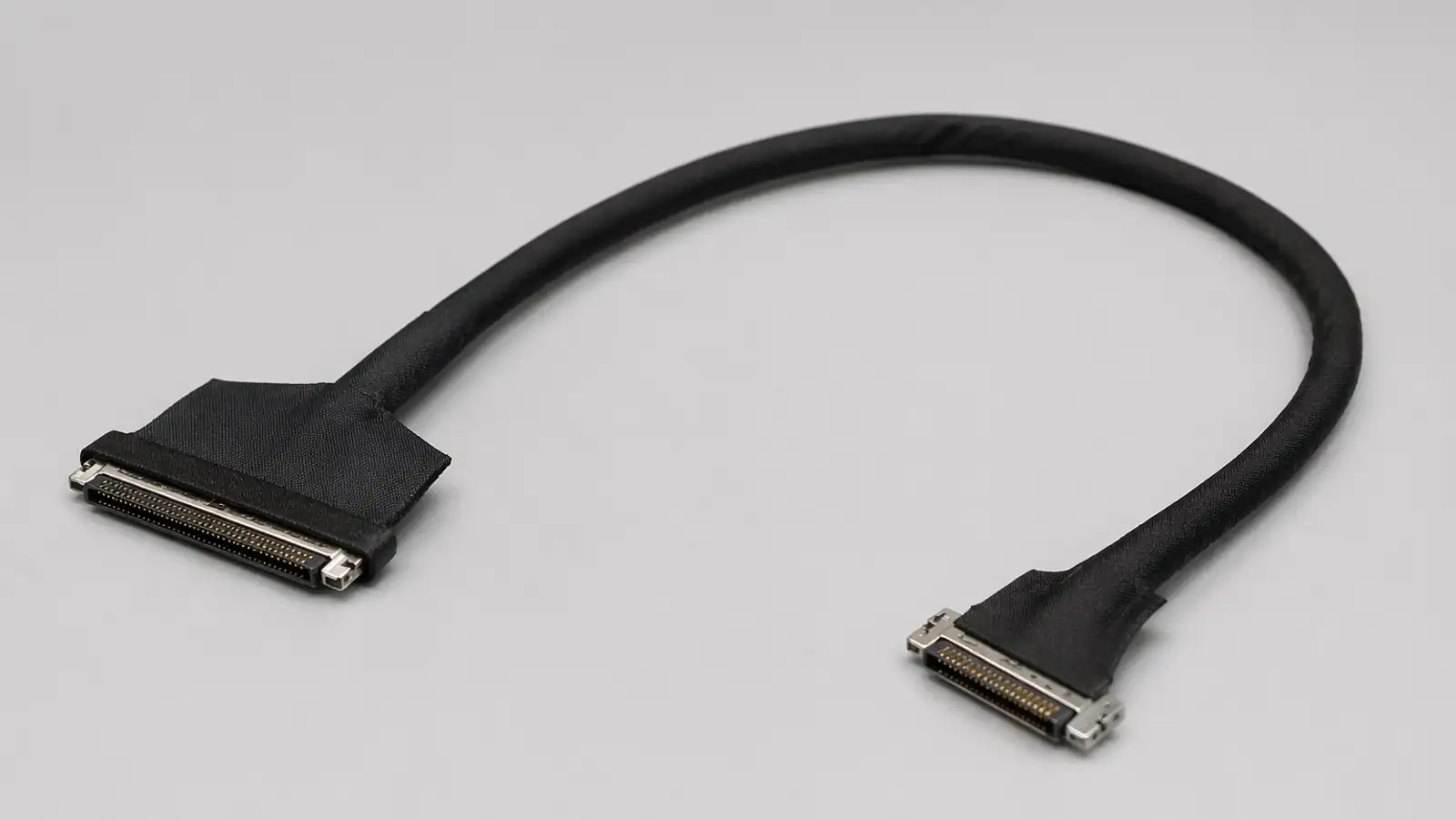
Start with the panel and mainboard interface documents, then identify the exact mating connectors, pinout, route, shielding and grounding, and system validation plan. Those inputs determine whether a pin-count page, connector page, or device page is the useful next step.
| 01 | Selection Starting Point | 30-pin and 40-pin are common sourcing directions; the released panel interface decides the usable definition |
| 02 | Typical Applications | Laptop and tablet platforms, industrial displays, and medical displays with a released eDP interface |
| 03 | Connector Systems | Complete board-side and panel-side part numbers, mating direction, lock, and tail-exit orientation |
| 04 | Signal Focus | Released lane assignment, auxiliary and control conductors, power conductors, grounds, and any reserved pins |
| 05 | Electrical Target | Differential target, tolerance, reference plane, fixture or method, and acceptance scope defined by the project |
| 06 | Cable Structure | Cable construction, branch or fan-out, bend zones, retention, and strain relief based on the installed route |
| 07 | Shielding Options | Coverage, grounding, and termination selected from the system EMI plan; final EMC performance requires system-level validation |
| 08 | Length | Released finished length and tolerance based on device layout, bend zones, and connector exits |
| 09 | Verification | Pin-map, continuity, workmanship, and any fixture-dependent electrical checks defined by the released control plan |
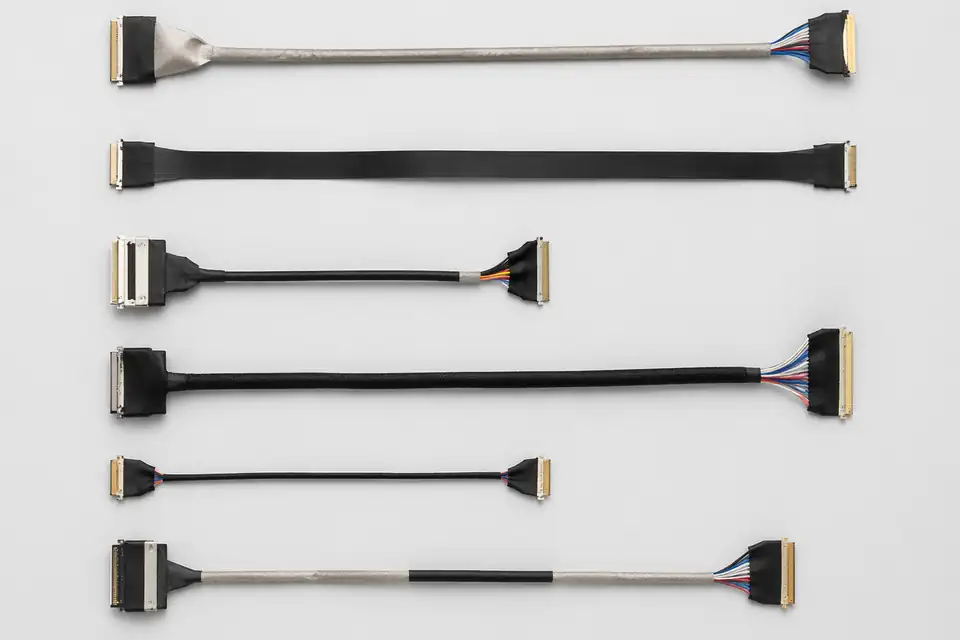
eDP connector-system detail
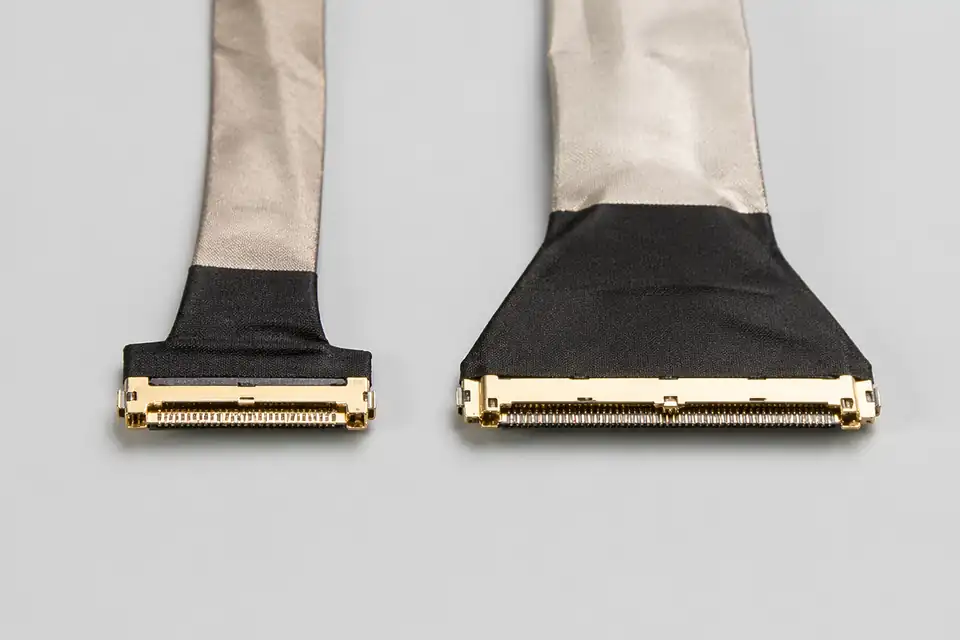
30-pin and 40-pin assembly comparison
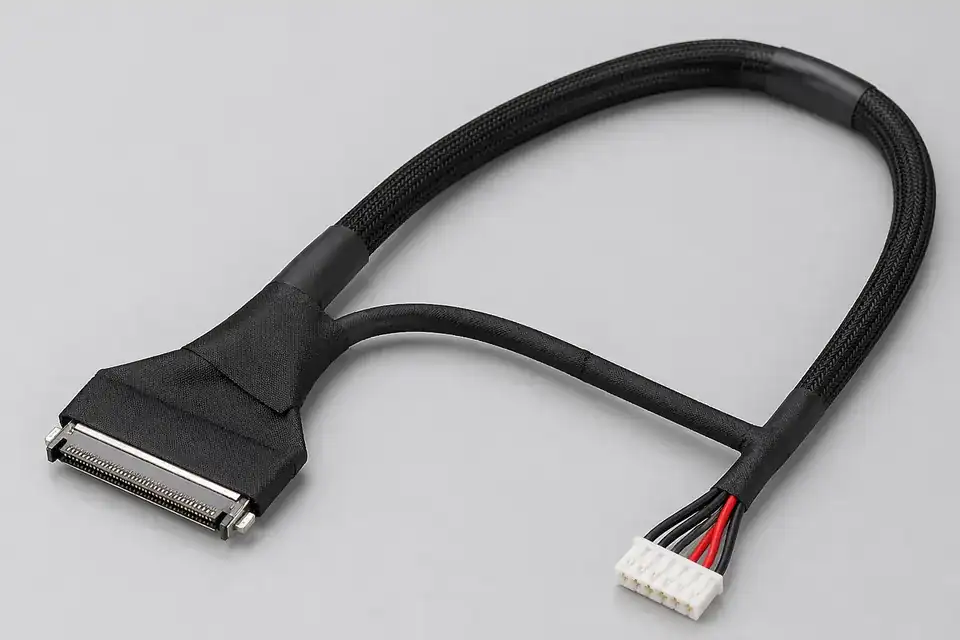
Display-link routing and shielding detail
Organize connector, pin-count, pitch, routing-space, and release requirements before narrowing the manufacturing scope.
Specification
REF-01For common laptop and compact-display programs that need a clear 30-pin internal display interconnect route.
Specification
REF-02For higher-pin-count eDP projects where routing space, shielding control, and repeatable termination matter.
Specification
REF-03For projects that already know the connector family and need a tighter connector-matching review.
Use device type, installed position, and validation focus to choose the matching application page.
Application
REF-01For display-side wiring in medical equipment where stable structure, clear release logic, and validation support matter.
Application
REF-02For industrial monitor and module programs that prioritize shielding consistency and installation fit.
Application
REF-03For internal display harness programs that depend on predictable batch consistency and faster engineering confirmation.
Engineering review converts the panel and mainboard interfaces into one buildable definition. The complete connector pair, pinout, cable structure, installed route, strain relief, and validation boundary must agree before a sample can become the production reference.
Confirm the panel interface, complete connector part numbers, mating orientation, and released pinout before selecting a 30-pin, 40-pin, or connector-specific path.
Assess cable construction, shielding and grounding, finished length, bend zones, fixing points, and strain relief against the actual enclosure route.
Freeze dimensions, pin mapping, connector references, material notes, and process-critical requirements in a controlled drawing so the approved sample and the production build stay aligned.
Use the approved drawing, sample scope, and system validation criteria as the release basis before production.
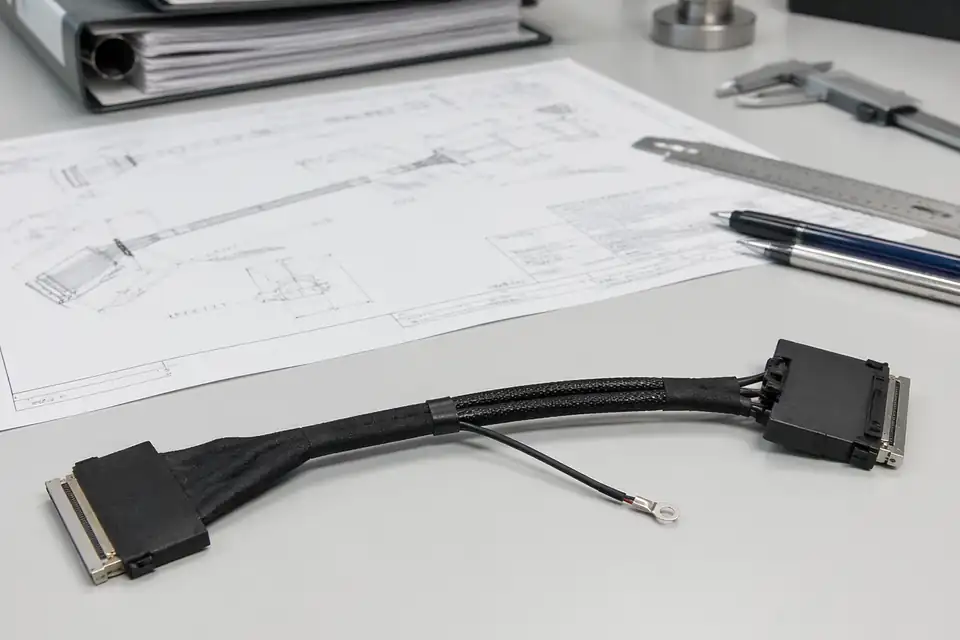
eDP engineering drawing set
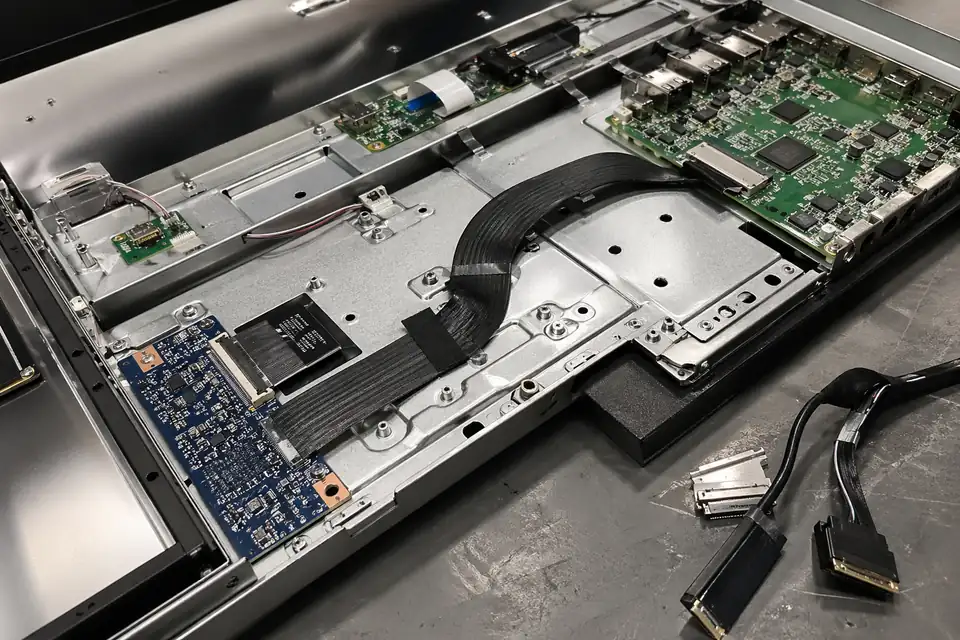
Connector mapping and installation-space review
Quality control should prove correspondence to the released interface rather than imply performance from an eDP or pin-count label. Inspection and test records need to identify the connector pair, pinout revision, cable construction, and applicable sample or batch scope.
The main risks in eDP work are not abstract defect rates, but wrong pin mapping, unstable shielding execution, jacket damage, weak termination repeatability, and stress concentrated around bend-critical zones.
Pin-map, continuity, and visual workmanship establish the assembly baseline. Any impedance or signal-related check needs an agreed target, method, fixture, reference plane, limits, and sample scope tied to the released structure.
FAIR, OQC reports, test reports, and conformance records matter because they tie each shipped batch back to the approved drawing, sample definition, and production requirements.
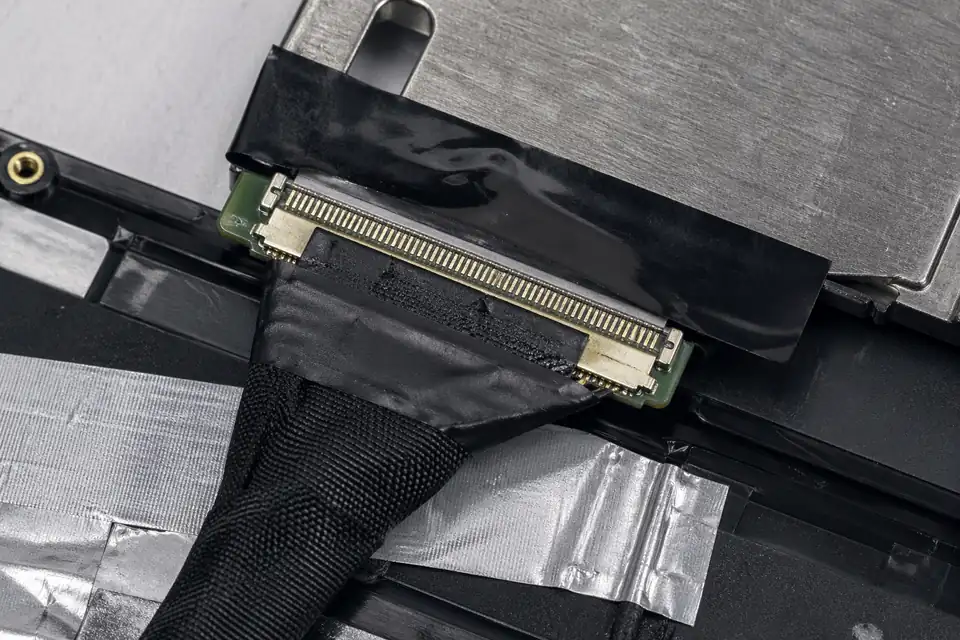
Termination and shielding workmanship detail
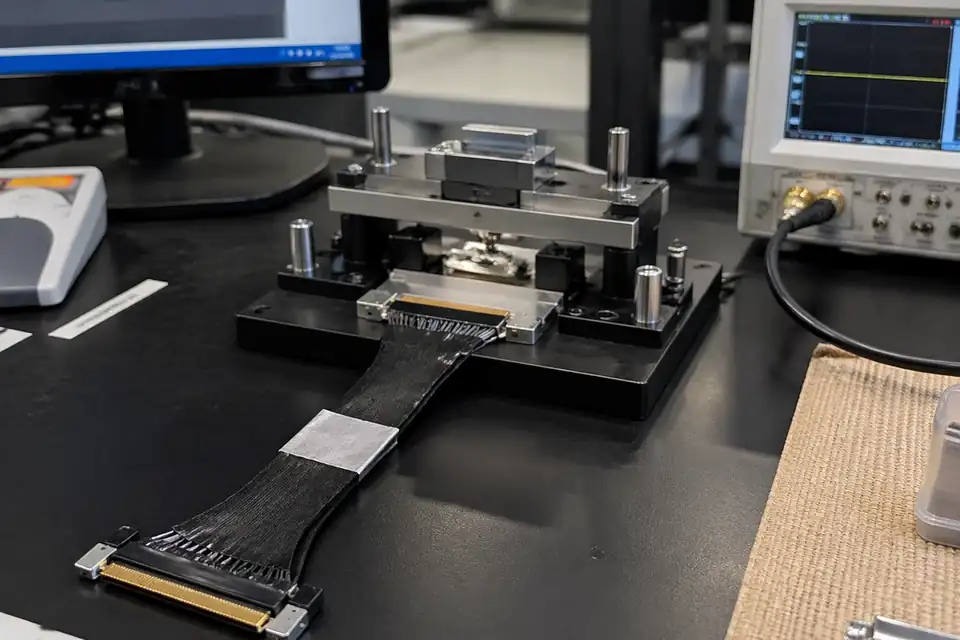
Inspection record and impedance-check reference
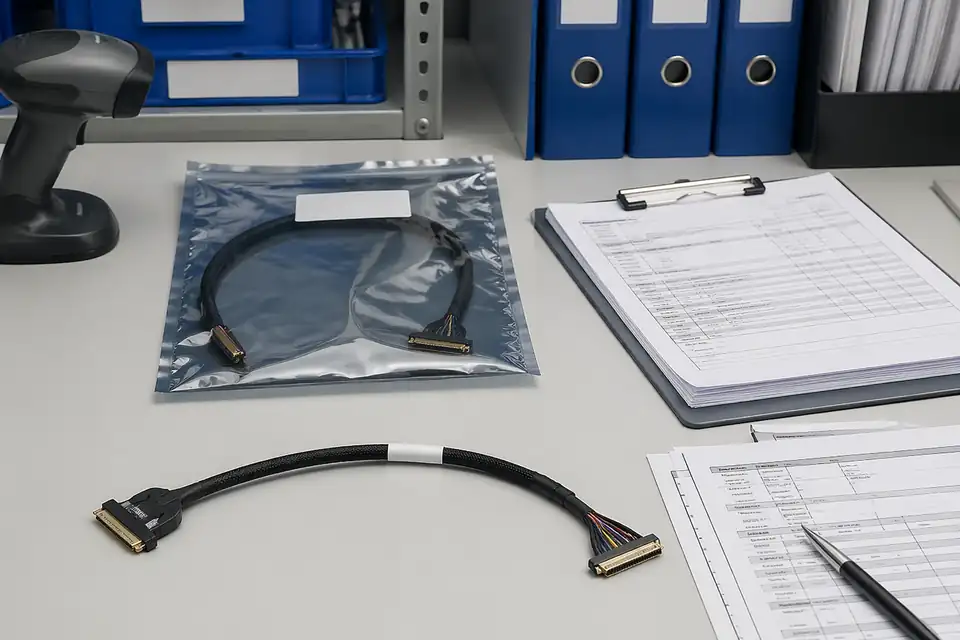
Released-sample traceability record
Choose the next review path from what is already fixed: the panel platform, an existing assembly that must be replaced, or a device environment with additional routing and validation controls.
Most eDP projects move through inquiry, engineering review, sample validation, and controlled production. The clearer that path is, the easier it becomes for sourcing and engineering teams to move the project forward.
Start with connector model, pin definition, target length, application context, and expected quantity so technical review begins from a clear scope.
Review interface logic, structure, routing environment, shielding expectations, and manufacturability before the project moves into sample build or production.
Use drawing confirmation, sample build, and project-side review to confirm that the structure is valid before production volume is approved.
Move into controlled production, final inspection, and shipment support under the approved definition, with the relevant quality records tied back to the released build.