Specification
REF-01Ribbon IDC Configurations
For standard ribbon and discrete IDC assembly formats that need cleaner structure definition.
IDCRibbonConfiguration
View Specification PageTechnical Reference · IDC-CABLE-ASSEMBLIES
IDC Assembly Configuration Hub
Choose the topology first, then release the exact connector pair, pin map, orientation, route, and test program
This is the configuration hub for the IDC assembly family. It covers straight-through ribbon links, cross-over maps, multi-node daisy chains, and IDC-to-discrete breakouts before routing the project to a format-, pitch-, mapping-, or use-case-specific child page. The standard Ribbon IDC child owns two-ended ribbon construction detail; this hub owns the broader topology decision and the complete RFQ boundary.
Quick Links
QUICK ACCESSUse the project interface, structure, and application requirements to move into the right content.
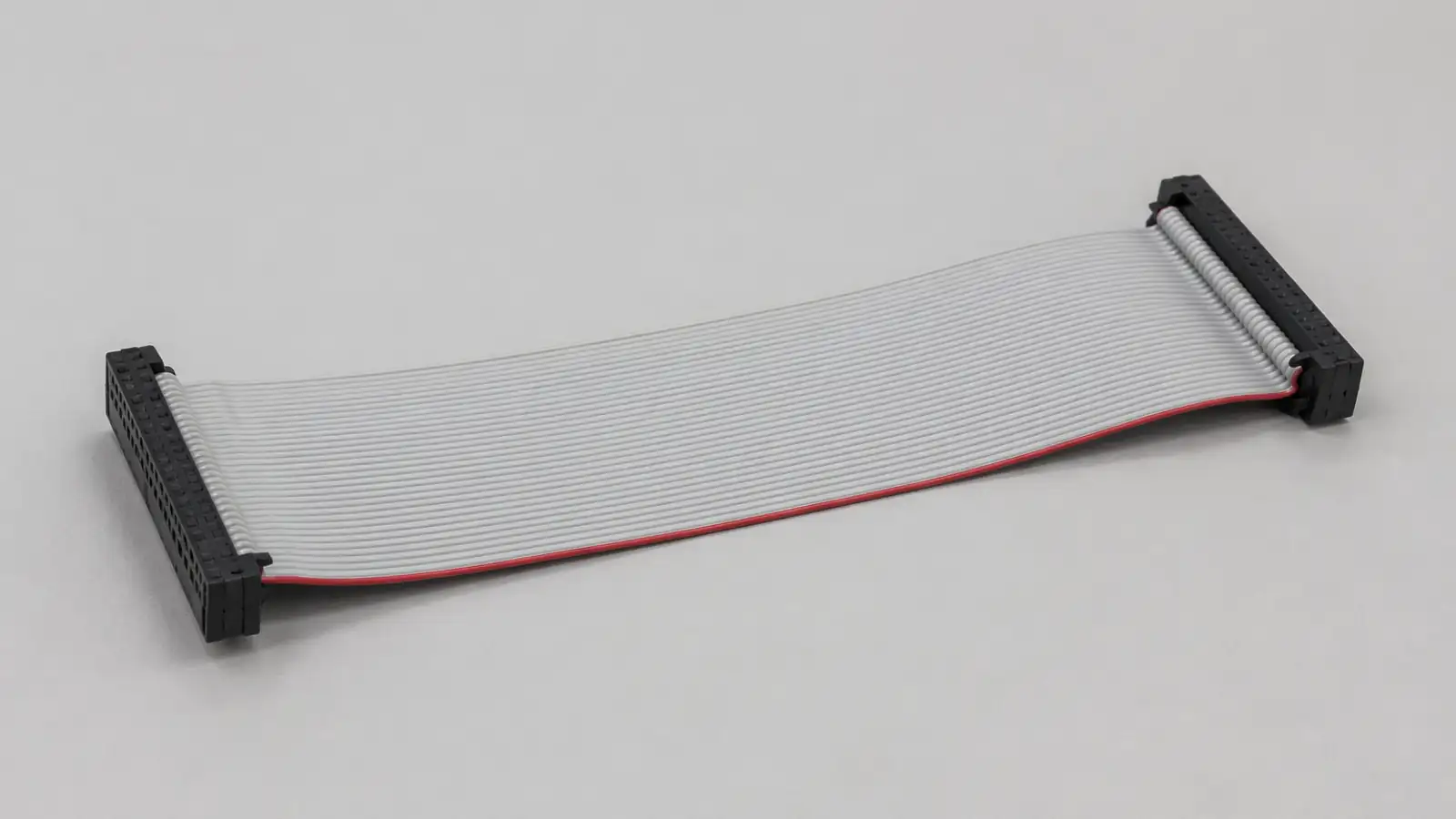
Start with the physical and electrical topology: a two-ended straight-through ribbon, a cross-over map, a daisy chain with several nodes, or an IDC-to-discrete breakout. Then confirm complete socket and mating-header part numbers; pitch references such as 1.27mm, 2.0mm, or 2.54mm do not establish compatibility by themselves. Every route still needs pin 1, viewing direction, cable exit, strain relief, conductor numbering, dimensions, and the released continuity definition.
| 01 | Page and Child Roles | This hub selects topology and RFQ path; Ribbon IDC owns standard ribbon format, Pitch Options owns connector spacing, and Custom Pin Mapping owns non-straight-through conductor maps |
| 02 | Pitch Options | Defined by the complete connector pair; 1.27mm, 2.0mm, and 2.54mm are common project references |
| 03 | Typical Structures | Straight-through, cross-over, daisy-chain, breakout, and other released conductor-map structures |
| 04 | Typical Applications | Industrial control systems, internal equipment wiring, telecom, and interface-extension projects |
| 05 | Pin Count Range | Defined by the complete connector part numbers, row count, keying, and released pin map |
| 06 | Shielding Direction | Shield construction and termination selected from the project grounding and system EMI plan |
| 07 | Customization | Finished length, cable exit, connector orientation, strain relief, conductor map, node spacing, and branch dimensions |
| 08 | Production Support | Drawing review, project-defined samples, installed-fit checks, controlled release, and revision-managed production |
| 09 | Verification | Pin-map and continuity program, orientation and workmanship checks, plus any pull or fit checks defined by method and sample scope |
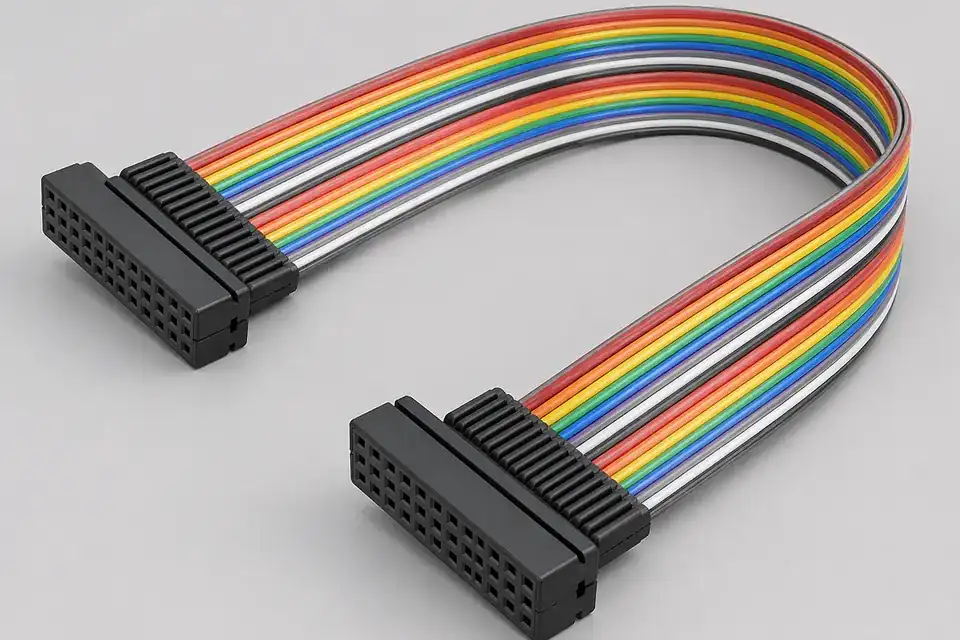
IDC ribbon finished assembly
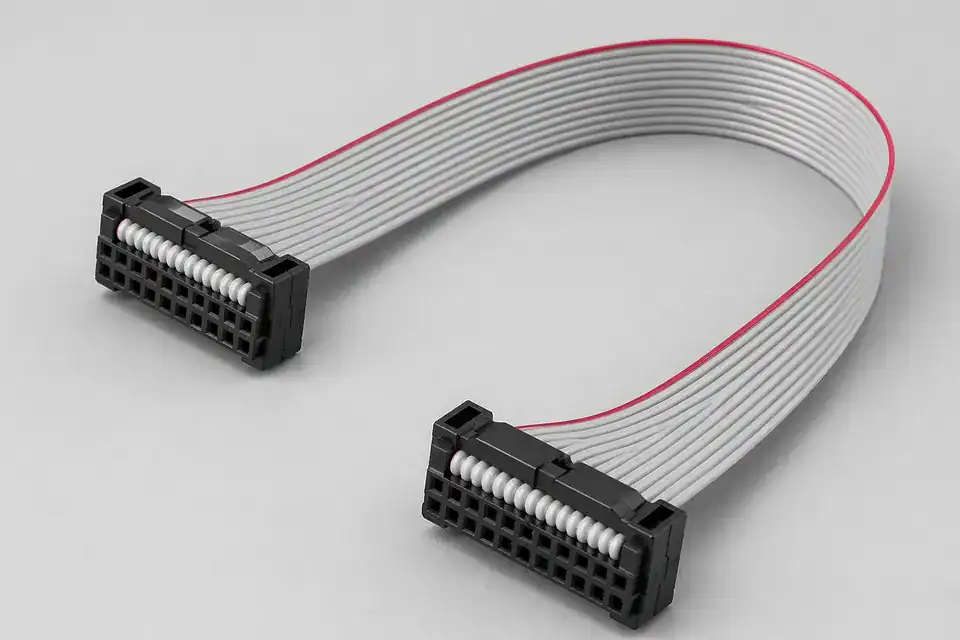
Pitch and connector-format detail
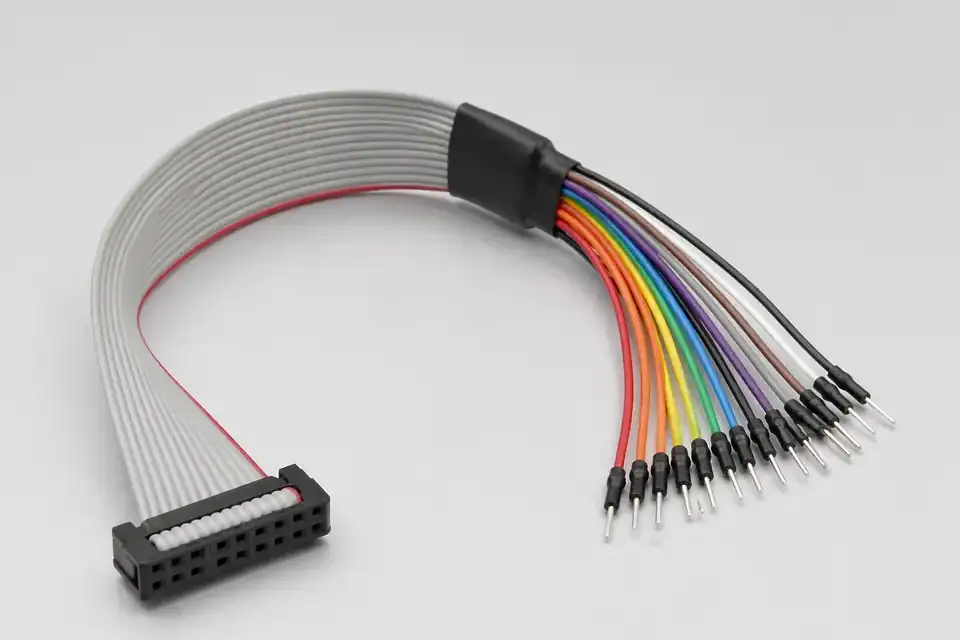
Multi-way harness structure
Organize connector, pin-count, pitch, routing-space, and release requirements before narrowing the manufacturing scope.
Specification
REF-01For standard ribbon and discrete IDC assembly formats that need cleaner structure definition.
Specification
REF-02For IDC RFQs that need 1.27mm, 2.0mm, or 2.54mm pitch selection tied to connector fit, cable format, and pin mapping.
Specification
REF-03For projects that need tighter control of pin mapping inside IDC harnesses.
Use device type, installed position, and validation focus to choose the matching application page.
Application
REF-01For cabinet, backplane, and industrial interconnect programs using IDC ribbon structures.
Application
REF-02For compact IDC-based interconnect systems in communications and interface-extension programs.
IDC engineering begins with the complete connector pair and an unambiguous conductor map. Pitch, pin 1, viewing direction, keying, cable exit, pressing setup, strain relief, route, and node or branch dimensions must remain tied to one released drawing.
Confirm complete socket and mating-header part numbers, pitch, row and pin count, keying, latch, strain relief, and cable exit before sampling.
Review viewing direction, pin 1, straight-through or custom conductor mapping, route and bend space, fixing, node spacing, branch order, and service access.
Freeze connector format, pitch, pin mapping, length, and key process notes in a controlled drawing so the review basis, sample version, and released build stay tied to the same file set.
Move into controlled production only after connector fit, pin-map and continuity checks, installed route, and the approved sample scope are confirmed.
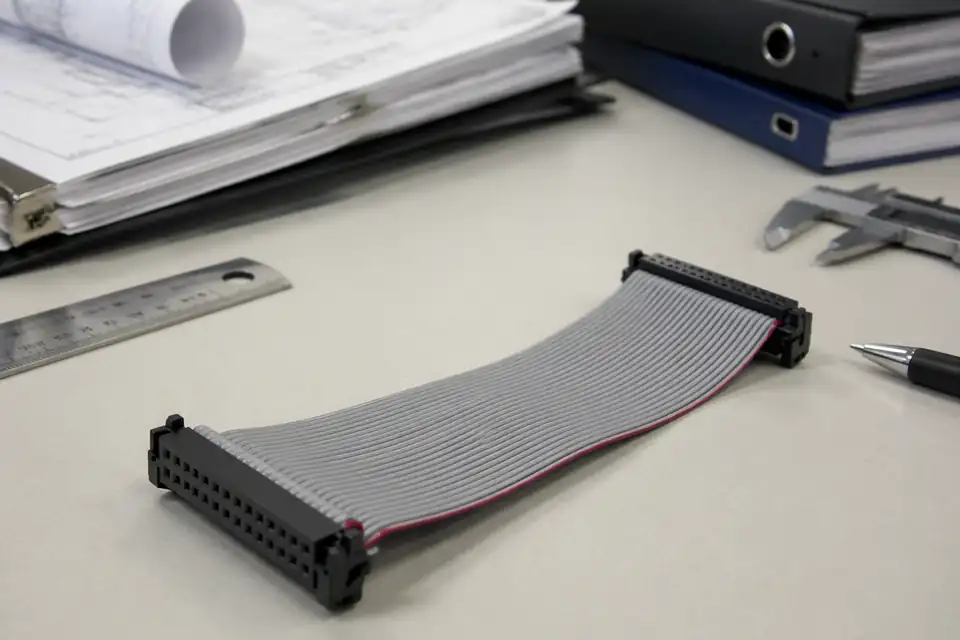
IDC engineering drawing set
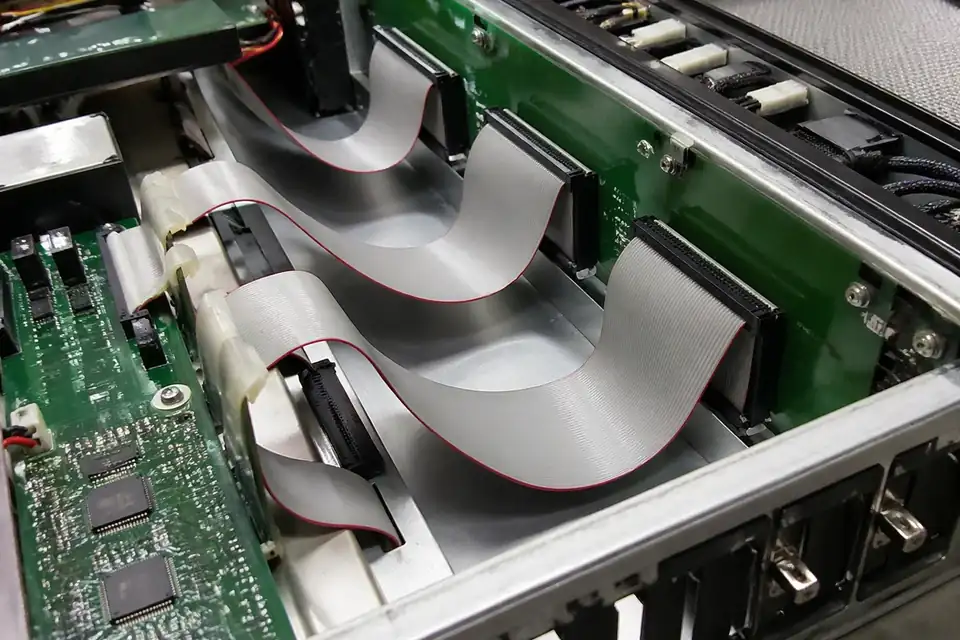
Ribbon routing or daisy-chain structure review
Quality evidence should show connector and tooling correspondence, pressing condition, orientation, pin map, strain relief, and route against the released drawing. Pull, retention, or other reliability results apply only to the agreed connector, ribbon, tooling, fixture, method, and sample plan.
Common risks in IDC work are not limited to continuity. They include pressing-depth variation, uneven force, unstable connector location, and batch-to-batch inconsistency.
Run the continuity program against the released conductor map and viewing direction. Connector seating, keying, strain relief, route fit, and any fixture-defined pull or retention checks follow the agreed control plan.
The relationship between sample definition, controlled drawings, inspection records, and batch release determines how well repeat orders and future issue tracing can be supported.
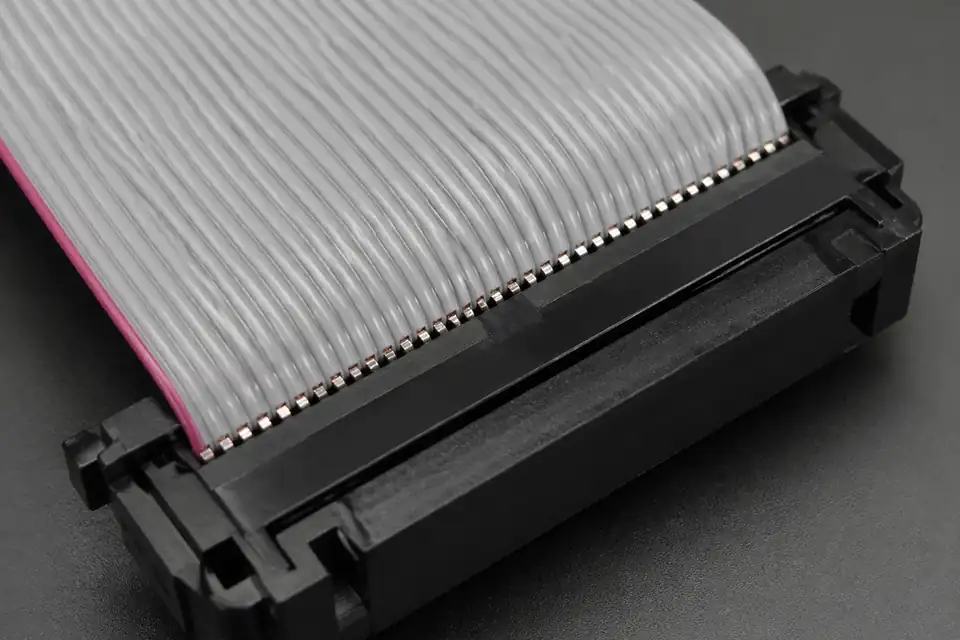
IDC pressing-quality detail
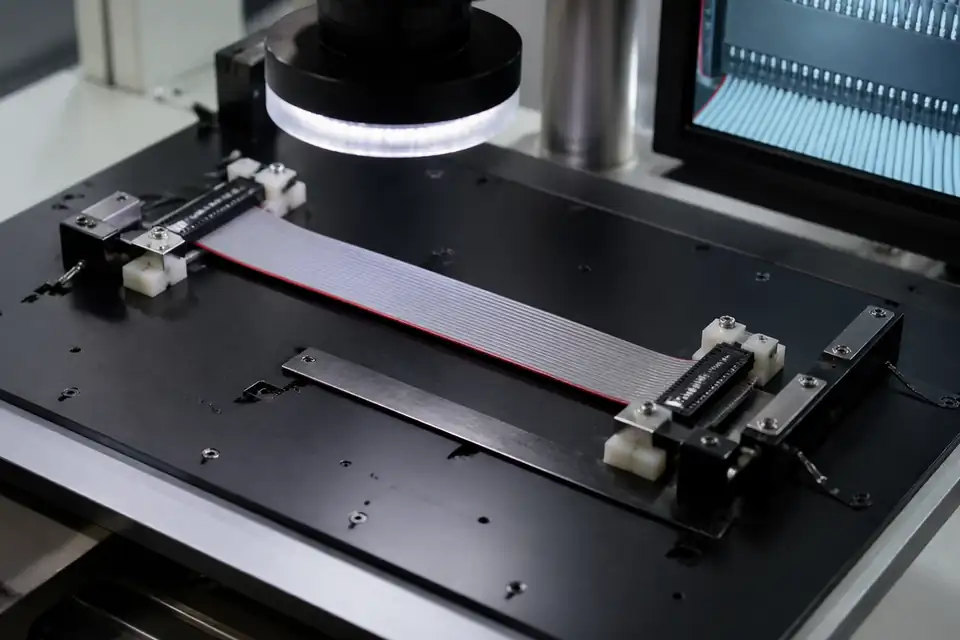
Pin-consistency inspection
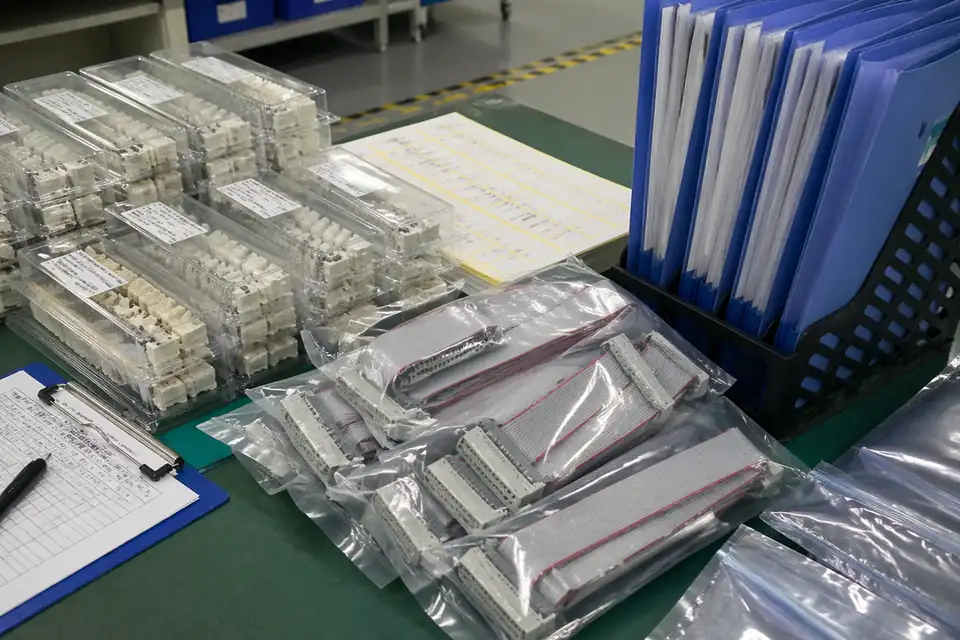
Batch-release record
Choose the next review path from the physical topology and conductor map. A specific child page should deepen one decision without duplicating the complete family overview.
Most IDC programs move through scope definition, engineering review, sample validation, and controlled production. When the required inputs, review gates, and release points are defined early, sourcing and engineering teams can move faster internally.
Start from pitch, connector format, pin count, application context, and expected quantity so review begins from a clear scope.
Review routing, flat-cable structure, assembly approach, and manufacturability before the project moves into sample build or production.
Approve the IDC sample only after point-to-point mapping, polarization, termination seating, mechanical dimensions, installed fit, and the project-specific electrical test all match the released records.
Run the released connector, ribbon, tooling, and tester configuration under controlled inspection, preserving lot identity, setup verification, electrical results, and shipment documentation.