Technical Reference · PORTABLE-MEDICAL
Portable Medical Interconnects
Custom Cable Assemblies for Portable Medical Devices
For equipment-side harnesses in handheld, mobile, and battery-powered medical devices
EDPcable supports equipment-side cable assemblies inside portable monitors, handheld diagnostic devices, mobile testing systems, and battery-powered medical modules. Confirm connector mapping, compact routing, storage path, fixing points, enclosure clearance, handling conditions, and the active device revision. Patient-contact lead sets remain outside this scope, and bend or handling life is evaluated only under customer-defined test conditions.
Quick Links
QUICK ACCESSStart with the sections closest to the project structure, interface requirements, and validation scope.
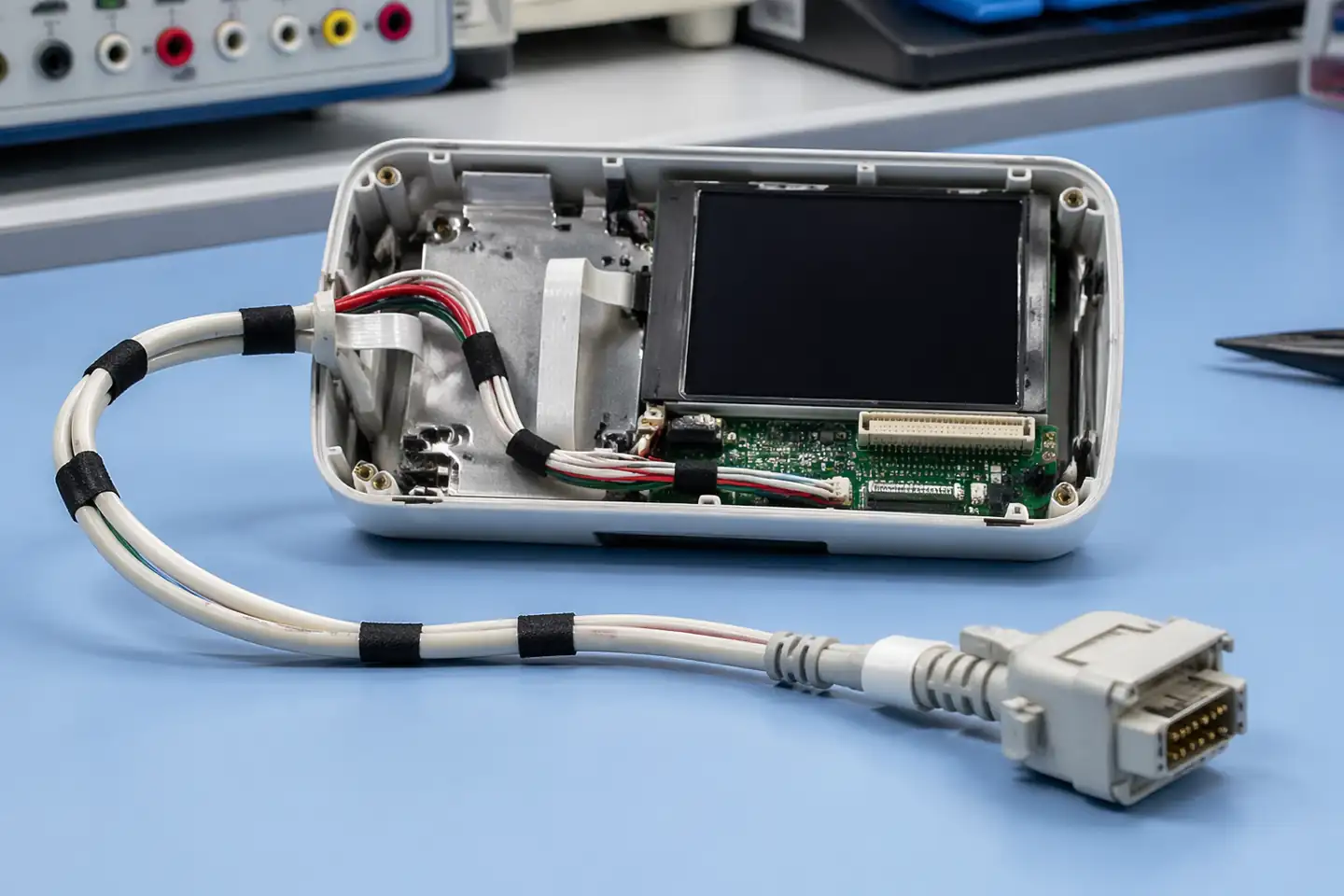
Portable Medical Cable Product Overview
Portable-medical cable programs work best when the device context is already clear and the next review can focus on connector mapping, route path, repeated-handling conditions, local fit, and version scope before sampling.
| NO | Item | Typical Range or Meaning |
|---|---|---|
| 01 | Typical Devices | Portable monitors, handheld diagnostic devices, mobile testing systems, compact medical modules |
| 02 | Common Structures | Compact cable assemblies, light branch harnesses, repeated-handling routes, flexible internal links |
| 03 | Key Inputs | Connector mapping, route path, repeated-use notes, installation limits, revision scope |
| 04 | Use Focus | Compact fit, repeated handling, storage path, replacement stability |
| 05 | Quality Focus | Batch consistency, file correspondence, long-run handling stability |
| 06 | Release Basis | Connector data, route notes, use conditions, and active version records |
Customer Pain Points
Portable-medical cable projects often sound straightforward once the product or route category is known. In real RFQ and sample work, delays usually appear in route fit, structure judgement, and revision control rather than in the label alone.
| NO | Customer Pain Point | Typical Risk | What Needs Early Confirmation |
|---|---|---|---|
| 01 | Product design issues | The connector path, structure, or local fit still does not truly match the portable-medical cable build, so the sample becomes only a temporary reference | Connector references, route path, structure boundaries, and installation space |
| 02 | Product quality issues | Execution, local fit, or batch consistency drifts across repeated portable-medical cable builds | Structure definition, quality focus, and revision linkage |
| 03 | Lead-time issues | Missing inputs force repeated sample loops and slow quotation, release, and batch timing | Connector data, route notes, project stage, quantity, and timing |
| 04 | After-sales issues | It becomes difficult to tell whether the issue came from structure, revision, or installed conditions | Drawing files, sample approval records, batch labels, and shipment records |
| 05 | Complaint-handling issues | Revision boundaries are unclear, so issue tracing stays slow | Revision confirmation, batch correspondence, and inspection records |
| 06 | Pricing issues | A broad request turns into repeated pricing changes once real fit constraints surface | Structure complexity, material expectations, quantity, and delivery boundaries |
Product Applications
Portable-medical harnesses in this scope are equipment-side assemblies. Compact routing, storage path, fixing points, handling conditions, enclosure limits, and revision boundaries define the release.
| NO | Application Scene | Scene Focus | Typical Concerns |
|---|---|---|---|
| 01 | Portable-monitor systems | compact route stability under repeated movement and handling | fixing method, local fit, and replacement boundaries |
| 02 | Handheld diagnostic devices | lighter structure with tighter route discipline | connector direction, bend zones, and handling notes |
| 03 | Mobile testing systems | repeatable batch execution with clear released scope | file correspondence, batch records, and after-sales tracing |
| 04 | Battery-powered medical modules | compact internal execution around tighter housings | route allowance, storage path, and structure limits |
| 05 | Replacement and upgrade programs | matching legacy portable harnesses to the active platform | usable scope, sample confirmation, and issue tracing |
Application Scene Visuals
IMAGES · 05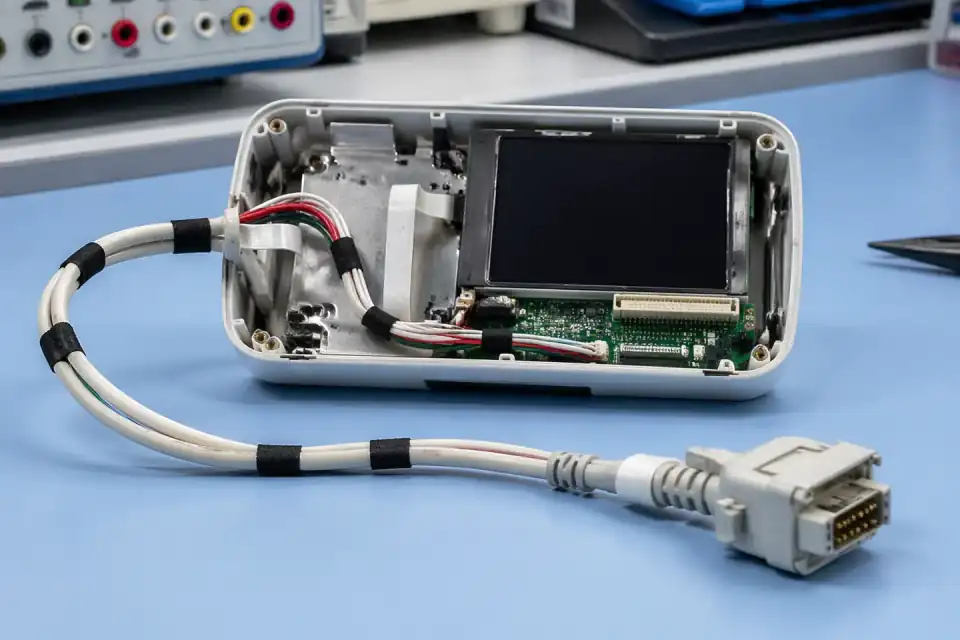
Portable-medical cable assembly inside a handheld medical monitor
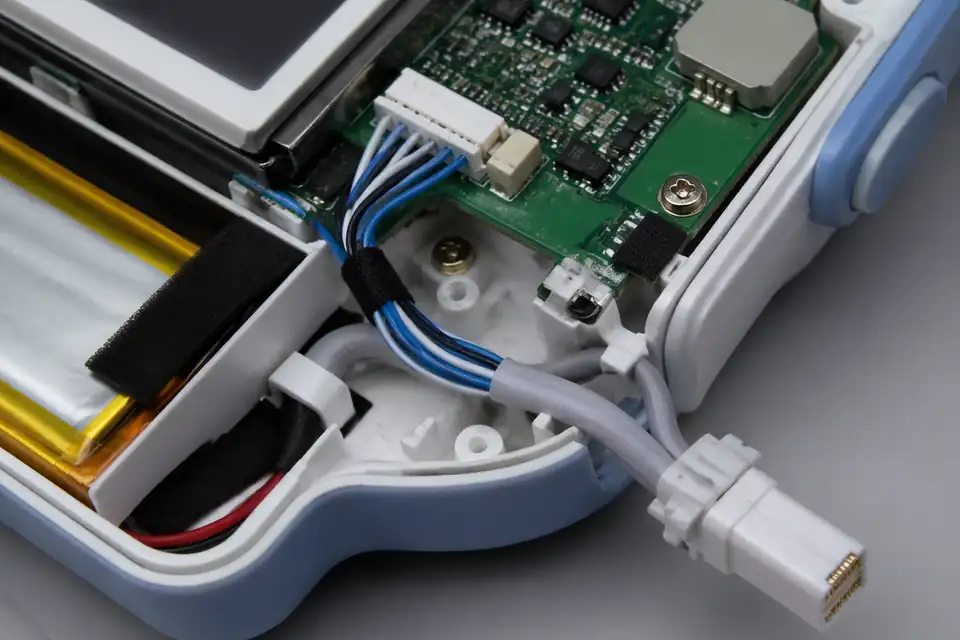
Portable-medical cable assembly inside a portable medical monitor with compact routing
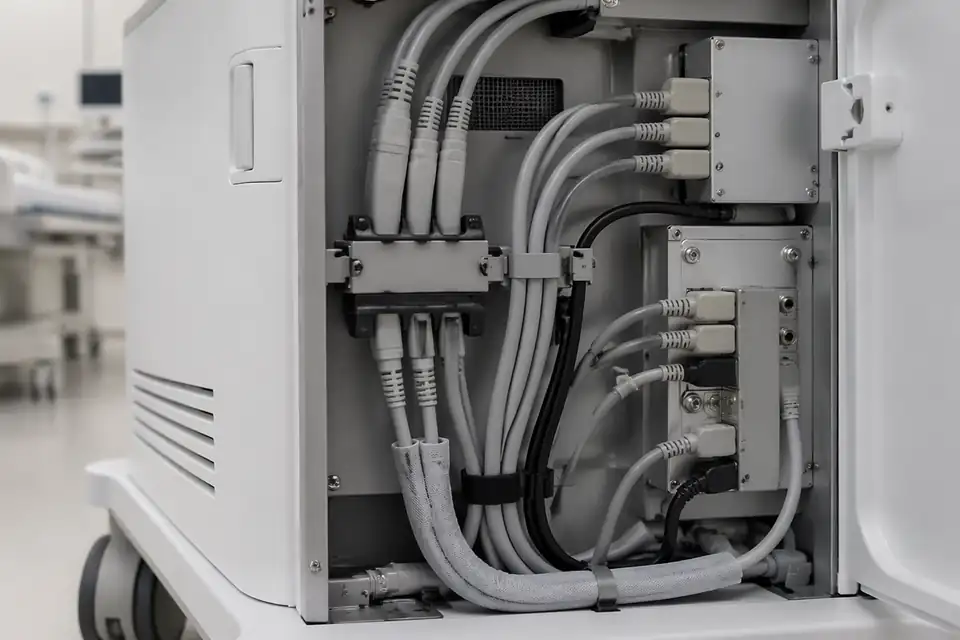
Portable-medical cable assembly inside a mobile diagnostic cart unit
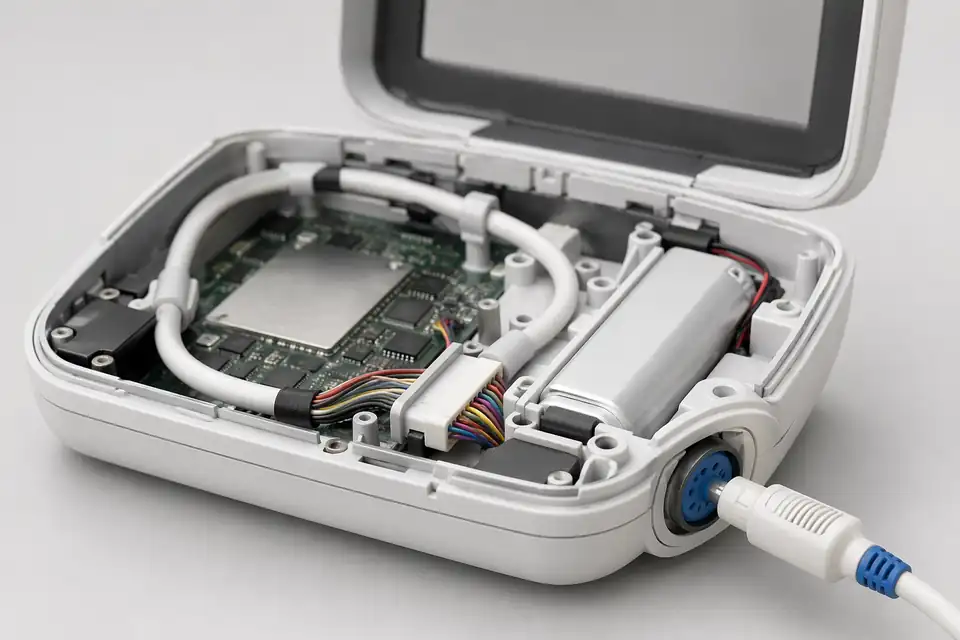
Portable-medical cable assembly inside a portable sensing device
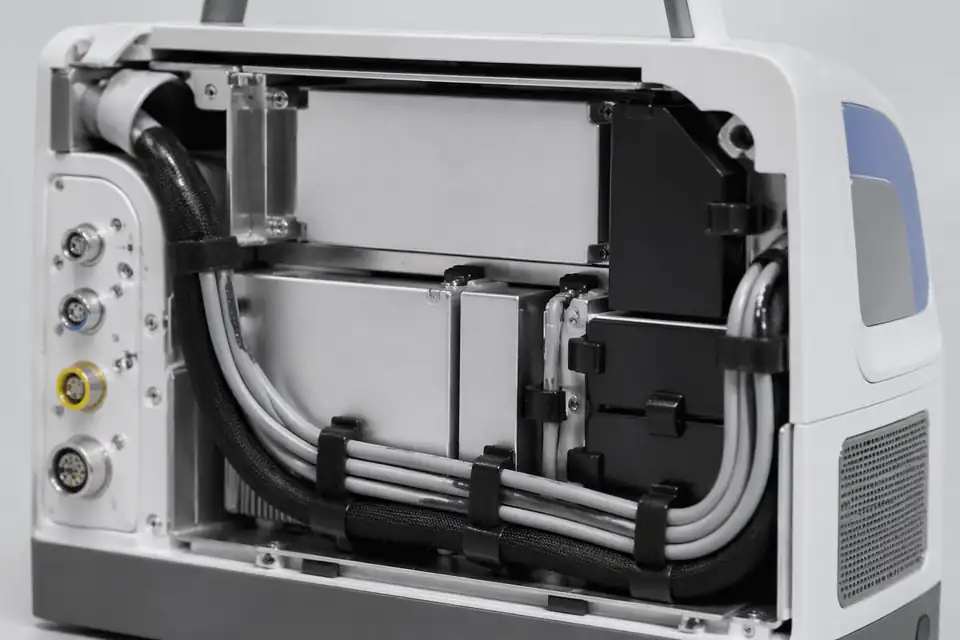
Portable-medical cable assembly inside a transport-ready medical electronics module
Portable Medical Device Harness Design Definition Matrix
Portable equipment adds storage, carrying, compact routing, and repeated handling conditions to the internal harness definition. Flex life and environmental suitability are valid only for the released BOM and customer-defined use simulation.
| NO | Portable-device input | Harness definition decision | Required project evidence |
|---|---|---|---|
| 01 | Deployed and stored route states | Describe the cable path during use, charging, transport, storage, service, and enclosure closure, including where the route changes shape. | Customer route views or physical mockups representing each approved equipment state. |
| 02 | Compact envelope and pinch zones | Set local height, width, bend transition, free length, fixing points, and no-contact regions around batteries, covers, hinges, and fasteners. | Dimensioned harness layout aligned with enclosure tolerance and assembly sequence. |
| 03 | Connector locking and user handling | Select exact mating parts and define latch access, insertion direction, strain support, service disconnect, and any externally handled interface. | Component drawings plus customer-approved mating and service requirements. |
| 04 | Circuit and power allocation | Map battery, charging, sensor, display, communication, and control circuits with conductor construction and protection inputs supplied by the device design. | Electrical interface schedule owned by the portable equipment manufacturer. |
| 05 | Repeated-motion requirement | Define moving segment, fixture, bend radius, travel, speed, cycle target, load, environment, monitored circuits, and failure criterion as one test condition. | Customer-approved motion specification tied to the exact cable construction and route. |
| 06 | Cleaning, storage, and transport exposure | Identify agents, temperatures, humidity, UV, abrasion, compression, and storage geometry that require material or label evaluation for the device program. | Exposure profile and acceptance criteria issued by the legal manufacturer. |
| 07 | Replacement and revision identity | Control device model, harness part number, connector set, branch option, label, firmware-related interface, and approved alternate in the replacement definition. | Service identification matrix linked to the released equipment configuration. |
First-Party Engineering References
- ISO 14971:2019 medical-device risk management
The portable device risk file defines hazards and controls associated with handling, storage, battery circuits, misconnections, and foreseeable use; the harness implements only allocated requirements.
- IEC 60601-1 general medical electrical equipment requirements
Any basic-safety or essential-performance requirement is assessed on the complete portable equipment and translated into cable specifications by the responsible design organization.
Portable Medical Device Harness Failure-Mode Review
Portable use can expose the harness to changing route geometry and frequent handling, but no durability number is assumed. Each control is limited to the specified device state and validation fixture.
| NO | Portable-route failure | Harness-level control | Device-owner decision |
|---|---|---|---|
| 01 | Enclosure closure pinches or abrades a conductor bundle | Mark keep-out zones, fixing features, local protection, and inspection points from the actual closing sequence and worst-case dimensional stack. | The customer verifies enclosure assembly and post-closure device operation across production tolerances. |
| 02 | Repeated handling bends the cable at an uncontrolled connector exit | Add route support and define the moving length, then test only the agreed radius, motion, load, cycles, and monitored circuits. | Service-life suitability is determined by the equipment program from representative use and risk evidence. |
| 03 | Mating interface releases or is damaged during transport or service | Review latch engagement, connector access, strain direction, support, and any customer-specified retention check on the selected component pair. | Transport and user handling assumptions belong to the complete-device verification plan. |
| 04 | Cleaning or storage exposure changes jacket, marking, or adhesive condition | Evaluate the released material set under the named agent and storage profile, using predefined visual, dimensional, or functional acceptance criteria. | Compatibility conclusions apply only to the tested exposure and do not establish biocompatibility. |
| 05 | Replacement harness matches the enclosure but carries a different circuit revision | Use model-specific identifiers, controlled labels, keyed interfaces, configuration records, and full mapping test for each released service variant. | The device manufacturer approves interchangeability and service instructions. |
Portable Medical Device Harness Verification Plan
Verify both static fit and the explicitly defined handling condition using representative equipment geometry. Evidence closes the harness release only; finished-device safety and performance testing remains separate.
| NO | Verification focus | Defined method and criteria | Release record |
|---|---|---|---|
| 01 | Circuit mapping and polarity | Test all power, battery, sensor, display, and control endpoints against the device-specific schedule, including polarity-sensitive and intentionally open positions. | Mapping result identified to portable device model and harness revision. |
| 02 | Enclosure fit in use and storage states | Install a first article in representative hardware and inspect clearance, cover closure, battery proximity, fixing, connector access, and stored-route shape. | Fit-review report naming equipment hardware and dimensional baseline. |
| 03 | Motion-zone endurance | Run the approved fixture with specified radius, travel, speed, cycles, load, environment, monitoring, and post-test inspection on the released construction. | Motion-test report restricted to the sample BOM and tested route condition. |
| 04 | Connector engagement and support | Verify mating, latch condition, insertion orientation, local strain support, and any customer-defined retention value using the exact connector pair. | Mating inspection and mechanical sample evidence with component references. |
| 05 | Environmental or cleaning exposure | Apply only the approved profile, then assess specified material, marking, dimension, mapping, or electrical characteristics against predeclared limits. | Exposure record documenting agent, duration, conditions, samples, and result. |
| 06 | Service-version traceability | Reconcile replacement identifier, mapping, connector set, optional branches, materials, drawing, and approval before a service configuration is released. | Configuration and first-article package suitable for customer service control. |
Engineering Capability
Portable-device harness review ties connector mapping, route and storage path, fixing points, enclosure clearance, handling conditions, and the active device revision to one released definition.
Engineering Capability
Review route path, connector references, and local fit together for the portable-medical cable build.
Quality and Verification Highlights
Watch local-fit zones, connector exits, and route transitions specific to portable-medical cable installs.
Evidence Chain
Controlled route and handling definition
Tie connector references, mapping, route and storage path, fixing points, handling conditions, and the active device revision to one released drawing.
Installed-use and enclosure-fit record
Record the approved enclosure fit, storage path, local bends, and customer-defined handling test conditions for the portable device.
Portable-device sample and batch correspondence
Keep sample approval, project-defined test results, batch labels, and shipment records linked to the same portable-device revision.
Files and Batch Support
Portable-medical cable work has its own document layer around route and fitting boundaries. Cross-family file control, batch traceability, and certification practice are summarised in the Related Capability Pages.
Portable-medical cable route and fitting-boundary records
Capture the route path, local fit, and installation-space limits that are specific to the portable-medical cable build so later structural differences can be traced back to the right layer of change.
Certifications / Records Visuals
IMAGES · 04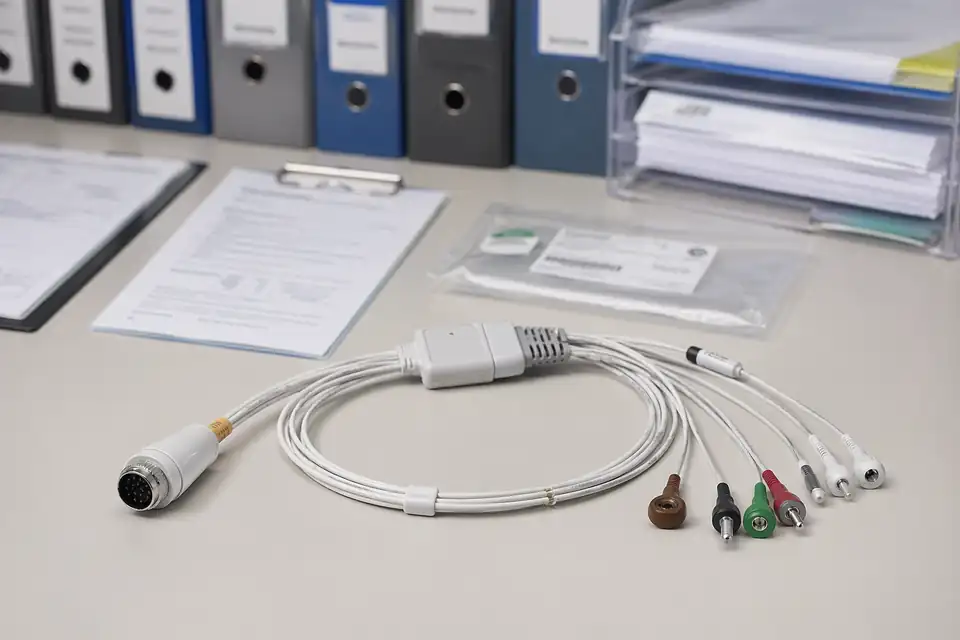
Medical cable assembly compliance and batch-record scene with documents secondary to the harness
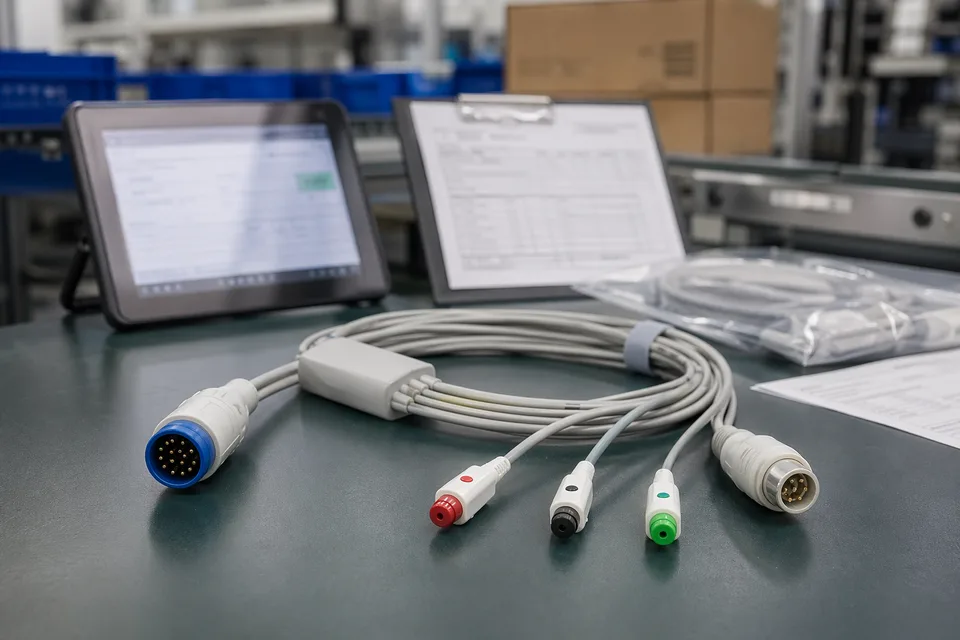
Medical cable compliance record scene with harness sample foreground and controlled documents
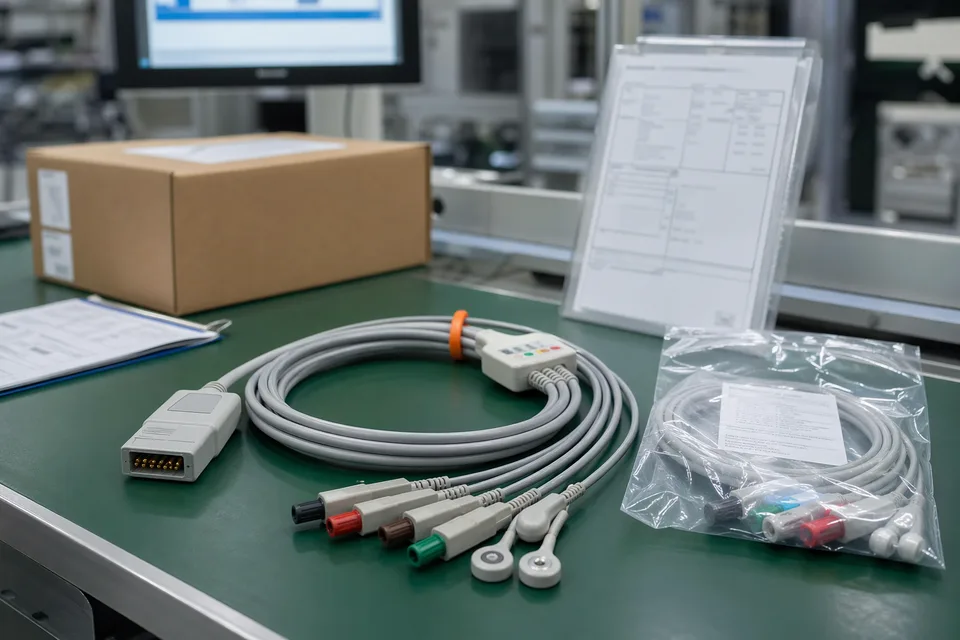
Medical cable batch traceability and sample approval archive in clean workspace
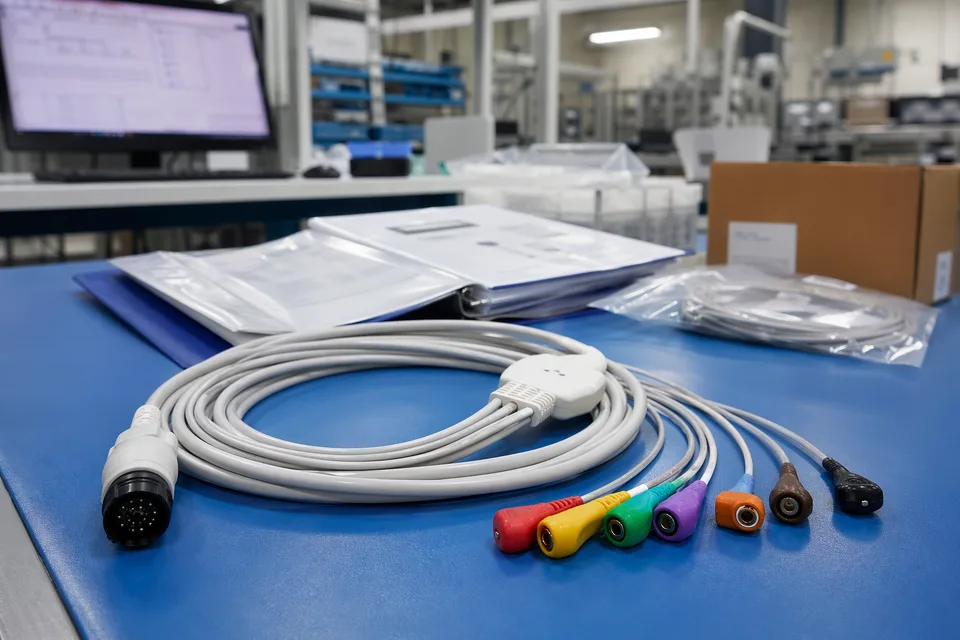
Medical released project folder with connector lot labels and sample cable support context
FAQ
Can you build portable-medical harnesses from old samples or old parts?
Yes. Existing samples help, but connector mapping, route path, repeated-handling notes, and active device revision still need to be confirmed before the sample can represent the released build.
What is the minimum input for a portable-medical quotation?
Send the device type, connector references, pin mapping, route notes, project stage, and expected quantity.
Why do portable-medical programs need more than connector model and cable length?
Because compact fit, repeated handling, structure limits, and version scope often decide whether the assembly can actually be released cleanly.
Can one portable-medical harness cover several device versions?
Sometimes, but only if mapping definition, route geometry, use conditions, and revision boundaries stay inside the same approved definition.
Can review start before the full drawing package is complete?
Yes. Early review can start from connector references, route context, and current handling limits, then tighten as the file package becomes clearer.