Technical Reference · CLEANROOM-MEDICAL-INTERCONNECT-MANUFACTURING
Medical Interconnect Capability
Controlled Medical Interconnect Assembly
Project-defined handling, inspection checkpoints, deliverable records, and batch traceability
EDPcable supports medical interconnect projects that require controlled handling, defined inspection checkpoints, packaging requirements, and shipment-side records alongside the cable structure. Drawings, samples, process checks, packaging instructions, and delivery records can be linked to one released project definition. Any cleanroom class, cleaning process, sterilization requirement, or regulatory conclusion must be supplied and approved through customer project documents; none is implied by this assembly description.
Quick Links
QUICK ACCESSStart with the sections closest to the project structure, interface requirements, and validation scope.
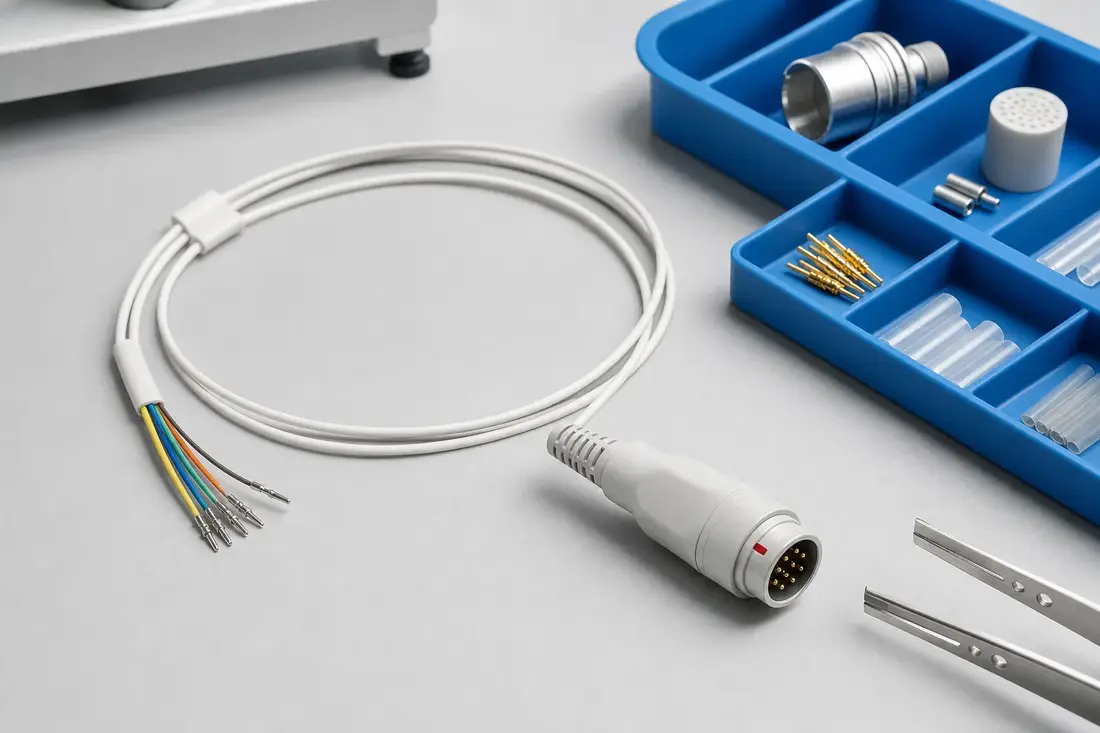
Capability Scope Snapshot
Best fit when the project already has a medical-device context and needs manufacturing discipline, inspection records, packaging documentation, and traceability to be reviewed before sampling or batch release.
| NO | Review Item | Practical Meaning |
|---|---|---|
| 01 | Capability Definition | Project-defined handling, process control, inspection, packaging, and record support for medical cable assemblies |
| 02 | Relevant Family | Medical cable assemblies, with possible overlap into micro-coaxial medical imaging projects when the structure requires finer review |
| 03 | Typical Programs | Patient monitoring, portable medical, diagnostic equipment, micro medical harness, and controlled replacement programs |
| 04 | Required Inputs | Drawing, BOM, sample, handling and packaging requirements, inspection scope, document format, and quantity rhythm |
| 05 | Deliverable Records | Sample approval record, inspection record, batch label, packaging record, COC or COC-like document when requested and confirmed |
| 06 | Capability Boundary | Any cleanroom class, cleaning or sterilization requirement, and regulatory conclusion must be defined and approved in customer project documents |
Capability Review Inputs
Use these items as first-round review inputs so the discussion does not rely on the page label alone.
Provide drawing, BOM, sample, or photos of the existing assembly.
Describe work-area, handling, packaging, labeling, and shipment-document requirements.
Provide inspection items, sampling or full-check boundaries, and record format.
State whether the project is new development, sample validation, pilot, production, or replacement.
Add sample quantity, pilot quantity, annual volume, and target timing.
If certification, sterilization, cleanroom class, or regulatory requirements apply, provide the exact standard or customer document.
Process Flow
Controlled medical interconnect projects separate requirement review, sample definition, material preparation, assembly, inspection, packaging, and document control into visible review nodes. The applicable controls are confirmed for each project before sampling.
| NO | Step | Control Point | Output or Record |
|---|---|---|---|
| 01 | Requirement review | Confirm drawings, BOM, clean handling or packaging needs, inspection scope, and record requirements | RFQ input checklist and engineering review notes |
| 02 | Sample definition | Lock connector, wire, branch, label, and revision boundary | Sample drawing or sample-definition record |
| 03 | Material preparation | Confirm material batch, appearance, and packaging status | Incoming material and batch-link notes |
| 04 | Controlled assembly | Apply the customer-approved work-area, tool, cable-placement, and handling requirements | Process check or work confirmation |
| 05 | In-process inspection | Check termination, continuity, appearance, labels, and critical dimensions | In-process inspection or issue-handling record |
| 06 | Finished inspection | Perform project-defined OQC and packaging-before-release checks | Finished-goods inspection record |
| 07 | Packaging and shipment | Apply protective packaging, labels, carton marks, and agreed shipment documents | Packaging record, batch label, and shipment file |
Inspection Checkpoints
Inspection should focus on the places where medical interconnect programs most often lose control: termination consistency, label identification, branch logic, clean appearance, packaging protection, and the connection between records and released version.
| NO | Checkpoint | What To Check | Suggested Record |
|---|---|---|---|
| 01 | Incoming material | Connector, wire, label material, packaging state | Material batch and appearance confirmation |
| 02 | First article or sample | Pin order, branch structure, length, label, local geometry | First-article or sample approval record |
| 03 | In-process patrol | Termination, soldering or crimping, appearance, clean handling state | Process patrol sheet or deviation note |
| 04 | Finished inspection | Continuity, appearance, labels, pre-packaging condition | OQC or finished-goods inspection record |
| 05 | Shipment confirmation | Batch label, carton mark, accompanying documents, protective packaging | Shipment checklist and packing record |
Customer Pain Points
The main risk is not whether one sample can be assembled, but whether the approved controls and records can support the next batch without changing the release boundary.
| NO | Customer Pain Point | Capability-Side Risk | Input To Confirm Early |
|---|---|---|---|
| 01 | Design files do not define process needs | The drawing defines structure but not clean handling, label, record, or packaging boundaries | Drawing, BOM, packaging requirement, record template |
| 02 | Sample looks acceptable but records are weak | The sample cannot support pilot or production because checkpoints and record depth were not defined | Inspection items, sampling/full-check boundary, approval method |
| 03 | Record requests appear too late | Late COC, label, or packaging requests force repeated shipment-file changes | Shipment documents, COC scope, label rules, batch rhythm |
| 04 | After-sales tracing is slow | A shipment cannot be tied quickly to revision, batch, or inspection output | Revision rule, batch label, shipment record |
| 05 | Complaint handling lacks evidence | The team cannot tell whether an issue came from material, assembly, packaging, or use conditions | Process records, deviation handling, sample approval |
Deliverable Records
Deliverable records are confirmed by project. The table shows common discussion items, not a default document package for every order.
| NO | Record Type | Project Stage | Use | Boundary |
|---|---|---|---|---|
| 01 | Sample approval record | Sample stage | Shows whether the sample can serve as a later-version basis | Customer must confirm the usable sample boundary |
| 02 | Inspection record | Sample, pilot, or production | Records appearance, continuity, dimensions, or project-specific checks | Inspection items follow drawing and quality requirements |
| 03 | Batch label | Pilot or production | Supports batch matching, repeat orders, and traceability | Label rules must be confirmed early |
| 04 | Packaging record | Shipment stage | Documents packing method, quantity, and protection requirements | Does not replace sterilization or regulatory evidence |
| 05 | COC or COC-like file | When requested | Supports customer release or supply-chain filing | Provided only after format and content are confirmed |
Controlled Medical Interconnect Process Definition Matrix
Controlled medical-interconnect assembly starts with customer-approved environmental, handling, cleanliness, packaging, and record requirements. This page does not imply a cleanroom class, sterile product, validated cleaning process, or biological suitability.
| NO | Process-definition input | Project decision required | Objective release basis |
|---|---|---|---|
| 01 | Required work environment | State the named room classification or controlled-area condition, operational state, monitoring requirement, and activities permitted for this specific assembly. | Customer-approved process specification; no class is inferred from the medical end use. |
| 02 | Cleanliness acceptance characteristic | Identify the actual particulate, residue, ionic, visual, or other cleanliness characteristic together with method, limit, location, and sample plan. | Measurable acceptance requirement rather than an undefined clean or medical-grade label. |
| 03 | Personnel and material handling | Define gowning, gloves, transfer containers, touch restrictions, exposed surfaces, line clearance, and segregation steps supplied by the customer. | Released work instruction and training applicability record for the assigned operation. |
| 04 | Material compatibility boundary | Freeze wire, jacket, tubing, adhesives, labels, lubricants, and process consumables whose residue or shedding matters to the product program. | Approved BOM and material declarations reviewed by the device manufacturer for intended use. |
| 05 | Cleaning process definition | Specify agent, concentration, application method, exposure time, drying, rinse, handling, and post-clean inspection only when the customer has approved them. | Controlled cleaning instruction; sterilization and biocompatibility are separate device-program decisions. |
| 06 | Packaging and transfer protection | Set bag material, layer count, closure, cleanliness state, label content, quantity, environmental protection, and opening sequence for downstream handling. | Packaging drawing or instruction linked to shipment and receiving requirements. |
| 07 | Traceability and delivered records | Agree lot identity, material linkage, operator or process records, inspection results, deviations, retention period, and shipment documentation before production. | Record matrix mapped to the customer's quality agreement and active device configuration. |
First-Party Engineering References
- ISO 13485:2016 medical-device quality management systems
ISO 13485 provides quality-system context for documented controls and records where applicable, but it does not assign a cleanroom class or certify an individual cable assembly.
- ISO 14971:2019 application of risk management to medical devices
The device manufacturer determines whether contamination, packaging, handling, or material hazards require controls and records in the outsourced interconnect process.
Controlled Medical Interconnect Process Failure Review
Process risks must be tied to a defined customer requirement; without a named class, method, limit, or packaging state there is no defensible controlled-environment acceptance claim.
| NO | Process failure condition | Preventive or detective control | Customer quality boundary |
|---|---|---|---|
| 01 | A cleanroom class is assumed from product terminology | Require the classification, operational condition, monitoring scope, and approved work steps in project documents before scheduling controlled-area work. | The customer determines which environmental classification is necessary for its device and regulatory pathway. |
| 02 | Materials or lots cross an uncleared work boundary | Use identified transfer containers, status labels, line clearance, lot segregation, and controlled exposure points defined for the assembly route. | Contamination-risk significance is evaluated in the customer's device risk and quality files. |
| 03 | Cleaning agent or process damages the cable construction | Approve the exact agent and procedure, then inspect defined material and identification characteristics after the specified exposure sequence. | Cleaning validation and compatibility conclusions remain limited to the tested BOM and device-use conditions. |
| 04 | Package integrity or cleanliness state is lost during transfer | Control bagging sequence, closures, labels, handling points, and any seal or visual check before the lot leaves the defined area. | Sterile-barrier claims are excluded unless separately designed and validated by the responsible device organization. |
| 05 | Required history cannot be reconstructed from delivered records | Link material lots, work order, inspection results, deviations, packaging status, and shipment identity through one agreed traceability index. | Record retention and regulatory sufficiency are set in the customer quality agreement. |
Controlled Medical Interconnect Release Verification Plan
Release evidence should prove that the requested environment, handling sequence, cleanliness characteristic, packaging state, and records were followed for the identified lot. It cannot substitute for device sterilization or regulatory validation.
| NO | Release checkpoint | Verification approach | Retained output |
|---|---|---|---|
| 01 | Requirement readiness before build | Confirm approved environment, work instruction, BOM, inspection method, packaging definition, record list, and open deviations at the production review. | Pre-build checklist signed against the applicable project revision. |
| 02 | Material and consumable identity | Reconcile cable materials, labels, adhesives, cleaning agents, gloves, bags, and any controlled consumables with the released list. | Lot-linked material issue record and approved-alternate status. |
| 03 | Work-area and handling compliance | Review required environmental status, line clearance, personnel authorization, transfers, and exposed-product handling at the defined process stages. | Area or operation log limited to the project-specified controls. |
| 04 | Specified cleanliness characteristic | Apply the customer-named sampling method, measurement location, limit, equipment, and disposition rule without substituting a generic visual statement. | Cleanliness result that identifies samples, method, acceptance basis, and anomalies. |
| 05 | Packaging configuration and closure | Inspect material, layers, quantity, orientation, labels, closure, visible damage, and required transfer state against the packaging instruction. | Packaging inspection record and shipment-lot association. |
| 06 | Delivered record packet | Check completeness and revision correspondence for inspection data, deviations, traceability, packaging evidence, and requested certificate or declaration content. | Document index approved before shipment, without adding unrequested regulatory claims. |
Engineering, Quality, and Evidence Chain
Capability review starts by defining what can be built, checked, recorded, packed, and traced for the specific project. Cross-family engineering review, drawing control, and documentation practice are covered in the Related Capability Pages below.
Engineering Capability
Define handling, work-area, packaging, record, and inspection requirements from customer-approved project documents.
Quality Checkpoints
Apply only the cleanroom class, cleaning, sterilization, and test requirements explicitly defined and approved for the project.
Evidence Chain
Capability scope confirmation
Record the project boundary for clean handling, packaging, inspection, and documentation before quotation and sampling.
Medical-Specific Record Boundaries
Medical-specific clean handling and record boundaries can be reviewed for the project, but unconfirmed medical certification, cleanroom class, sterilization results, or regulatory approval should not be assumed. Cross-family file control and certification practice are summarised in the Related Capability Pages.
Customer medical-standard alignment
If a customer has specific medical, clean handling, packaging, or test standards, provide them during RFQ so feasibility can be reviewed.
Certification boundary statement
Manufacturing records do not replace medical-device certification, sterilization validation, cleanroom-class evidence, or customer regulatory responsibility.
Records and Compliance Visuals
IMAGES · 04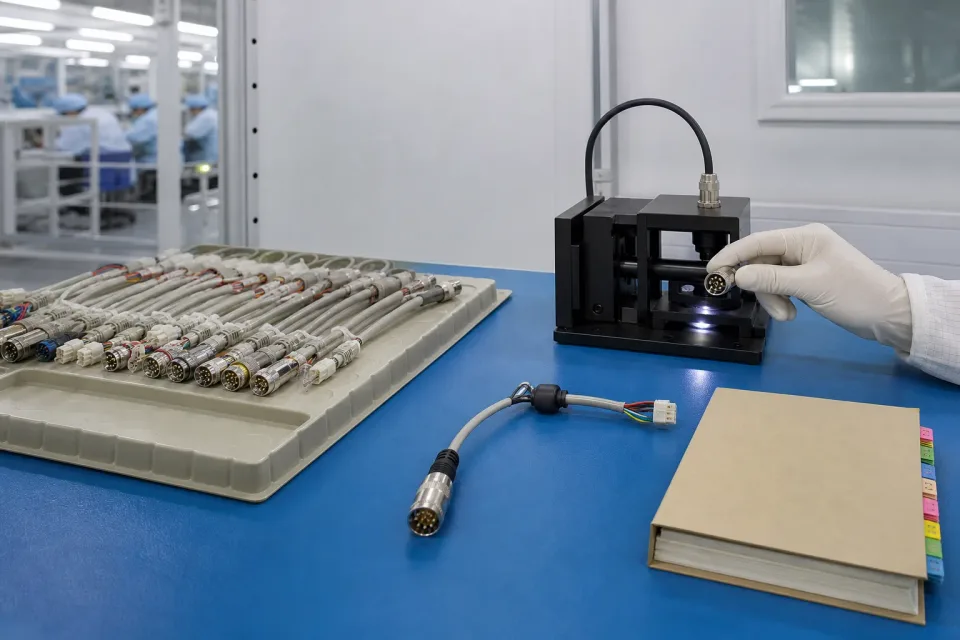
Controlled assembly and inline-inspection station for a medical interconnect program with process records
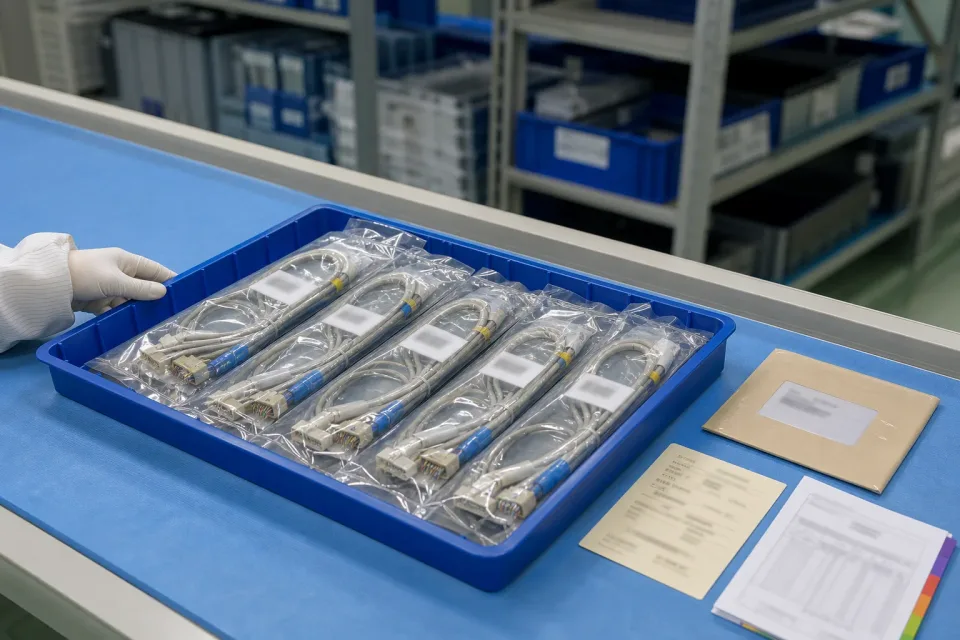
Pre-shipment lot tray of packaged medical interconnect harnesses with release records and protective sleeves
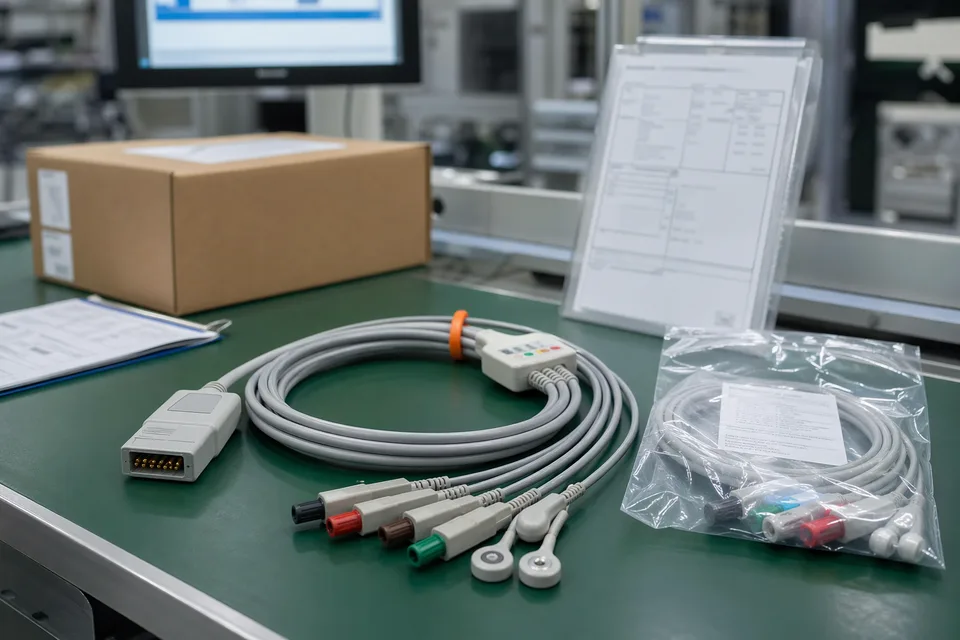
Medical cable batch traceability and sample approval archive in clean workspace
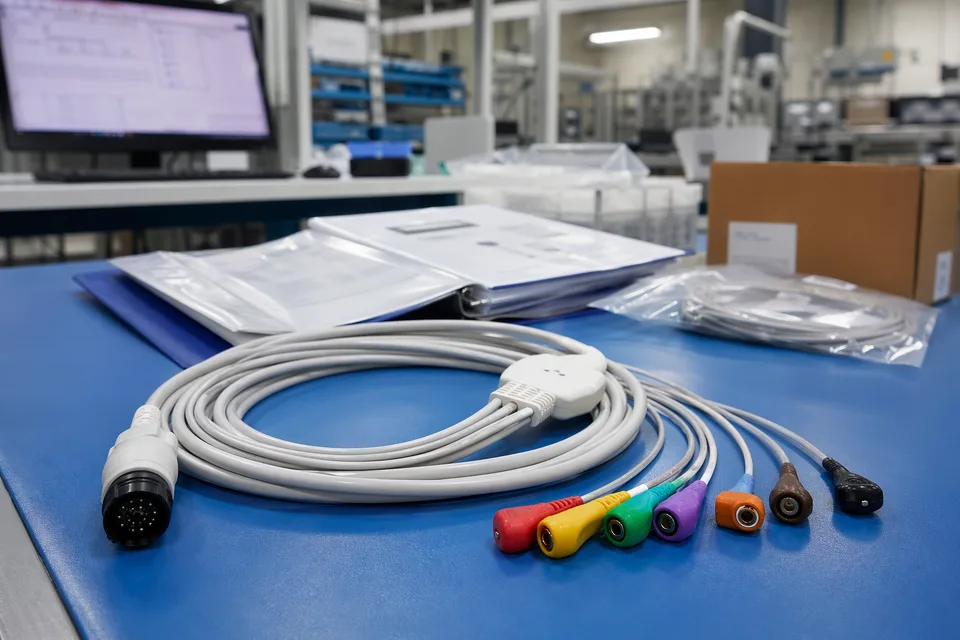
Medical released project folder with connector lot labels and sample cable support context
FAQ
How is a required cleanroom class handled?
Provide the required class, operating procedure, monitoring expectations, product-transfer rules, and record format in the customer project documents. Feasibility is reviewed against those inputs; no class is inferred from general controlled-assembly wording.
What input is needed for a controlled medical interconnect quotation?
Send drawings, BOM, samples, work-area and handling requirements, packaging requirements, inspection items, record format, project stage, and expected quantity.
Can you provide inspection records or COC files?
They can be discussed by project, but format, content, and applicability must be confirmed during RFQ or sample review.
When is a controlled-assembly review useful?
Use it when the cable structure is already understood but the project still needs handling controls, inspection checkpoints, packaging rules, deliverable records, and batch traceability defined before sampling.
Can review start before the customer has a complete standard?
Yes. An initial review can identify missing inputs, but any cleanroom class, cleaning or sterilization process, test method, and shipment-document requirement must be confirmed from customer standards before release.