Start With the Manufacturer and the Complete Number
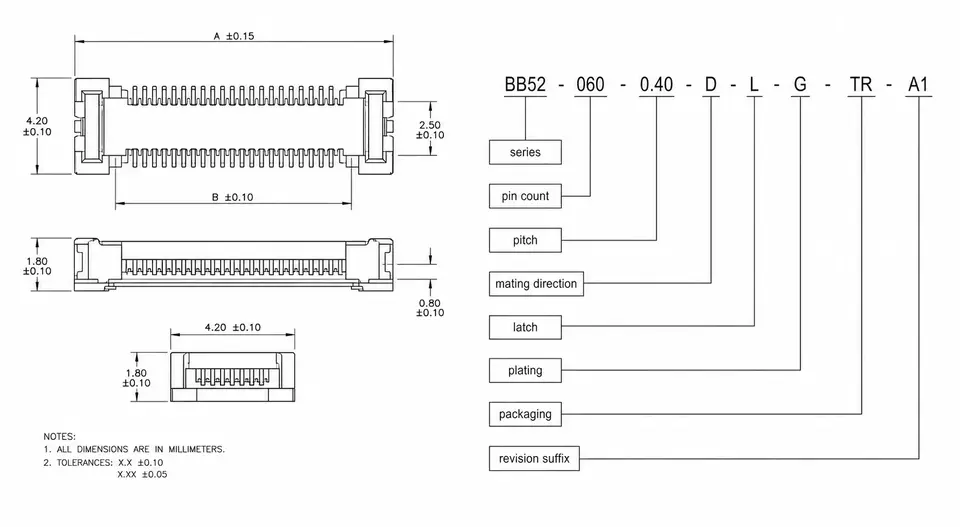
To read a connector part number, identify its manufacturer and exact series, find that series' ordering guide, and check every field against the product drawing. Keep punctuation, leading zeros and the complete suffix. There is no universal position in which a letter means plating, a number means pitch, or the last characters mean a revision.
For a request such as “DF14 cable” or “FI-X replacement,” record the missing full number as an open question. Do not fill the gap with a code borrowed from another maker. Reading the number identifies a component candidate; approving the mating interface and the cable assembly is a separate engineering decision.
Separate Three Identifiers Before Decoding a Suffix
| Identifier or evidence | Question it answers | What to record separately |
|---|---|---|
| Complete manufacturer product number | Which physical component is specified? | Maker, full string and source document |
| Packaging or ordering number | In what orderable delivery form is it supplied? | Packing code and its documented product mapping |
| Drawing number and revision | Which definition did engineering check? | Drawing ID, revision and retrieval date |
| Mating component number | Which opposite half is specified? | Exact mating number and drawing reference |
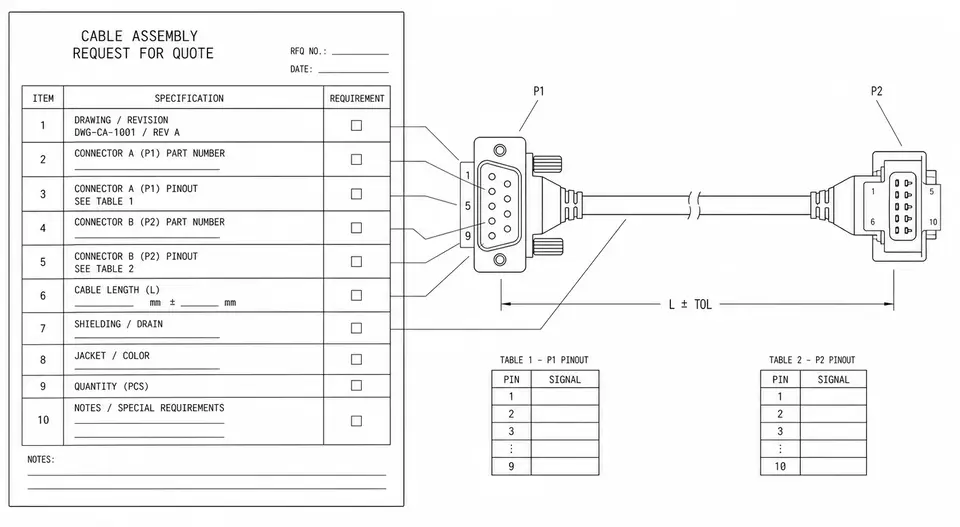
| Contact numbering and wiring schedule | Where does each conductor terminate? | View direction, pin 1 and net assignment |
| Assembly drawing and acceptance plan | What is the complete deliverable? | Cable, termination, routing and project verification requirements |
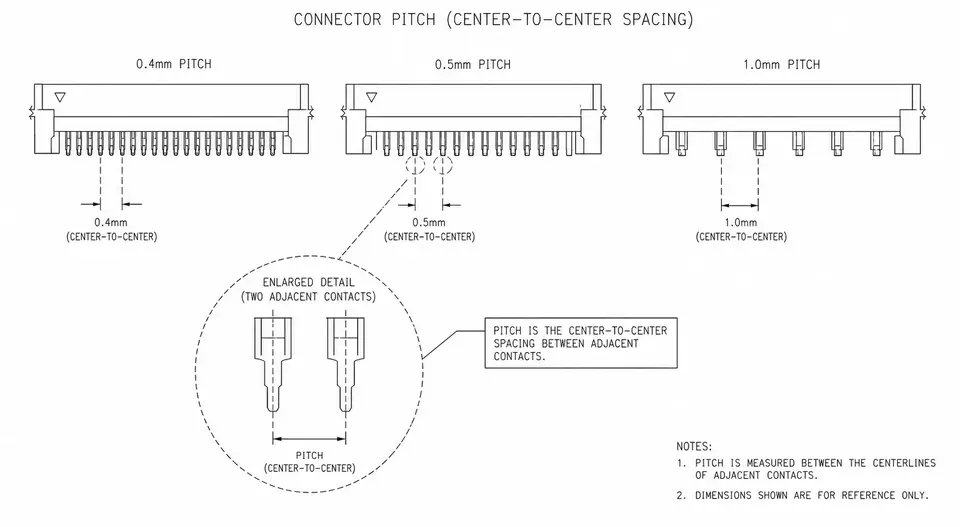
A drawing revision is not automatically part of the orderable number. A packaging difference is not automatically a different mating interface, either. Confirm the manufacturer's mapping instead of silently dropping a suffix. Matching contact count alone does not establish the wiring schedule; use the connector pitch guide to separate spacing from position count.
Worked Example: IRISO Product and Packaging Numbers
IRISO's own model-number guide gives two examples. The following is a reading exercise for those examples, not a conversion rule or an approved substitution.
| Published example | Fields explained by that guide | Detail that still needs the drawing |
|---|---|---|
IMSA-13065B-20Y917 — packaging number | 13065 series; B plug; 20 contacts; Y embossed/blister packaging | 917 is assigned in the packing drawing |
IMSA-13065B-20W-TM16 — product number | Same series, plug designation and contact count; a shape classification and plating field follow | Resolve W and the complete plating specification against the product drawing |
| The two strings compared | The common prefix is useful for identification | Obtain the actual product-to-packing mapping; a common prefix does not prove these are interchangeable |
Do not infer a thickness, latch, electrical rating or lifetime from the unexplained characters. This example cannot decode an I-PEX, Hirose or JAE number. A maker-specific field description is a starting point for finding evidence, not permission to guess the remaining fields.
Verify an I-PEX Number in the Drawing
The I-PEX drawing guide separates the recommended part-number/position table, title-block revision, materials/finish information, mating information and packing pages. Use those locations as a document checklist:
- Find the full requested variant in the number table; expand any position-count placeholder from the actual variant list. Keep the requested number and any recommended alternative as separate entries.
- Record the title-block drawing revision. Confirm relevant dimensions and finish from their own tables rather than assigning a guessed meaning to a suffix.
- Check the opposite-half number, mating geometry and contact orientation. A familiar family name does not define a complete pair.
- Read the packing information for procurement and feeding requirements. Keep it distinct from the mechanical interface review.
For an existing design, a manufacturer's recommended number still needs a documented comparison with the installed part and the approved design. For a cable-side project, continue with the I-PEX 20455 interface page or JAE FI-X interface page only after identifying the actual mating parts.
Six Checks Before Releasing a Replacement or Purchase
This is a proposed project review checklist, not a report of testing performed by EDPcable.
| Check | Evidence to retain | Hold the decision when |
|---|---|---|
| Identity | Complete number, maker and authoritative source | Only a series, distributor abbreviation or unclear photo is available |
| Product versus packing | Manufacturer's mapping and both relevant drawings | A suffix has been removed or assumed to affect packing only |
| Mating and installation | Both mating numbers, dimensions, latch and available space | Fit is inferred only from pitch, count or visual similarity |
| Wiring | Pin-1 view, contact numbering and approved net list | Cable-side and mating-side views give conflicting assignments |
| Materials and process | Specified finish, termination and applicable manufacturer instructions | Plating, wire accommodation or process requirements remain unresolved |
| Project acceptance | Agreed sample checks and electrical/mechanical acceptance criteria | Component identification is being used as proof of assembly performance |
If a number is obsolete or untraceable, ask for the manufacturer's lifecycle information and available replacement documentation. A sample and photos can support identification, but they do not guarantee that a replacement is available or suitable. Record unresolved items and the owner's disposition before purchase or production.
Send a Traceable RFQ Record
A useful record has separate fields: requested full number; maker; product drawing ID/revision; packing code and mapping; opposite-half number; pin-1 view/net list; cable construction and length; installation constraints; and acceptance criteria. Mark unknown values “confirmation required” instead of treating blanks as approval.
For example, if a supplier quote omits the packing suffix, retain the original requested string, request the exact offered order code and product mapping, and compare the drawings before accepting the change. This is a purchasing scenario, not a claim that the quoted parts differ mechanically. Use the cable assembly RFQ guide for the complete assembly definition, or Micro-Coaxial Cable Assemblies for the relevant application scope.
Trademark Notice
Manufacturer names, marks and example part numbers identify their respective owners' products and documentation. EDPcable is independent of those owners; these identification examples do not imply authorization, partnership or verified interchangeability.