Replacement support for obsolete or undocumented cable assemblies
Cable Reverse Engineering & Replacement Manufacturing
From physical sample to controlled drawing, assumptions list, replacement sample, and production path.
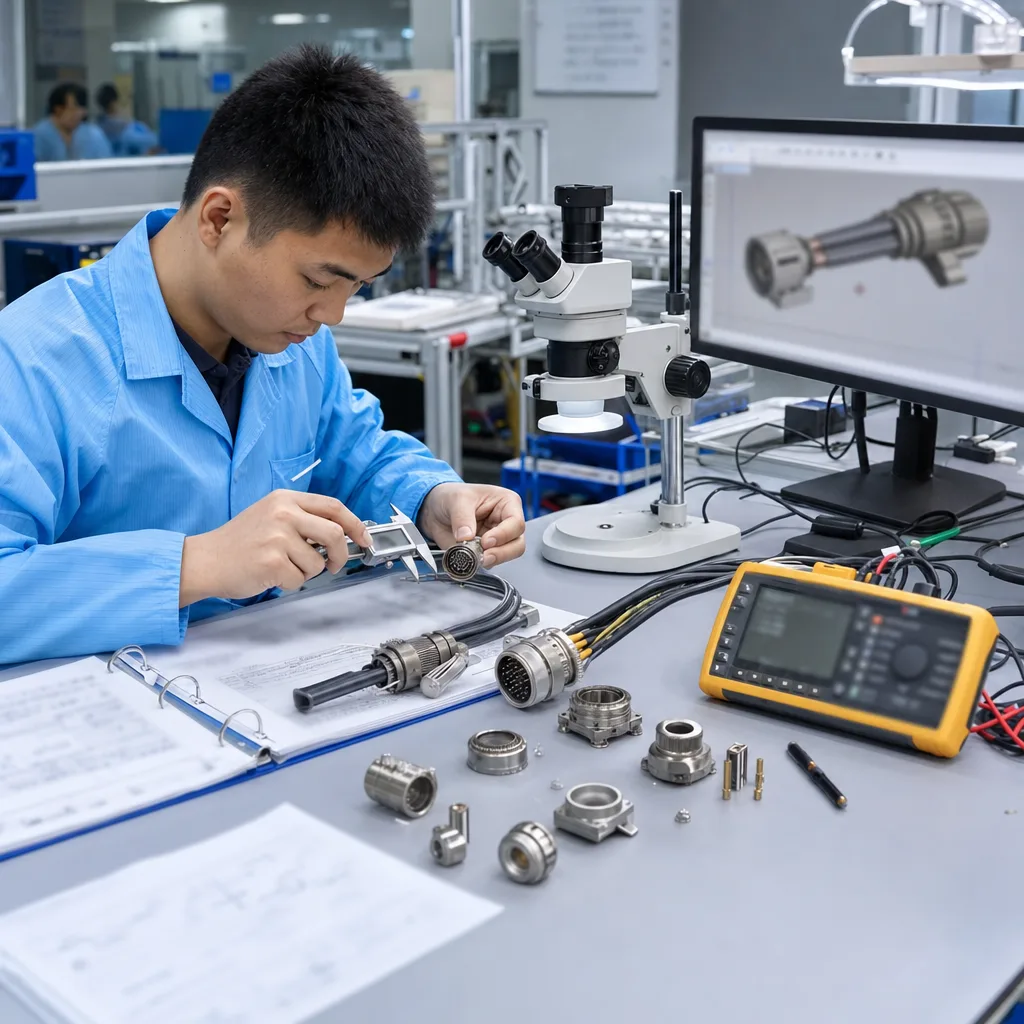
EDPcable can review a physical cable or harness sample, create a controlled drawing, document key dimensions and assumptions, and manufacture a compatible replacement. This supports obsolete parts, EOL suppliers, repair programs, second-source qualification, and projects where the original drawing is missing. Reverse engineering has limits: hidden construction details and IP responsibility must be clarified by the customer, and all assumptions need customer validation during sampling.
Capability scope
Best fit when a physical sample exists but the original drawing, BOM, or process records are missing. If a full drawing already exists, build-to-print is usually the cleaner route.
Physical sample review, dimensional capture, connector and pin mapping, and controlled drawing output
Assumptions are written down instead of hidden inside the replacement build
Replacement samples are used to validate fit, electrical behavior, and compatibility
Customer is responsible for confirming sample ownership, IP rights, and final compatibility acceptance
Process Flow
| Step | Station / Action | Control Point | Output Record |
|---|---|---|---|
| Sample intake | Customer ships the physical sample | Completeness confirmation / damage marking | Sample intake record |
| Project background review | Original supplier status / EOL timing / compatible equipment | Confirm reverse necessity | Background review memo |
| Reverse measurement | Key dimensions / interfaces / pins / routing / structure | Separate measurable vs unmeasurable parts | Measurement record |
| Document assumptions | Unmeasurable parts inferred from process know-how and flagged | Assumptions list + validation advice | Assumptions list |
| Controlled drawing output | Reverse controlled drawing + key-dimension table + assumptions | Staged customer confirmation | Reverse controlled drawing v1 |
| Compatibility assessment | Compatibility of the replacement with the original equipment | Compatibility boundary + known limits | Compatibility assessment report |
| Replacement sample build | Build the sample to the reverse drawing | Sample + installation validation | Sample record |
| Production (if continued) | Produce to the reverse drawing | Controlled production | Production record |
Inspection Checkpoints
| Checkpoint | What is checked | Record | Limit |
|---|---|---|---|
| Sample integrity | Sample condition / damage / markings | Intake record + photos | Damaged areas may affect inference accuracy |
| Measurement accuracy | Key-dimension tolerance range | Measurement record + caliper calibration | Tolerances finally accepted by the customer |
| Inferred assumptions | Whether unmeasurable-part assumptions are reasonable | Assumptions list + engineer cross-review | Staged customer confirmation |
| Compatibility | Replacement compatible with original equipment | Compatibility assessment + customer installation validation | Compatibility finally confirmed by the customer |
Deliverable Records
| Deliverable Record | Stage | Use | Limit |
|---|---|---|---|
| Sample intake record | Project start | Received sample condition + IP responsibility split | Customer responsible for sample IP ownership |
| Project background review memo | Project start | Reverse necessity + project scope lock | Does not replace customer business judgment |
| Reverse controlled drawing v1 | After measurement | First reverse drawing version | Finalized after staged customer confirmation |
| Key-dimension table | After measurement | Key dimensions + tolerance range | Tolerances finally accepted by the customer |
| Assumptions list | After measurement | Explanation of unmeasurable-part assumptions | Assumptions need staged customer validation |
| Compatibility assessment report | After measurement | Replacement vs original equipment compatibility | Final compatibility validated by the customer |
| Sample + installation validation record | Sample stage | Reverse solution validation | Installation validation performed by the customer |
Applicable Projects
Best fit for cable and harness projects that have a physical sample but lack a complete drawing or need replacement development, with focus on:
Original supplier EOL but the product still needs maintenance
Second-source parts for legacy equipment repair (for example 5+ year-old equipment)
Multi-supplier compatible production (an A-supplier drawing exists but EDPcable reverse-validates it)
Adding a second source to a registered model (compatible replacement without changing the original registration)
Related Applications
Reverse engineering is often used together with engineering review, drawing control, build-to-print, and DFM review: first build a controlled drawing from the physical sample, then have the customer confirm key dimensions and assumptions, after which sampling or production can switch to strict build-to-drawing execution.
Why EDPcable
One path from sample intake to controlled drawing, replacement sample, and production transfer
Unmeasurable or hidden details are listed as assumptions for customer validation
Cross-family experience across display, medical, FFC/FPC, IDC, LVDS, and micro-coax cable builds
A dedicated project team coordinates the initial review and staged customer confirmation before production
FAQ
- Can you reverse engineer from only one sample?
- Yes, but one sample cannot establish statistical tolerance. Two or three samples from different batches improve the reliability of the reverse drawing.
- Who owns the reverse-engineered drawing IP?
- The customer is responsible for the IP status of the physical sample. Drawing ownership and usage rights are defined by the project agreement.
- Will the replacement perform exactly like the original?
- Not automatically. EDPcable can reverse visible and measurable features, but hidden materials or construction details may require assumptions and customer validation.
- Can the reverse drawing become a build-to-print package later?
- Yes. Once the customer approves the reverse drawing, the project can move into build-to-print manufacturing with controlled change rules.
RFQ Inputs
For a new reverse engineering project inquiry, please share:
Customer physical samples (1-3 pieces; more is better)
Original project background (application / equipment model / original supplier status)
Expected reverse accuracy (key-dimension tolerance range)
Compatibility requirements (features that must match the original / features where differences are acceptable)
Quantity expectation (one-off replacement / ongoing second source / batch replacement)
Timing requirements (urgent repair / planned replacement)
IP declaration (sample IP ownership / whether third-party IP is involved)
Send the physical sample, application background, and compatibility expectations
Reverse engineering works best when the sample, target equipment, must-match features, acceptable differences, and IP responsibility are clear from the start.