Start by drawing the segment you are buying
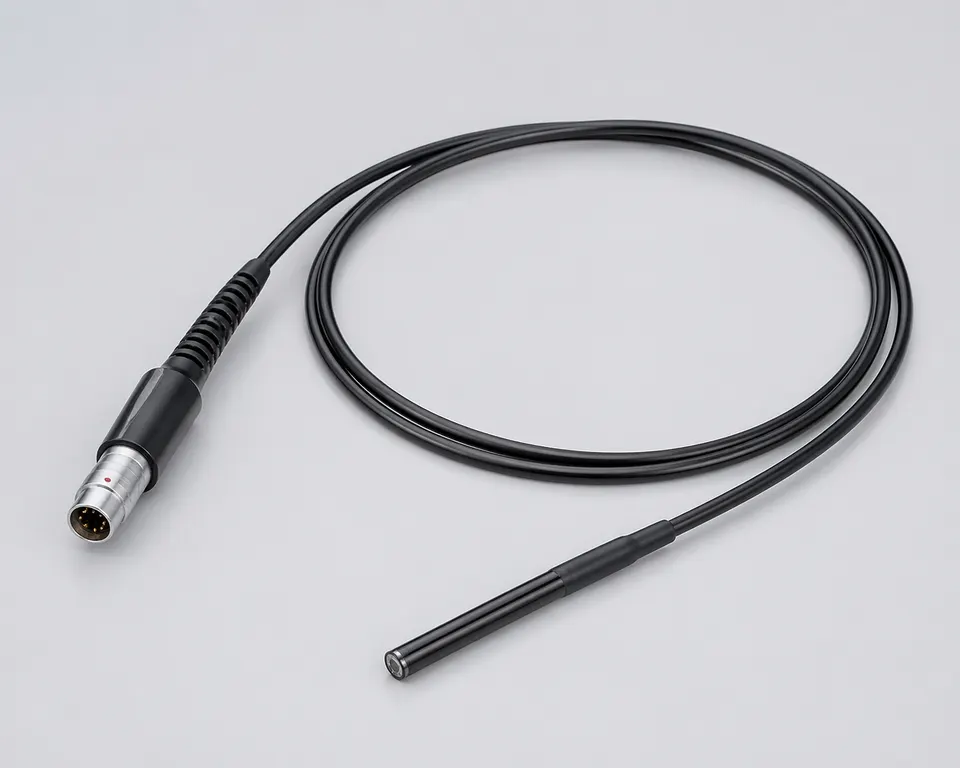
When a buyer asks for a disposable endoscope cable, the supplier still needs to know where the assembly begins and ends. Is the request for the camera-module lead, the route through the insertion section, the handle breakout, or a cable that mates to the reusable equipment? Highlight the supplied segment on a system diagram. Label every supplied endpoint and show which neighboring parts are provided by the device manufacturer.
For a commercial review of that segment, use our single-use endoscope cable assembly page. The checklist below organizes the RFQ package; it does not choose a clinical use model or establish device approval.
1. Identify the exact camera and endpoint options
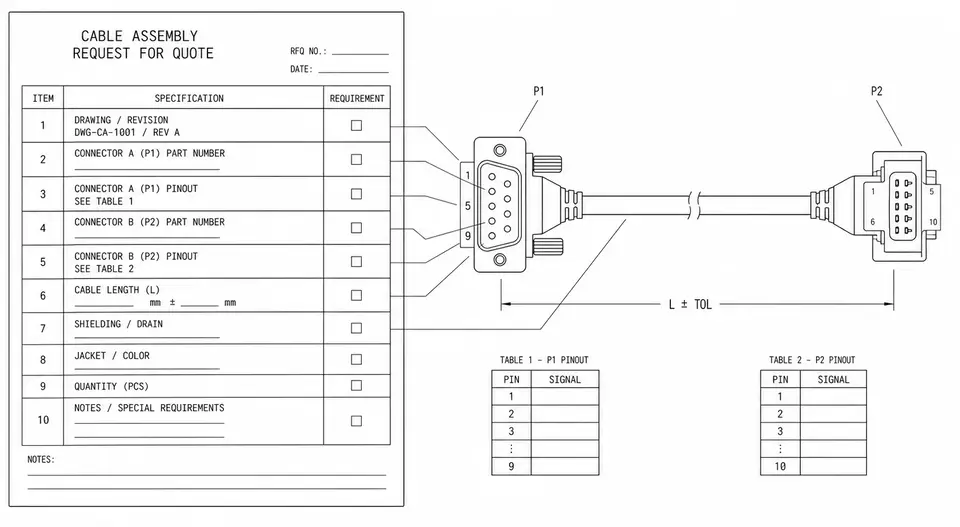
Record the camera-module option and the full connector part number at each endpoint, including suffixes and keying. Add contact-view drawings: a photograph of a connector does not tell the supplier whether the pin numbering is being viewed from the mating face or the wire exit. Where a proprietary module datasheet cannot be shared, provide a controlled interface extract that identifies the electrical functions needed for cable construction.
The I-PEX CABLINE-CA manufacturer page illustrates the kind of mating and assembly documentation that belongs to a connector reference. It is not a recommendation that this connector suits every endoscope. Select parts from the actual camera, handle and equipment drawings.
2. Send one pin-by-pin connection table
Give each net a name and list its source contact, destination contact and function. Distinguish image-data conductors from module supplies, returns, illumination conductors and controls. Mark reserved or unused contacts explicitly so a supplier cannot confuse them with an incomplete drawing.
If the system specification requires an electrical target, include its tolerance and the method by which it will be checked. Do not infer a data interface or impedance value from the term endoscope cable. The module interface and the complete installed channel define those requirements. For fine-coax construction questions, the medical imaging micro-coax route provides a separate starting point.
3. Separate insertion geometry from the handle breakout
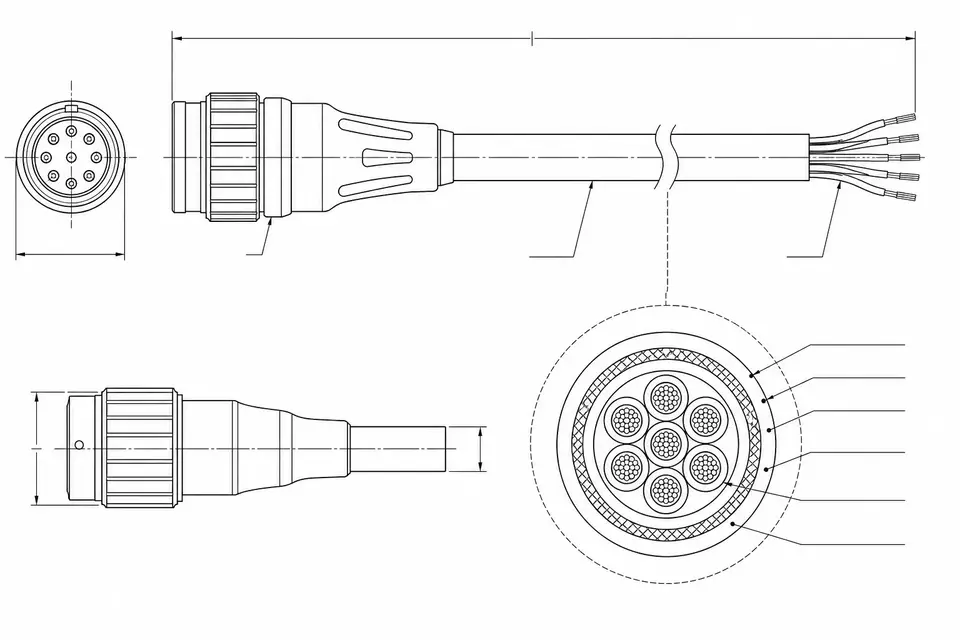
A finished cable length is only one mechanical input. Specify the available bundle envelope, local clearance, restraint positions and moving zones in the insertion section. Show where the bundle enters the handle and how individual conductors fan out to the PCB or equipment connector.
Describe the assembly sequence where it affects access: for example, whether the distal termination must pass through a narrow feature before the handle connector is attached. State the intended bend or steering evaluation without inventing a universal bend radius or cycle count. The acceptable route and motion sequence come from the device design and its agreed evaluation plan.
4. Define processing and delivery responsibilities
Specify the material requirements, intended contact boundary and the condition in which the cable will be delivered. Explain whether cable supply occurs before or after a device-maker-controlled processing step, and identify the protocol needed to evaluate the selected material build. A single-use label does not by itself demonstrate compatibility with that step.
FDA's reprocessing guidance for medical devices explains the need to validate applicable processing instructions. Its scope is mainly reusable devices and also addresses certain devices requiring initial processing; it should not be treated as approval for this cable or permission to reuse a single-use endoscope. Applicable device requirements remain with the device manufacturer.
5. Agree what each sample must prove
Separate cable checks from equipment checks in the quotation. Pin mapping, continuity, shorts, endpoint identity and termination workmanship can be specified as assembly-level records. Imaging modes, artifacts during movement and behavior after the defined exposure require the OEM's representative camera, equipment and route configuration.
When signal measurements are requested, document the fixture, reference planes, test conditions and acceptance limits. A result from a different length or module option does not automatically apply to the requested build. Agree how evaluated samples will be identified so their material and drawing revision can be traced without confusing them with a later variant.
A compact RFQ package
| RFQ attachment | Decision it enables | Check before sending |
|---|---|---|
| Marked system segment | Establishes the supplied assembly boundary | Disposable and reusable sides are identified |
| Endpoint drawings | Resolves mating identity and orientation | Full part numbers and contact views are included |
| Connection table | Defines every signal, supply and return | Reserved pins and unused contacts are explicit |
| Route and breakout drawing | Defines insertion fit and handle assembly | Length, envelope, support and exit details are shown |
| Material and handoff note | Allocates processing requirements | Delivered state and evaluation responsibility are clear |
| Sample acceptance plan | Distinguishes cable and device evidence | Configuration, records and decision owner are named |
For a wider device harness request, start with the medical cable assembly overview. For document structure and quotation logistics, the general cable assembly RFQ guide complements the endoscope-specific attachments above.
Compare supplier responses against the same boundary
Before comparing prices, check that each response includes the same endpoints, supplied components, sample quantity and required records. Ask the supplier to identify assumptions and unresolved inputs instead of treating a shorter quotation as a completed technical review. Where the camera option or insertion route is still changing, separate the provisional evaluation build from the final production definition.
Send the marked assembly segment with the interface extract and route drawing to EDPcable engineering. That package allows the first discussion to focus on the cable you actually need, the information still missing and the evidence required before the device program moves forward.